
Metal & enamel
Persian Tea Set Estekan and Samovar: A Collector's Guide
Discover the art of the Persian tea set, estekan glasses, and samovar. Learn how these metal and glass crafts are made, brewed with, and evaluated.
Published 12 October 2026 · 12 min read
AI-written from our archive and public references; not expert reviewed. Prices, dates and attributions are indicative only — confirm with a specialist.
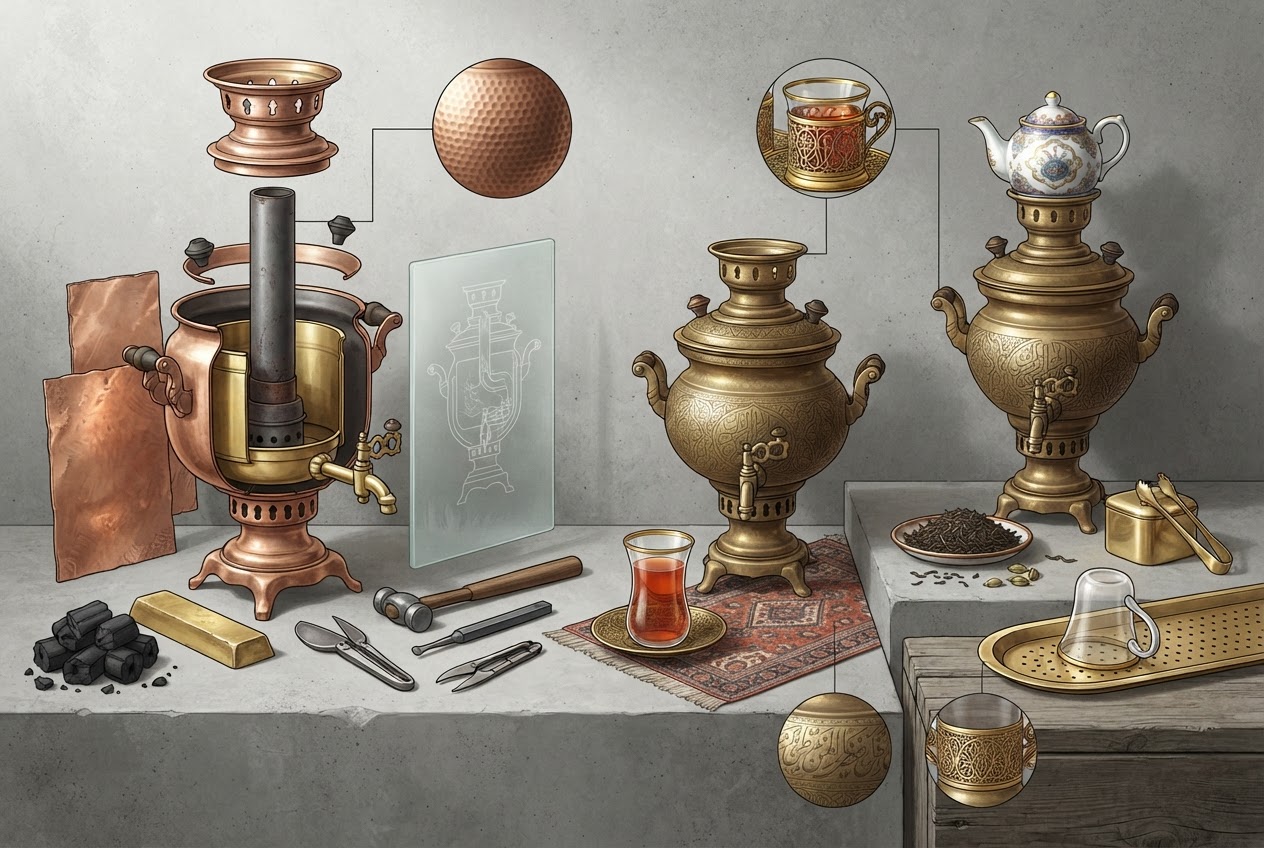
A traditional Persian tea set brings together two essential craft traditions: the water-boiling samovar (spelled *samavar* in Persian) and the delicate estekan (tea glass), accompanied by saucers, holders, and sweet vessels. In an Iranian household, this service is not a passive decorative showpiece but the mechanical and social heart of domestic hospitality, maintaining boiling water and steeped concentrate throughout the day. For collectors and enthusiasts of Islamic metalwork and decorative glass, a genuine Persian tea service represents an intersection of hammered metallurgy, hand-chasing, glassblowing, and ritual dining etiquette.
While tea is now inseparable from Iranian identity, the culture surrounding the samovar and glass service took shape over the nineteenth century during the Qajar era. The apparatus itself migrated into Persia from Imperial Russia, but Iranian coppersmiths (*mesgarha*) and engravers (*qalam-zanan*) quickly adapted the vessel into a distinctively Persian canvas. Understanding how these sets are constructed, how the tea is prepared, and how to tell artisan metalwork from stamped commercial tinware allows you to appreciate both their functional utility and their artistic legacy.
What Comprises a Complete Persian Tea Service?
A formal Persian tea service is an integrated suite of functional metalware, porcelain, and glass. While everyday home use might involve only a kettle and a mug, a customary ceremonial or formal hosting arrangement incorporates several dedicated pieces designed to regulate temperature, hygiene, and presentation.
Primary Elements of the Suite
- Samovar (Samavar): The main water vessel containing a central fire-tube or heating element, a top chimney collar (*taj*), water chamber, spigot (*shir*), and handles.
- Teapot (Qori): A small porcelain or engraved metal pot that rests directly atop the samovar chimney, gently brewing tea leaves using radiant steam.
- Tea Glasses (Estekan): Small, transparent vessels traditionally formed with a pinched waist (*kamar-barik*), allowing sediments to settle while framing the tea's color.
- Glass Holders (Payeh-ye Estekan or Estekan-gir): Metal jackets, often made from pierced brass, silver, or filigree, that shield the drinker's fingers from the hot glass.
- Saucers (Na'lbaki): Small plates placed beneath the glasses to catch drips and occasionally hold lemon wedges, date pits, or sugar lumps.
- Drip Bowl (Kaseh-ye Samavar): Positioned beneath the samovar spigot to catch drops and rinse tea glasses between servings.
- Sugar Caddy (Qanddan): A lidded vessel crafted in matching chased metal or cut glass to hold hard-cut beet sugar (*qand*).
- Service Tray (Sini): A wide, flat brass or copper platter upon which the entire assembly rests, often detailed with intricate narrative or floral engraving.
The Estekan: Anatomy and Purpose of the Waisted Glass
The term estekan (derived from the Russian *stakan*, meaning glass or beaker) denotes the narrow, handleless vessel central to Iranian tea consumption. Unlike heavy Western ceramic mugs, the Persian tea glass is light, transparent, and deliberately modest in volume—typically holding between 70 to 120 milliliters. The physical shape of the estekan is essential to its function.
The classic profile is known as *kamar-barik* (literally 'narrow-waisted'). This hourglass silhouette serves three distinct purposes. First, the flared upper rim allows the surface layer of tea to cool slightly faster than the body, making the first sip comfortable against the lips. Second, the narrow waist prevents tea leaves or heavy sediments from swirling freely into the top chamber when the glass is tilted. Third, the pinched indentation gives the server or drinker a secure, balanced grip when holding the vessel without a metal sleeve.
Transparency is non-negotiable in traditional tea appreciation. Persian tea drinkers evaluate the brew visually before tasting it. The goal is an immaculate, luminous clarity known as *cheshm-e khorus* ('rooster eye') or *la'l-gun* ('ruby-toned'). Opaque ceramics or deeply tinted glassware obscure this visual check, which signals whether the tea was properly steeped or burnt by aggressive boiling.
| Component | Persian Name | Primary Traditional Materials | Function and Cultural Significance |
|---|---|---|---|
| Samovar | Samavar | Brass, Copper, Nickel-Silver (Varsheh) | Boils water and provides steam heat to slowly steep the upper teapot. |
| Teapot | Qori | Fine Porcelain, Stoneware, Tinned Brass | Brews high-strength tea extract (*chay-e por-rang*) without boiling the leaves. |
| Tea Glass | Estekan (Kamar-barik) | Blown glass, Crystal, Gilt-rimmed glass | Exhibits tea clarity and ruby color; small size ensures tea is consumed hot. |
| Glass Holder | Estekan-gir / Payeh | Chased brass, Silver filigree, Pierced nickel-silver | Protects the hand from heat while elevating the glass from the table. |
| Saucer | Na'lbaki | Glazed ceramic, Engraved brass, Glass | Catches spills; historically used to cool individual sips of tea. |
| Sugar Caddy | Qanddan | Enamelled metal, Cut glass, Chased brass | Holds rock or cut loaf sugar (*qand*) for drinking tea *qand-pahlou*. |
The Samovar: From Russian Import to Persian Domestic Icon
The samovar was developed in Russia during the eighteenth century and entered Iran through diplomacy and cross-border trade in the early Qajar period. Sources often note that the royal court of Naser al-Din Shah Qajar popularized the apparatus across Tehran, granting royal privileges to local metalworkers to reproduce the foreign machines domestically.
Iranian metal smiths did not simply copy Russian shapes; they fundamentally re-engineered the surface and proportions. While Russian manufacturers in Tula favored heavy, industrial brass with crisp factory stamps, Persian artisans integrated their own regional metallurgical techniques. Workshops in Isfahan, Tabriz, and Borujerd adorned the boiler bodies with dense vegetal arabesques, medallion motifs, and calligraphic verses praising friendship, hospitality, and divine blessing.
Traditional samovars fall into two mechanical categories based on heat source: fuel-burning (*zoghali*, or charcoal-fired) and modern heating types (paraffin, town gas, or electric heating coils). The charcoal samovar operates via a vertical internal flue known as the fire-pipe (*luleh-ye atash*). Embers placed in the bottom grate heat the pipe, which directly transfers thermal energy to the surrounding water jacket. Draft is controlled by a perforated base (*payeh*) and an adjustable cap on top of the flue.
Decorative Metalwork: How Persian Sets are Decorated
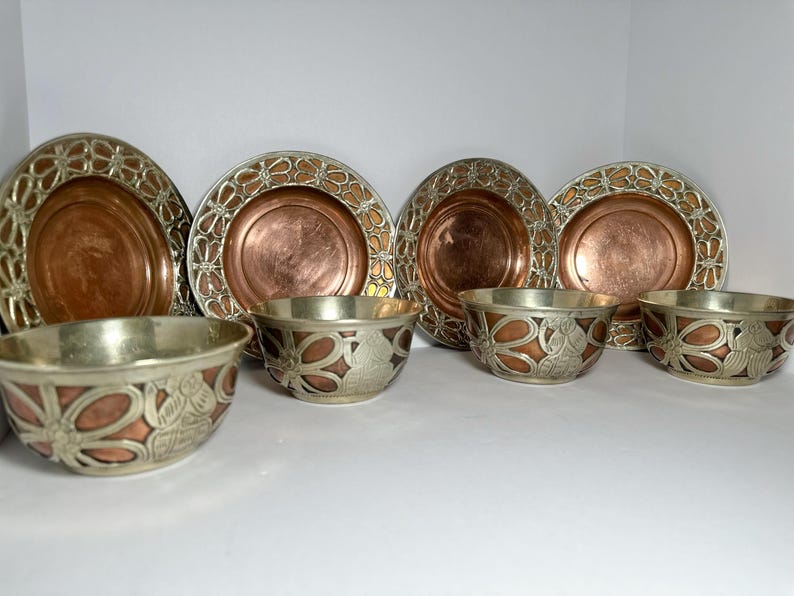
The visual splendour of an Iranian samovar set depends on the decorative treatment applied to its brass, copper, or white alloy surfaces. Several specialized metal disciplines contribute to these objects:
Key Surface Crafts
- Engraving and Chasing (Qalam-zani): Masters use steel styluses and heavy hammers to emboss reliefs (*barjasteh*) or incise fine scrollwork (*riz-qalam*) across the samovar body, tray, and saucers. Classic patterns include the traditional tear-shaped <a href="/motifs/boteh">Boteh</a>, intricate solar rosettes like the <a href="/motifs/shamseh">Shamseh</a>, and palmette ribbons featuring the <a href="/motifs/shah-abbasi">Shah Abbasi palmette</a>.
- Nickel-Silver Alloy (Varsheh-sazi): Centered historically in Borujerd, craftsmen hammered *varsheh* (an alloy of copper, nickel, and zinc imported from Europe) into silky, silver-toned vessels that resist tarnishing without the need for silver electroplating.
- Turquoise Inlay (Firuzeh-kubi): A twentieth-century innovation primarily from Isfahan, where artisans set tiny chips of genuine <a href="/materials/turquoise">Turquoise</a> into dark bitumen beds cast into recesses on copper or brass tea trays and sugar holders. Learn more about this technique in our guide to <a href="/encyclopedia/firuzeh-kubi">Turquoise inlay (Firuzeh-kubi)</a>.
- Silver Filigree (Malileh): Associated predominantly with Zanjan and Isfahan, delicate wires of silver or silver-plated copper are coiled into lace-like structures to construct ethereal glass holders and sugar tongs.
How Tea is Brewed on a Persian Samovar
Brewing tea with a Persian samovar is fundamentally different from boiling water in a standard electric kettle and steeping a mug with a tea bag. The method isolates concentration from dilution, allowing each guest to receive a glass calibrated precisely to their preferred strength and color.
The Step-by-Step Samovar Method
- 1
Bring the Water to a Rolling Boil
Fill the samovar water jacket with cold, low-mineral water. Light the charcoal chimney or activate the electric coil. Allow the water to boil completely, which also heats the top collar (*taj*).
- 2
Rinse and Warm the Teapot
Take the empty porcelain or tinned-brass teapot (*qori*). Draw a small amount of boiling water from the spigot, swirl it around to preheat the vessel's walls, and discard the water.
- 3
Charge the Leaves and Add Steam Water
Add high-quality loose-leaf black tea (frequently orthodox Ceylon, Lahijan Persian leaf, or Assam blends, often scented with bruised green cardamom pods or dried rose petals). Add just enough boiling water to cover and swell the leaves, leaving the rest of the pot empty.
- 4
Slow-Steam Atop the Chimney (Dam Keshidan)
Seat the teapot firmly onto the top crown of the samovar. Reduce the heat source so the water gently simmers. The ambient steam escaping the vents envelopes the teapot base, allowing the leaves to unfold gently without scorching, typically for 10 to 15 minutes.
- 5
Pour and Balance the Glass
To serve, pour the dense, dark tea extract (*chay-e damkeshideh*) into the estekan, filling anywhere from one-third (for medium, or *ta'am*) to two-thirds (for strong, or *por-rang*). Then, turn the samovar spigot to top up the glass with clean boiling water to reach the desired hue.
Qualitative comparison based on traditional metallurgical properties, heat retention, and maintenance needs.
How to Spot Authentic Handmade Pieces vs. Machine Replicas
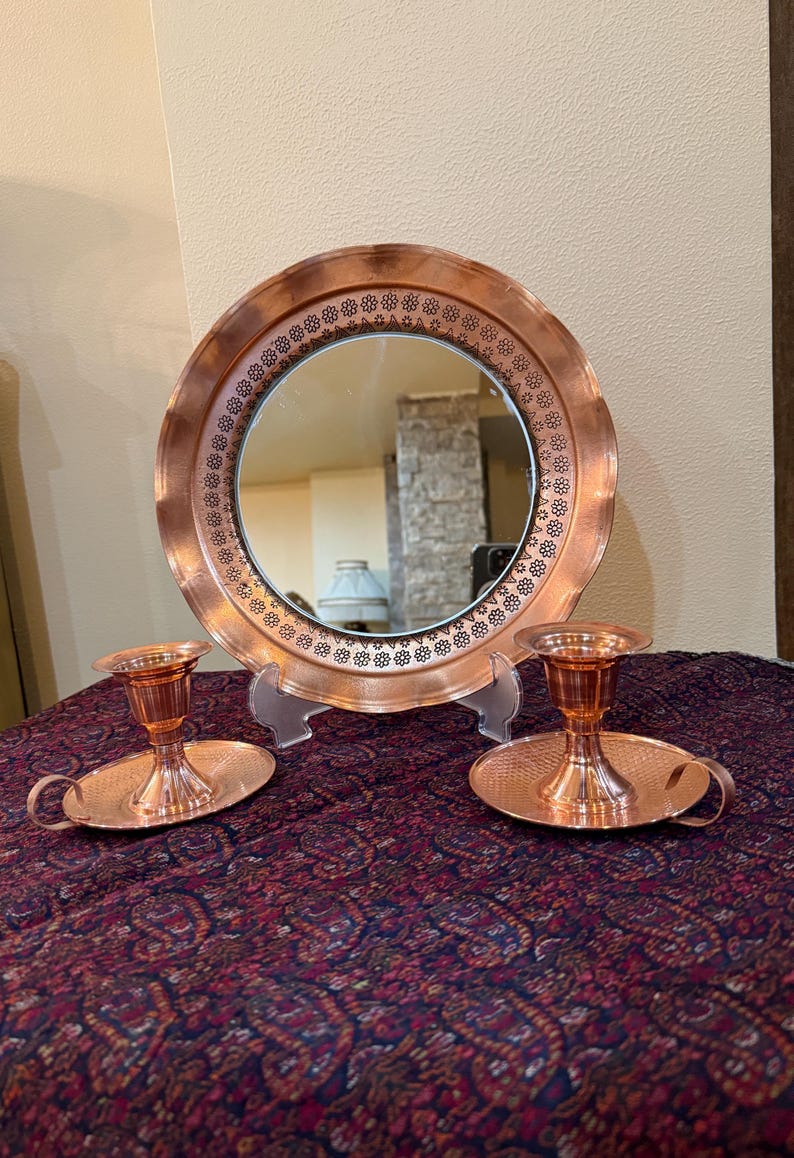
The market for samovars and estekan sets features both exquisite artisan craftsmanship and low-grade industrial reproductions. Mass-manufactured sets produced in international factories are often marketed under broad labels like 'antique Persian style' or 'Middle Eastern vintage.' Discerning collectors look for physical cues that confirm hand production.
First, inspect the gauge and assembly seams of the metal. Genuine vintage and handmade copper or brass samovars have substantial weight. If you examine the joints where the handles, spigot assembly, and base meet the main water container, hand-fabricated models will exhibit silver solder or brazing with faint hand-worked file marks. Cheap reproductions are typically spot-welded or pressed from paper-thin sheet steel with a flash-plating of yellow brass or imitation copper.
Second, analyze the relief work. Hand-engraved sets made in Isfahan show micro-variations across recurring floral scrolls. No two flower petals in a hand-chased border will be identical in depth or curvature. By contrast, hydroformed, die-cast, or roll-stamped metal displays mechanically exact repeats with smooth, uniform depressions that lack the distinctive bite of a steel chisel.
| Feature | Handcrafted Artisan Set | Mass-Produced Commercial Import |
|---|---|---|
| Material Core | Solid heavy-gauge brass, pure copper, or genuine varsheh alloy. | Thin stamped steel, zinc alloy, or light pot metal with plated finish. |
| Surface Relief | Hand-incised with chisels; micro-variations and distinct tool strikes. | Machine-embossed or etched chemically; completely flat or uniform. |
| Spigot & Key | Tapered ground-brass plug lapped into its barrel to prevent leaks without gaskets. | Loose assembly relying on synthetic rubber rings or cheap plastic washers. |
| Glass Quality | Hand-blown or mouth-blown crystal; optical brilliance, slight waist variance. | Thick soda-lime press glass with visible vertical mold parting seams. |
| Gold Decoration | Fired liquid bright gold or leaf paint; durable if washed gently by hand. | Low-temperature printed metallic pigment that flakes off with warm water. |
The Etiquette of Persian Tea: How It Is Served and Consumed
Tea service in Iran is bounded by subtle codes of hospitality (*ta'arof*) and sensory custom. Understanding the handling of the estekan enhances the ownership of an authentic service.
A guest is never served tea without a saucer or an estekan-holder. The server presents the tea glass filled nearly to the brim, but leaving a narrow finger-width margin called *ja-ye dast* ('place for the hand') at the top of the glass. This rim remains cool enough to grip with the thumb and forefinger if no metal holder is used.
Persian tea is rarely sweetened by stirring sugar into the glass with a spoon, although crystal rock sugar on a wooden stick (*nabat*, often infused with saffron) is offered for digestive ailments or fatigue. Under normal circumstances, tea is taken *qand-pahlou* ('sugar beside'). The drinker takes a small, hard cube of beet sugar (*qand*), places it between their front teeth, and sips the hot, bitter tea through the sugar. The cube slowly dissolves, sweetening each mouthful while preserving the unadulterated clarity of the liquid remaining in the glass.
Caring for Your Samovar and Estekan Set
Preserving a fine tea service requires distinct care protocols for the metal boiler and the fragile glassware. Mishandling either material can strip valuable historic patina or irreparably ruin hand-painted gold details.
Practical Preservation Guidelines
- Descaling the Boiler: Hard water forms calcium buildup (*jerm*) on the interior flue and water chamber. Clear scale gently using a 1:1 solution of white vinegar and warm water. Never scrub the interior with abrasive wire wool, which scratches the tin barrier.
- Drying the Water Chamber: Never leave standing water inside a metal samovar when not in use. Drain completely through the spigot, tip out residual moisture, and remove the lid to let the interior dry, preventing internal corrosion.
- Cleaning Estekan Glasses: Always wash gilded or cut-glass estekans by hand using lukewarm water and mild dish soap. Never place hand-decorated tea glasses into a modern dishwasher; the extreme heat and caustic detergents will erase fired gold leaf and dull delicate crystal.
- Preserving Chased Metalwork: Avoid aggressive liquid metal polishes that leave powdery white residues inside the incised grooves of *qalam-zani* work. A soft microfiber cloth slightly buffed with microcrystalline wax protects the metal from moisture without stripping its natural aged contrast. Learn more in our guide on <a href="/learn/caring-for-enamel-and-inlaid-metal">Caring for enamel and inlaid metalwork</a>.
Frequently asked questions
What is the difference between a Russian and a Persian samovar?
While the mechanical design of the charcoal fire-pipe was imported from Russia, Persian samovars differ dramatically in their decorative finish and alloys. Persian pieces feature hand-chased (*qalam-zani*) engraving of floral scrolls, Persian poetry, or Qajar court scenes. They were often crafted in Borujerd using nickel-silver (*varsheh*) or in Isfahan using solid brass and copper, contrasting with Russian industrial factory stamps.
Can I use an antique charcoal samovar indoors?
Burning charcoal indoors poses severe carbon monoxide and fire hazards. Authentic antique charcoal (*zoghali*) samovars should only be fired with charcoal outdoors, in a well-ventilated courtyard, or beneath a commercial extraction hood. For indoor display and use, collectors either keep vintage units as decorative centerpieces or use purpose-built electric or gas samovars.
Why do Persian tea glasses have a narrow waist?
The narrow waist (*kamar-barik*) serves three purposes: it allows the tea above the cinch to cool slightly faster for comfortable sipping, it physically restrains heavier loose tea sediments from swirling toward the lip, and it provides an ergonomic, balanced grip for the drinker's fingers without requiring a handle.
How do you drink tea with a sugar cube (qand-pahlou)?
Rather than dissolving sugar granules into the glass with a spoon, traditional Persian etiquette places a small, dense cube of beet sugar (*qand*) between the front teeth. The drinker takes a hot sip of black tea directly through the cube, allowing the sugar to melt gradually across the palate.
How can I tell if a samovar set is safe for drinking?
Inspect the interior of the water vessel. Food-safe copper and brass samovars must have an intact, non-peeling lining of pure, food-grade tin (*sefid-kari*). If raw copper or lead-bearing vintage solder is visible, test the surface with a lead testing swab. If lead is detected or tin is missing, have it professionally retinned before functional use.
What is the best way to clean gold-rimmed estekan glasses?
Clean gold-rimmed and hand-painted glasses exclusively by hand using cool to lukewarm water, a non-abrasive sponge, and mild dish soap. Never expose them to automatic dishwashers, harsh degreasers, or abrasive scouring pads, as these will permanently strip or scratch the gold luster.
Explore further on CraftPersia
Sources and further reading
- Encyclopaedia Iranica — Encyclopaedia Iranica Foundation
- Art of the Islamic World collection — The Metropolitan Museum of Art
- Middle East collections — Victoria and Albert Museum
- Collection online — The British Museum
- Intangible Cultural Heritage — Iran — UNESCO
- Etsy seller listings (product photos) — Etsy sellers
General references; they do not endorse this article.
Topics: samovar · estekan · metalwork · tea culture · qalamzani