
Preservation · 9 min
Caring for enamel and inlaid metalwork
Editorial team · updated 2026-09-29
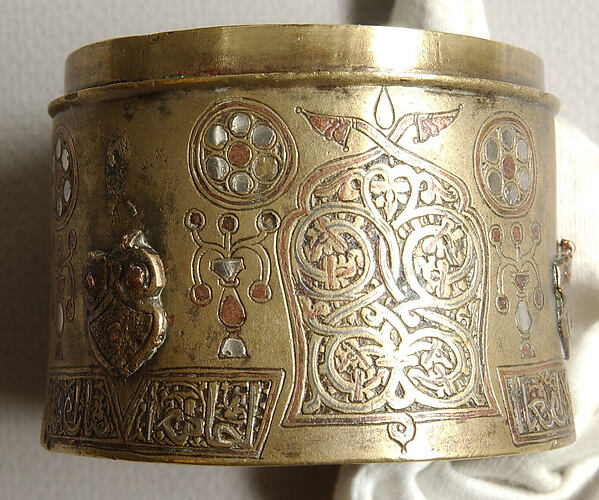
13th century · accession 35.128a, b · The Metropolitan Museum of Art · CC0 (Met Open Access) · Photo source ↗
- Type
- Preservation
- Reading
- 9 min
- Chapters
- 8
- Photos
- 5
How to clean and store minakari, engraved brass, koftgari and turquoise-set pieces without damaging them.
Dust, don't polish
Use a soft dry brush or cloth. Metal polish removes patina, rounds engraved lines and can stain enamel and turquoise.
Keep water away
Do not soak pieces. Water can get under chipped enamel and loosen turquoise set in compound.
Handle with care
Hold vessels by the body, not the rim or handle. Enamel chips on impact and cannot be simply repainted.
Common problems
- Chipped enamel: keep fragments and see a conservator
- Tarnish on silver inlay: consult a specialist before polishing mixed materials
- Loose turquoise chips: retain fragments and seek qualified conservation advice
- Lifting koftgari wire: avoid rubbing it
- Composite object
- Metal, enamel, stone and adhesives may respond differently
- Avoid
- Polish, soaking and home adhesive repairs
- Losses
- Keep fragments identified and seek advice
Identify the materials before choosing a cleaner
Enamel, engraved metal, wire inlay and turquoise setting are different surface systems. Enamel is a glassy layer; engraved lines are cut or worked into metal; inlay introduces other material into a support. Coatings and previous repairs may add further layers.
A cleaner suitable for bare silver may damage adjacent enamel, lacquer, stone or joining material. If composition is uncertain, limit handling and do not perform an exploratory polish. Request a material and treatment history and distinguish original decoration from later finishes.
Handle stable surfaces without catching decoration
Support a vessel by its sound body or base with both hands where practical, not a fragile handle, rim or ornamental projection. Use a clean padded work surface and remove nearby hard objects. A soft dry brush is appropriate only if it will not catch loose wires, flaking enamel or lifted coatings.
Do not wipe across unstable decoration. Abrasives can round engraving and alter intentional dark recesses; dips and liquids can reach joints. Tarnish is not always a reason for immediate treatment, particularly on mixed-material or historic objects.
Respond to chips and loose inlay conservatively
A chipped enamel area cannot be restored to its original fired structure with ordinary paint. Loose turquoise fragments and lifting wire should not be reset with a generic suitable adhesive. Adhesive choice and removal can affect porous stone, metal corrosion and future treatment.
Retain detached fragments in a labelled container, keeping their identity linked to the object. Avoid pressure on the damaged area and ask a conservator or qualified specialist to assess stability. Do not detach a partly loose fragment to make the surface tidier.
Store and display with composite risks in mind
Keep objects away from damp, heat, perfumes and household cleaning sprays. A padded stand should support a sound area without pressing on ornament. Ensure neighbouring objects cannot strike an enamel rim when a shelf is used.
Document cracks, missing chips, coating loss and loose joins before transport or treatment. A bright clean appearance does not prove good condition, and aggressive polishing may remove historically meaningful surfaces. The aim is stability and legibility, not a uniform new-looking shine.
Related photographs and screened examples
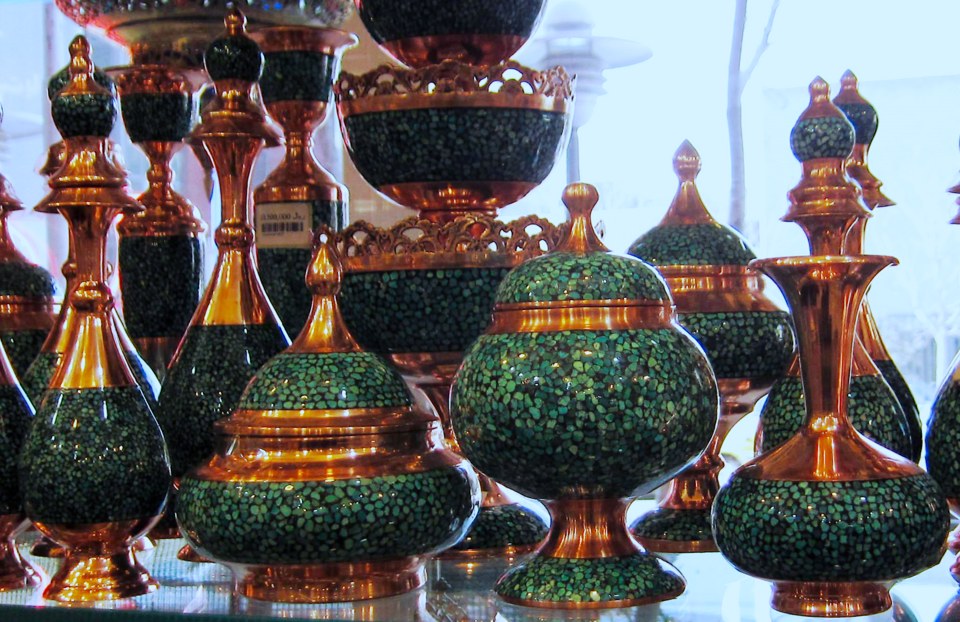
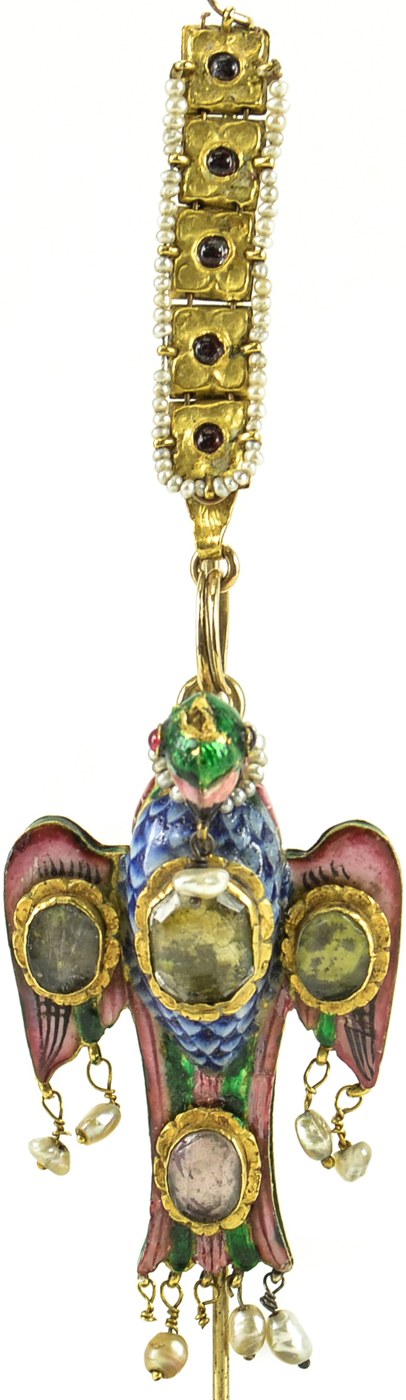
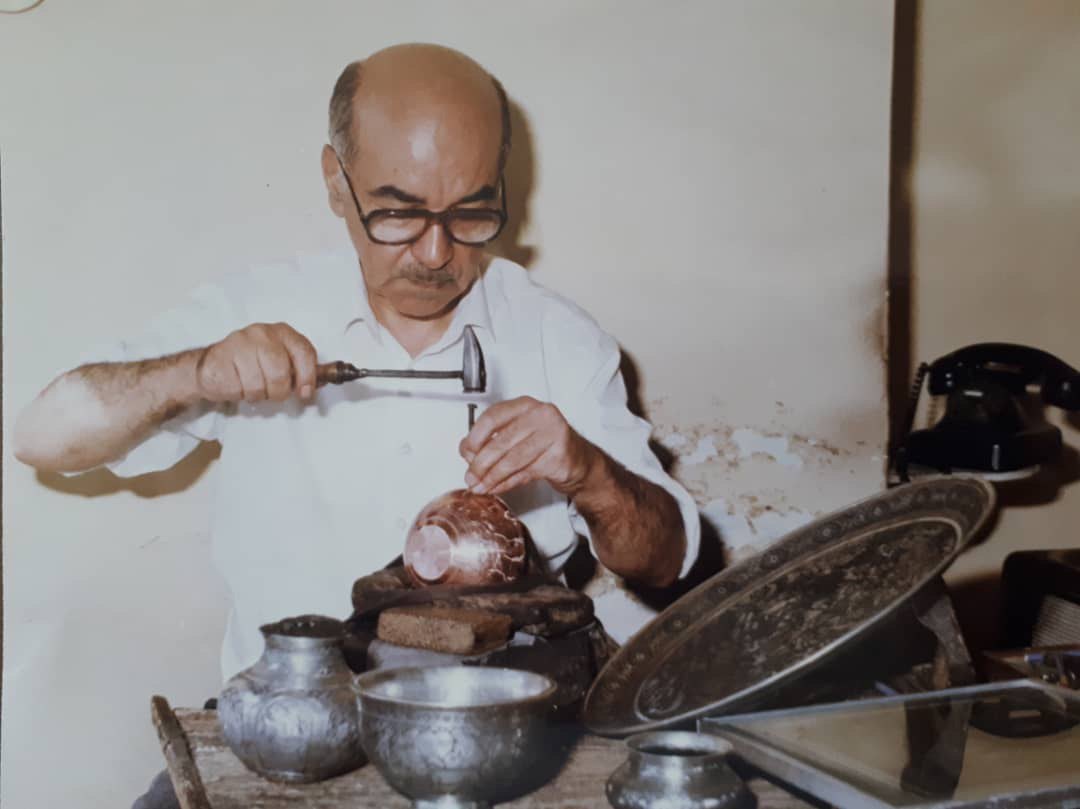
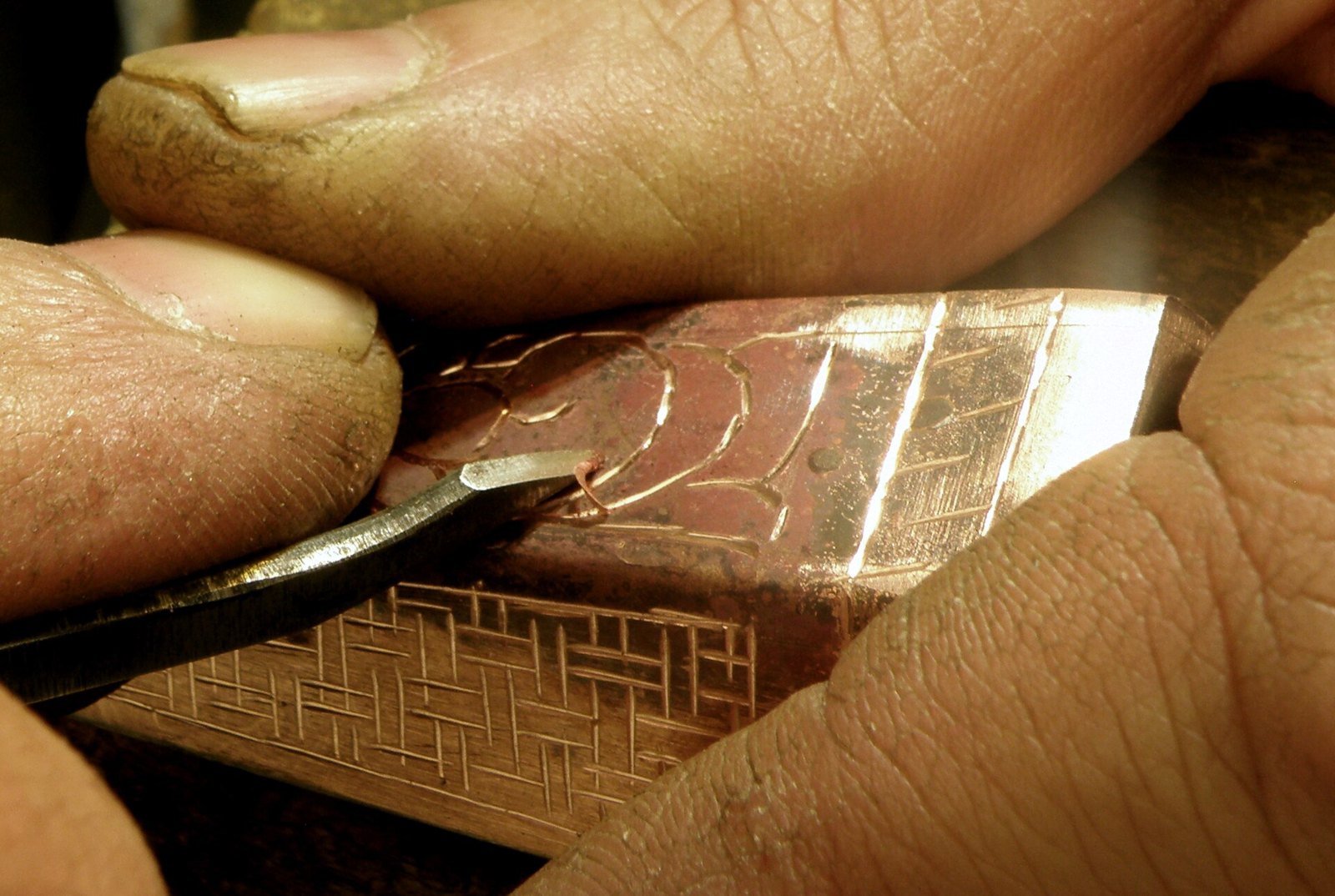
Representative photographs only. Marketplace examples rely on seller descriptions; CraftPersia has not independently authenticated their maker, origin, or rights status. Follow each source link for the listing context.
| Situation | What to ask or inspect | What not to assume |
|---|---|---|
| Stable dust | Soft dry cleaning if nothing can snag | Every surface tolerates rubbing |
| Silver tarnish near enamel | Qualified mixed-material assessment | Metal polish is safe around glass |
| Loose turquoise | Retain fragments and consult specialist | Home adhesive repairs are reversible |
| Lifting wire | Limit contact and support object | Pressing it flat is harmless |
References and further reading
- [1] Canadian Conservation Institute — Preventive conservation guidelines ↗General risk guidance; individual mounts and treatments need qualified assessment.
- [2] H. E. Wulff, The Traditional Crafts of Persia (1966)Historical background, not a live directory or authentication of individual objects.
These sources provide context, not authentication or provenance for an individual object. Editorial interpretations remain under review.