
The two crafts in photographs
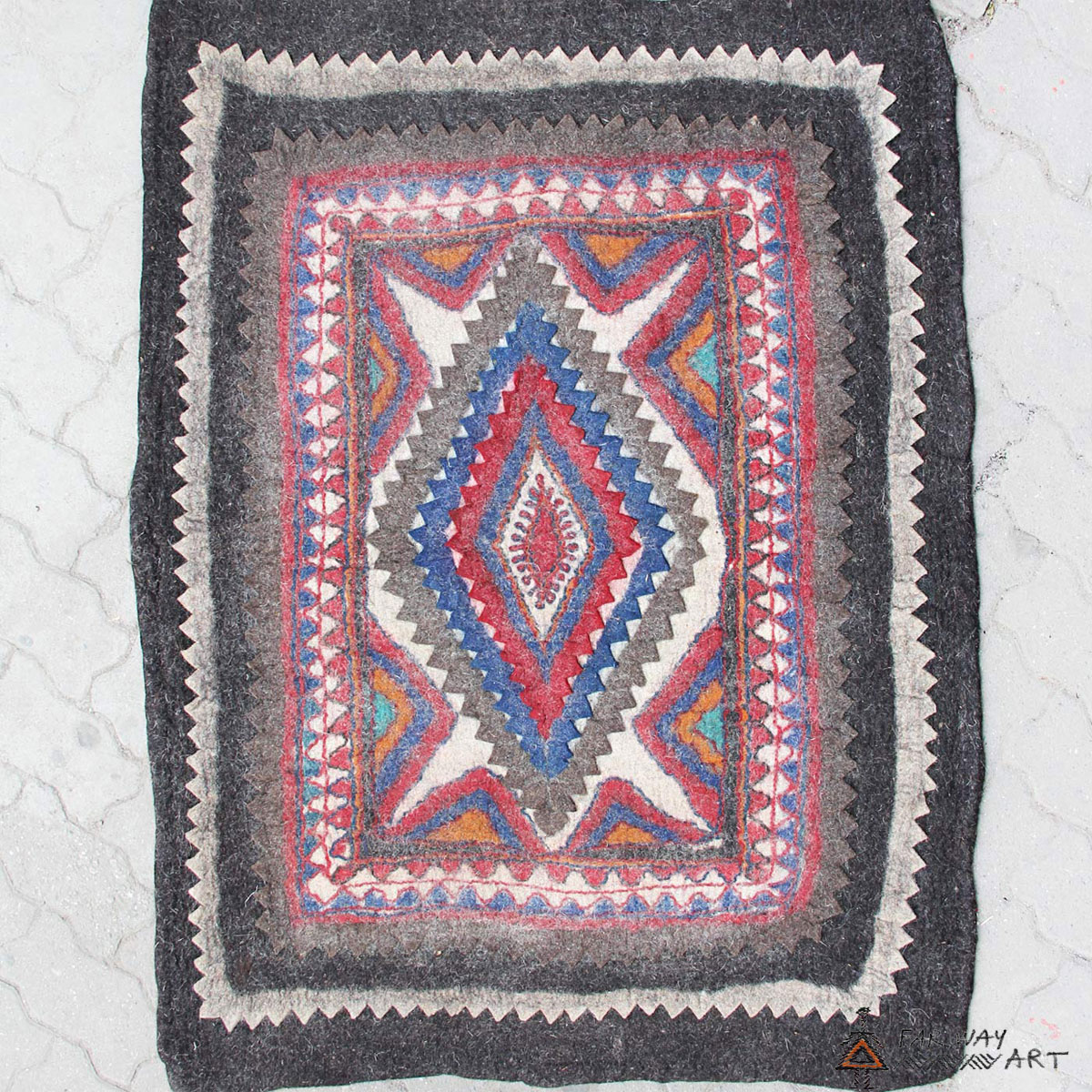
Namad felt
Zilu (Meybod)
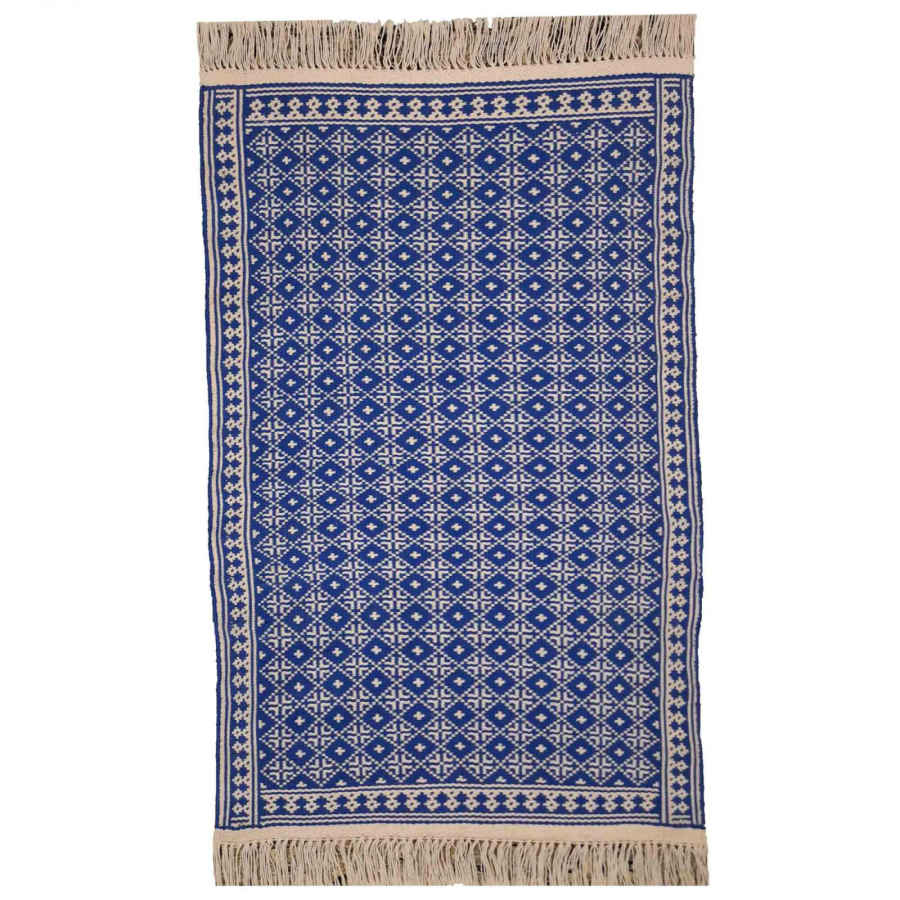
Photographs show documented examples of each craft for visual comparison; they do not prove what any other object is.
Side by side
| Namad felt | Zilu (Meybod) | |
|---|---|---|
| Persian name | نمد | زیلو |
| Category | Textiles · Felted wool | Textiles · Flatweave |
| Materials | Wool | Cotton |
| Techniques | Wet felting | Weft-faced flatweaving |
| Regions | Isfahan, Yazd, Kerman | Yazd |
| Periods | Safavid, Qajar, Pahlavi, Contemporary | Safavid, Qajar, Pahlavi, Contemporary |
| Motifs | Gereh (geometric knot) | Gereh (geometric knot) |
| Current vitality | At risk | Endangered |
What they share
- Regions: Yazd
- Motifs: Gereh (geometric knot)
- Periods: Safavid, Qajar, Pahlavi, Contemporary
How to tell them apart
- The Namad felt record lists Wool, which the Zilu (Meybod) record does not.
- The Zilu (Meybod) record lists Cotton, which the Namad felt record does not.
- Namad felt typically involves Wet felting.
- Zilu (Meybod) typically involves Weft-faced flatweaving.
- A material listed for only one craft is a question to ask, not an identification test.
- The stated place of making is a useful clue, but never proof on its own.
Background on each craft
About Namad felt
Definition
Namad is felted wool cloth, made not by weaving thread but by working loose wool fibres with water, soap and pressure until their scaled surfaces lock together into a solid, dense mat. The technique requires no loom, and namad-makers have historically worked with simple tools: a reed or bamboo mat, a source of hot water, and physical effort applied by hand, foot or roller.
Namad has served a wide range of everyday functions in Iran, including floor coverings, shepherd's cloaks that shed water and insulate against cold, saddle pads, and protective wrapping material, reflecting felt's practical qualities of warmth, water resistance and durability rather than decorative refinement alone.
History
Felting is among the oldest textile technologies in the wider Central Asian and Iranian region, associated historically with nomadic and pastoral groups for whom sheep's wool was abundant and weaving equipment less practical to transport. Documented Iranian namad-making centres, including workshops in Isfahan and other cities, produced both plain utilitarian felt and, in some cases, decorated felt with applied or pressed-in pattern.
Through the twentieth century, manufactured textiles and synthetic materials displaced much everyday use of felt for cloaks and floor covering, and craft surveys and heritage documentation describe a shrinking number of practitioners maintaining traditional hand-felting methods, with some production continuing for ceremonial, decorative or specialty markets.
General background on the craft, not a statement about any individual object; dates and attributions summarise common positions in the literature and remain under review. Read the full Namad felt entry.
About Zilu (Meybod)
Definition
Iranian zilu is a reversible cotton flatweave, distinct from knotted-pile carpets and from the supplementary-pattern-weft structures called zili in Anatolia and the Caucasus. The cited technical study describes separate ground heddles and pattern harnesses; it should not be reduced to an ordinary plain-weave colour sequence.
Meybod near Yazd is a documented centre. The study illustrates vertical looms, workshop patterns and prayer zilus in the Meybod Zilu Museum. Mosque, shrine and household use should be attributed to a documented object or source rather than inferred from a blue-and-white palette alone.
History
Zilu weaving in the Yazd region is documented from at least the Safavid period, with Meybod developing as the recognised centre of production, supplying floor coverings for religious buildings as well as domestic use. Surviving older examples, including pieces used in shrines, indicate a long-standing continuous practice, though precise dating of individual pieces requires technical or documentary evidence rather than assumption from pattern alone.
The 2019 technical study documents continuing workshop practice and museum examples. This archive's endangered label is an editorial assessment, not a current practitioner census or UNESCO inscription; contemporary scale and economic pressures require up-to-date field research.
General background on the craft, not a statement about any individual object; dates and attributions summarise common positions in the literature and remain under review. Read the full Zilu (Meybod) entry.
Read more
Disclaimer
This comparison is educational and built from entries still under review. It cannot confirm what a particular object is.