
What documented Zilu (Meybod) looks like
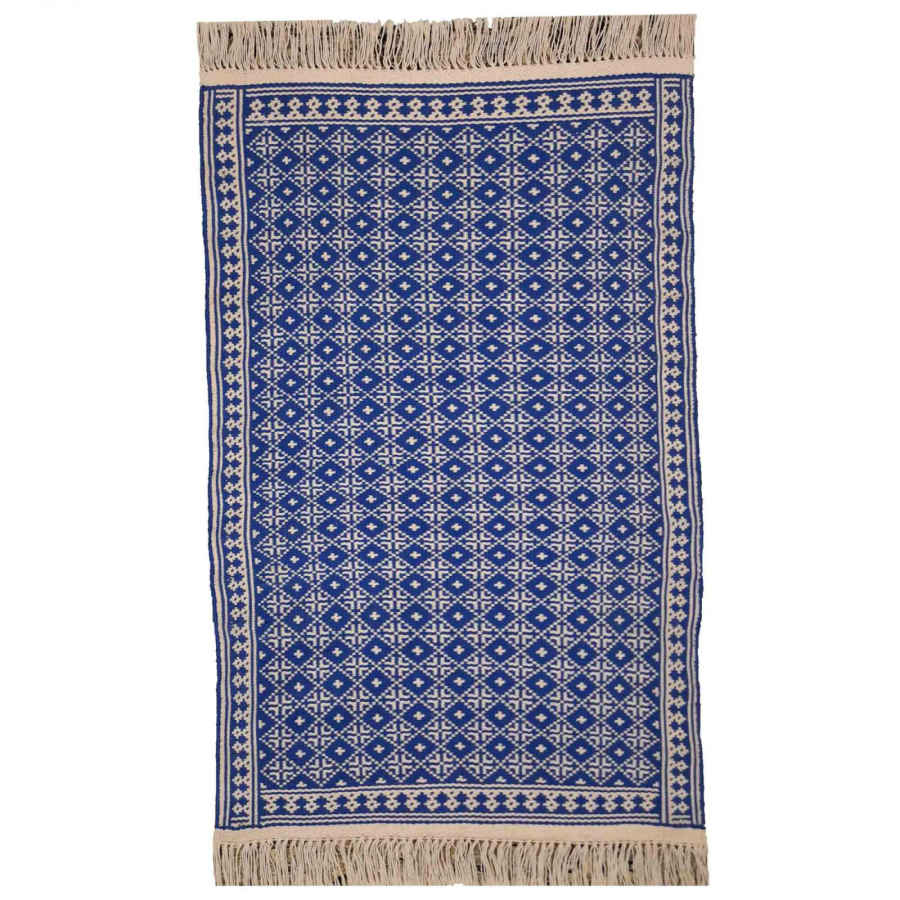
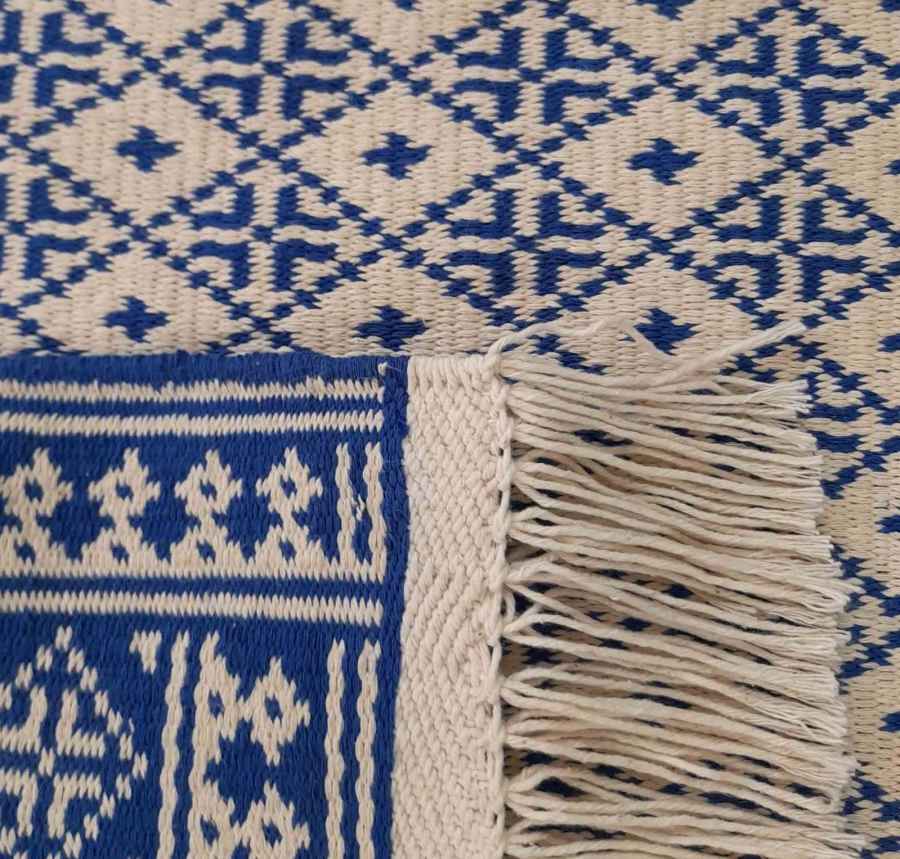
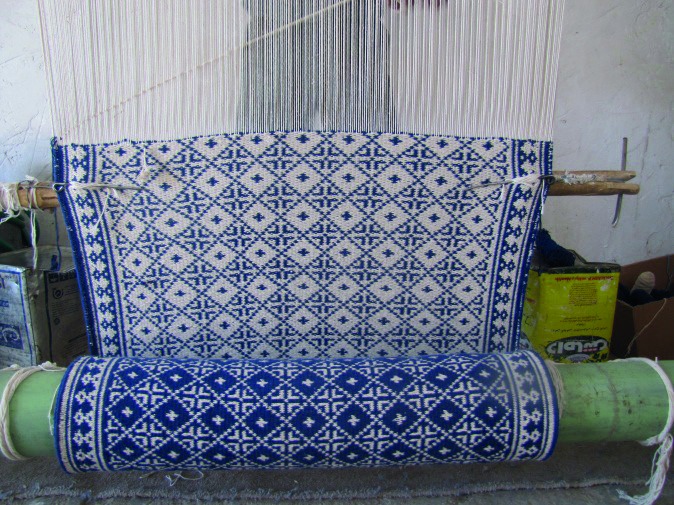
Reference photographs of documented Zilu (Meybod) pieces, credited to their sources. Compare construction, surface and wear with any piece you are offered — a resemblance is not proof of origin.
Zilu (Meybod) at a glance
| Persian name | زیلو |
| Category | Textiles · Flatweave |
| Main techniques | flatweave-weaving |
| Typical materials | cotton |
| Places of making | yazd |
| Current vitality | Endangered |
Understanding Zilu (Meybod)
What Zilu (Meybod) is and how it is made
Definition
Iranian zilu is a reversible cotton flatweave, distinct from knotted-pile carpets and from the supplementary-pattern-weft structures called zili in Anatolia and the Caucasus. The cited technical study describes separate ground heddles and pattern harnesses; it should not be reduced to an ordinary plain-weave colour sequence.
Meybod near Yazd is a documented centre. The study illustrates vertical looms, workshop patterns and prayer zilus in the Meybod Zilu Museum. Mosque, shrine and household use should be attributed to a documented object or source rather than inferred from a blue-and-white palette alone.
History
Zilu weaving in the Yazd region is documented from at least the Safavid period, with Meybod developing as the recognised centre of production, supplying floor coverings for religious buildings as well as domestic use. Surviving older examples, including pieces used in shrines, indicate a long-standing continuous practice, though precise dating of individual pieces requires technical or documentary evidence rather than assumption from pattern alone.
The 2019 technical study documents continuing workshop practice and museum examples. This archive's endangered label is an editorial assessment, not a current practitioner census or UNESCO inscription; contemporary scale and economic pressures require up-to-date field research.
Materials
The technical study describes Iranian zilu as cotton, commonly using two colours. Fibre and dye identification for an individual object require documentation or testing; neither colour nor surface firmness establishes natural dyes, age or origin.
- Cotton warp and weft, tightly set
- Natural dyes historically, with synthetic dyes in later production
General background on the craft, not a statement about any individual object; dates and attributions summarise common positions in the literature and remain under review. Read the full Zilu (Meybod) entry.
Before you buy: what to inspect
- Zilu is a cotton flatweave; the pattern shows in reverse colours on the back.
- Check for thin, worn areas and broken wefts, especially on older floor pieces from mosques and houses.
- Look for a maker's or donor's woven inscription, which some zilus carry.
Typical materials: cotton.
Red flags: copies and 'Persian style' imports
- Printed cotton sold as woven zilu.
- Old mosque or shrine pieces offered without any history (ask how it was acquired).
A genuine Zilu (Meybod) piece should come with a named place of making in Iran (often yazd) and a clear statement that it is handmade.
Questions to ask the seller
- Was it woven in Meybod or another centre?
- Is there a woven date or inscription?
- Has it been washed or repaired?
What affects the price
| Age |
| Size |
| Inscription |
| Condition |
Care and cleaning
- Vacuum on low suction without a beater bar, or shake small pieces gently.
- Use a non-slip underlay: flatweaves have no pile to cushion wear and can slide.
- Rotate floor pieces every six to twelve months.
- Have old or valuable pieces cleaned by a rug specialist rather than washed at home.
Storage
- Roll with the pile facing inward, never fold.
- Wrap in breathable cotton, not plastic.
- Protect against moths with regular airing and inspection.
Shipping
Rolled textiles travel well; ask for tube or rolled packing and tracked delivery.
Disclaimer
This guide is educational. It cannot confirm that any particular object is genuine, old or valuable. For important purchases, ask an independent specialist. Read the full Zilu (Meybod) entry.