
The two crafts in photographs
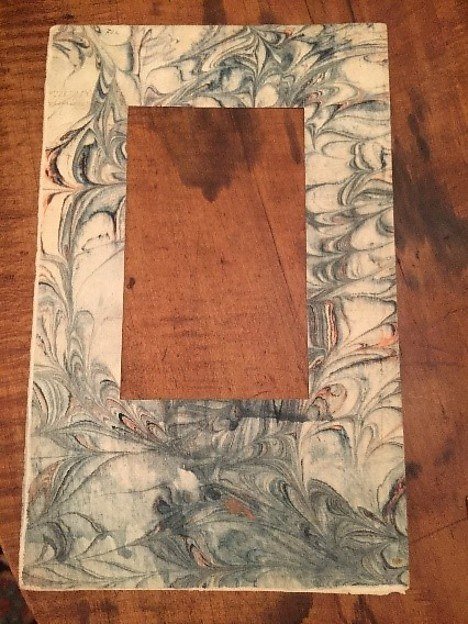
Paper marbling (Abr-o-bad)
Traditional bookbinding (Sahhafi)
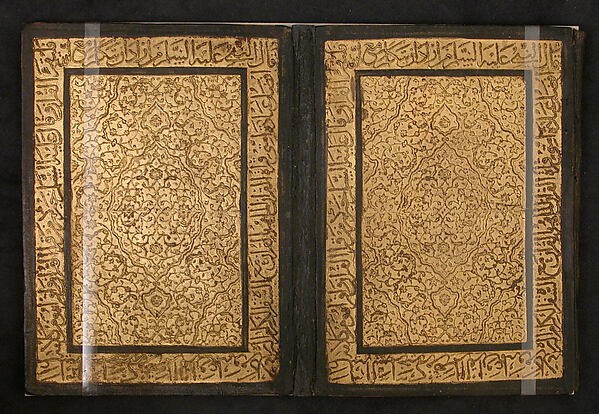
Photographs show documented examples of each craft for visual comparison; they do not prove what any other object is.
Side by side
| Paper marbling (Abr-o-bad) | Traditional bookbinding (Sahhafi) | |
|---|---|---|
| Persian name | ابر و باد | صحافی سنتی |
| Category | Paper arts · Marbling | Book arts · Bookbinding |
| Materials | Paper | Leather, Paper, Lacquer coating |
| Techniques | Paper marbling | — |
| Regions | Isfahan, Tabriz | Isfahan, Tabriz, Shiraz |
| Periods | Safavid, Qajar, Contemporary | Safavid, Qajar, Contemporary |
| Motifs | — | — |
| Current vitality | Revived | Endangered |
What they share
- Materials: Paper
- Regions: Isfahan, Tabriz
- Periods: Safavid, Qajar, Contemporary
How to tell them apart
- The Traditional bookbinding (Sahhafi) record lists Leather, Lacquer coating, which the Paper marbling (Abr-o-bad) record does not.
- Paper marbling (Abr-o-bad) typically involves Paper marbling.
- A material listed for only one craft is a question to ask, not an identification test.
- The stated place of making is a useful clue, but never proof on its own.
Background on each craft
About Paper marbling (Abr-o-bad)
Definition
Abr-o-bad, literally cloud-and-wind, describes the Persian tradition of marbling paper by floating prepared pigments on the surface of a viscous bath, usually thickened with a mucilage such as gum tragacanth, and shaping them into patterns before laying a sheet of paper onto the surface to lift off a mirrored impression of the floating colour.
The technique belongs to a wider family of marbling practices found across the Islamic world and into Europe, sharing core methods with the Turkish ebru tradition, and the exact lines of historical transmission between regional variants are not fully settled in the scholarly literature.
History
Marbled paper is documented in Persian manuscript production from the Safavid period, used for borders, album pages, bookbindings and decorative surrounds to calligraphy and miniature painting, often in combination with illumination (tazhib) on the same page. Its use continued into the Qajar period as part of the broader decorative apparatus of the book arts.
Interest in Persian and related marbling traditions declined with the broader contraction of manuscript arts as print culture spread, but the technique has seen renewed practice and teaching in more recent decades as part of a wider revival of traditional book arts, alongside related Turkish ebru practice with which it shares considerable technical overlap.
General background on the craft, not a statement about any individual object; dates and attributions summarise common positions in the literature and remain under review. Read the full Paper marbling (Abr-o-bad) entry.
About Traditional bookbinding (Sahhafi)
History
Persian bookbinding reached a high level in the Timurid and Safavid periods, with stamped, filigree-cut and gilded leather covers. Lacquer bindings became popular in the Qajar period.
Technique
Gatherings are sewn, spine edges are headbanded, and boards of layered paper are covered in leather. Decoration may be pressed with metal stamps, worked in cut-leather filigree over coloured paper, or painted and lacquered.
General background on the craft, not a statement about any individual object; dates and attributions summarise common positions in the literature and remain under review. Read the full Traditional bookbinding (Sahhafi) entry.
Read more
- Paper marbling (Abr-o-bad) entry · buying guide
- Traditional bookbinding (Sahhafi) entry · buying guide
- Paper marbling (Abr-o-bad) vs Illumination (Tazhib)
- Illumination (Tazhib) vs Traditional bookbinding (Sahhafi)
- Persian lacquer painting vs Traditional bookbinding (Sahhafi)
- Persian miniature vs Traditional bookbinding (Sahhafi)
Disclaimer
This comparison is educational and built from entries still under review. It cannot confirm what a particular object is.