
What documented Traditional bookbinding (Sahhafi) looks like
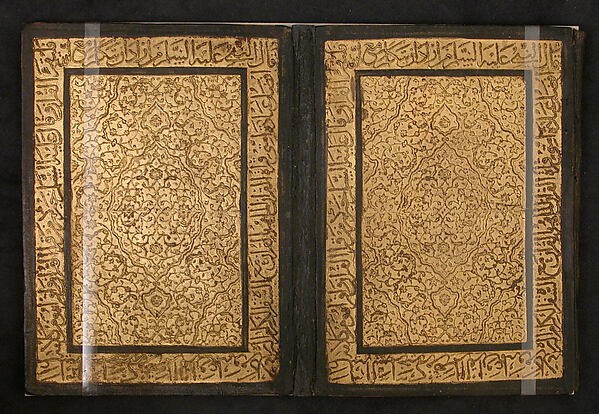
Reference photographs of documented Traditional bookbinding (Sahhafi) pieces, credited to their sources. Compare construction, surface and wear with any piece you are offered — a resemblance is not proof of origin.
Traditional bookbinding (Sahhafi) at a glance
| Persian name | صحافی سنتی |
| Category | Book arts · Bookbinding |
| Main techniques | — |
| Typical materials | leather, paper, lacquer |
| Places of making | isfahan, tabriz, shiraz |
| Current vitality | Endangered |
Understanding Traditional bookbinding (Sahhafi)
What Traditional bookbinding (Sahhafi) is and how it is made
History
Persian bookbinding reached a high level in the Timurid and Safavid periods, with stamped, filigree-cut and gilded leather covers. Lacquer bindings became popular in the Qajar period.
Technique
Gatherings are sewn, spine edges are headbanded, and boards of layered paper are covered in leather. Decoration may be pressed with metal stamps, worked in cut-leather filigree over coloured paper, or painted and lacquered.
Collecting and identification
Check that the binding belongs to the book (later rebinding is common), and look at wear to spine and flap. Old manuscripts may need export permits and specialist advice.
This guidance is educational only and is not an authentication or valuation service.
General background on the craft, not a statement about any individual object; dates and attributions summarise common positions in the literature and remain under review. Read the full Traditional bookbinding (Sahhafi) entry.
Before you buy: what to inspect
- Hand bookbinding is sewn through the folds of the gatherings; open the book gently and look at the sewing.
- Check that the binding belongs to the text: replacement or 'married' bindings are common on older manuscripts.
- Look at joints, spine and corners for splitting, and at tooled or lacquered covers for losses.
Typical materials: leather, paper, lacquer.
Red flags: copies and 'Persian style' imports
- Printed or embossed covers sold as hand-tooled or hand-lacquered.
- Manuscripts offered without legal export history.
A genuine Traditional bookbinding (Sahhafi) piece should come with a named place of making in Iran (often isfahan, tabriz, shiraz) and a clear statement that it is handmade.
Questions to ask the seller
- Is the binding original to the text?
- What is the cover made of (leather, lacquer)?
- Who bound it, and when?
What affects the price
| Binding quality |
| Age and originality |
| Decoration |
| Condition |
Care and cleaning
- Support the covers when opening; never force a book flat.
- Keep out of direct sunlight and damp.
Storage
- Store flat or upright with support, in stable humidity.
Shipping
Ship flat between rigid boards, or rolled only if the maker agrees.
Disclaimer
This guide is educational. It cannot confirm that any particular object is genuine, old or valuable. For important purchases, ask an independent specialist. Read the full Traditional bookbinding (Sahhafi) entry.