
Buying guide · 11 min
What is KPSI and does it matter?
Editorial team · updated 2026-10-03
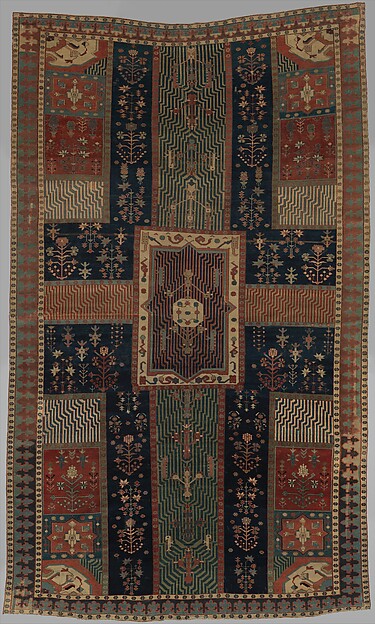
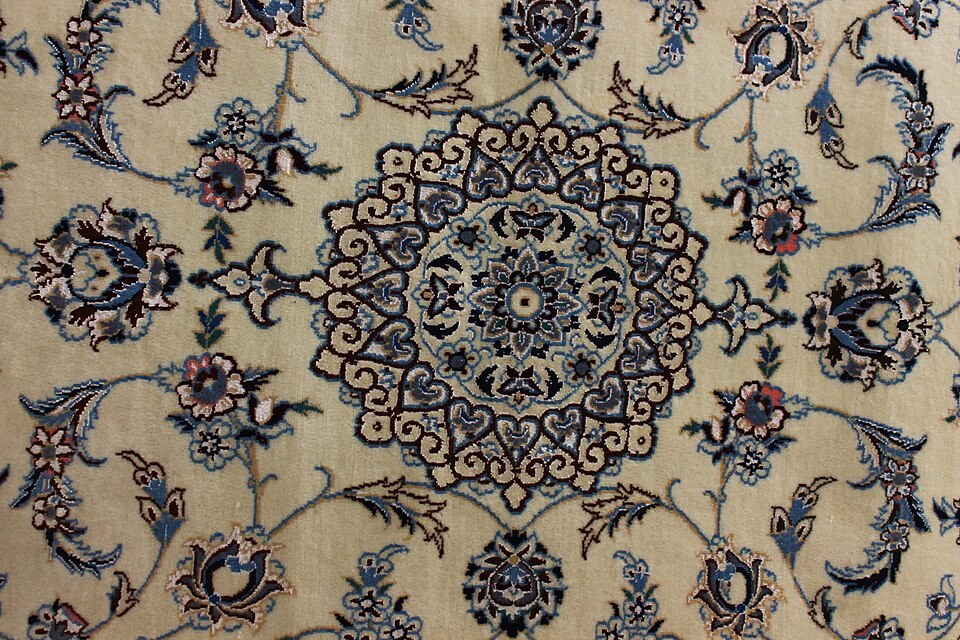
second half 18th century · accession 22.100.128 · The Metropolitan Museum of Art · CC0 (Met Open Access) · Photo source ↗
- Type
- Buying guide
- Reading
- 11 min
- Chapters
- 10
- Photos
- 6
KPSI — knots per square inch — measures knot density. Higher density allows finer detail, but it is only one factor in quality.
How to count
Count knots along one inch horizontally and one inch vertically on the back, then multiply.
Typical ranges
- Record the measured interval in each direction
- Multiply the two per-inch counts
- Do not use density as a quality or origin certificate
Beyond density
Wool quality, dyes, design, condition and age matter just as much.
How it is measured
KPSI means knots per square inch. Count the knots along one inch horizontally and vertically on the back of the rug, then multiply. Metric counts per square decimetre or raj counts are also used in Iran.
What it tells you
Higher knot density allows finer drawing, but it is only one part of quality. Wool, dyes, design, symmetry and condition matter as much.
- Village rugs: often lower density but full of character
- City silk rugs: can be very high density
- Do not pay purely by knot count
A note on this guide
This guide is general information from the CraftPersia editorial team and has not been reviewed by a specialist. Prices, workshop locations and practices change; check current details before travelling or buying.
- Measure
- Knots per square inch, not knots per linear inch
- Method
- Horizontal count × vertical count
- Limit
- Density alone does not establish origin, quality or price
Count knots, not coloured bumps
KPSI is an area measurement. Record the number of complete knots across a measured horizontal interval and the number of knot rows along a measured vertical interval on the reverse. Multiply the two counts only after expressing both per inch.
Some knot structures show two visible nodes for one knot, while depressed warps can hide part of a knot. Do not assume every coloured bump is a complete knot. A specialist should identify the counting unit before you publish a density claim.
- Use an undistorted measured interval
- Record horizontal and vertical directions
- Do not pull, bend or scrape fragile areas
- Keep the counting method with the result
A worked example, not a quality grade
A hypothetical sample with 10 knots across one inch and 12 rows along one inch has 120 KPSI. A second sample with 15 by 20 has 300 KPSI. These figures describe the examples only; they are not measurements of any photograph on this page.
For a longer interval, divide each count by its measured length before multiplying. Unequal horizontal and vertical spacing is common: squaring one direction can give the wrong result. Repeat observations in sound areas and report variation rather than false precision.
Keep raj and KPSI separate
Raj is a linear count quoted over a stated traditional interval, often approximately 7 cm in rug trading. Ask which direction, interval and counting convention the seller uses. A single raj number is insufficient to calculate area density without the other direction.
Do not convert raj with a universal lookup table or classify a rug as good or poor from raj alone. Preserve the original wording when the method is missing and mark the measurement as unconfirmed.
Read density alongside drawing and condition
Density can permit smaller design details, but knot size, yarn thickness, pile height, drawing and finishing also affect appearance. An expressive coarser weave is not inferior merely because it uses fewer knots.
Inspect condition and documented materials separately. Neither a high count nor a silk claim proves Iranian manufacture, age, fair working conditions or resale value. Contextual photographs here illustrate rugs, not calibrated knot-count demonstrations.
Related photographs and screened examples

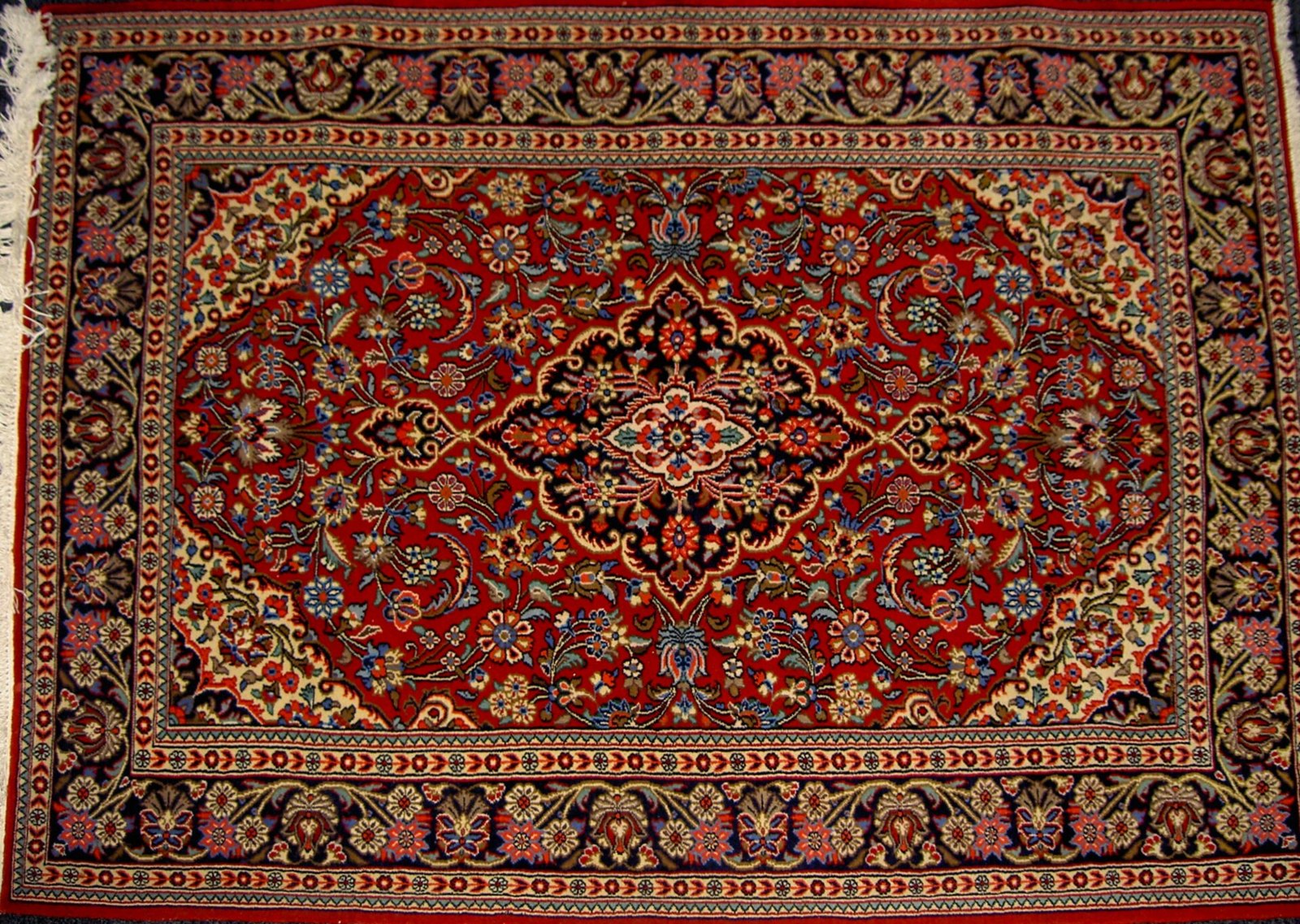
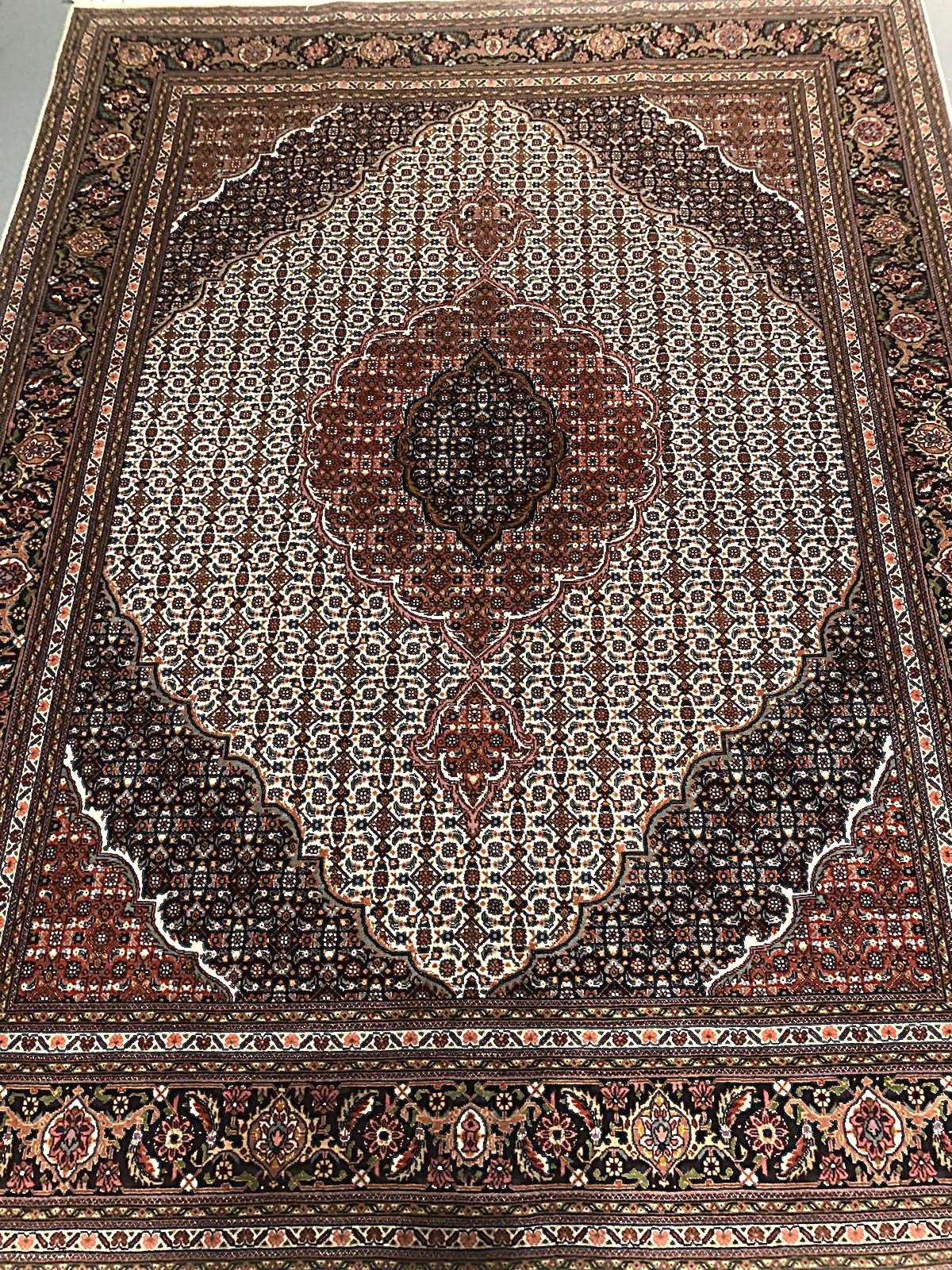
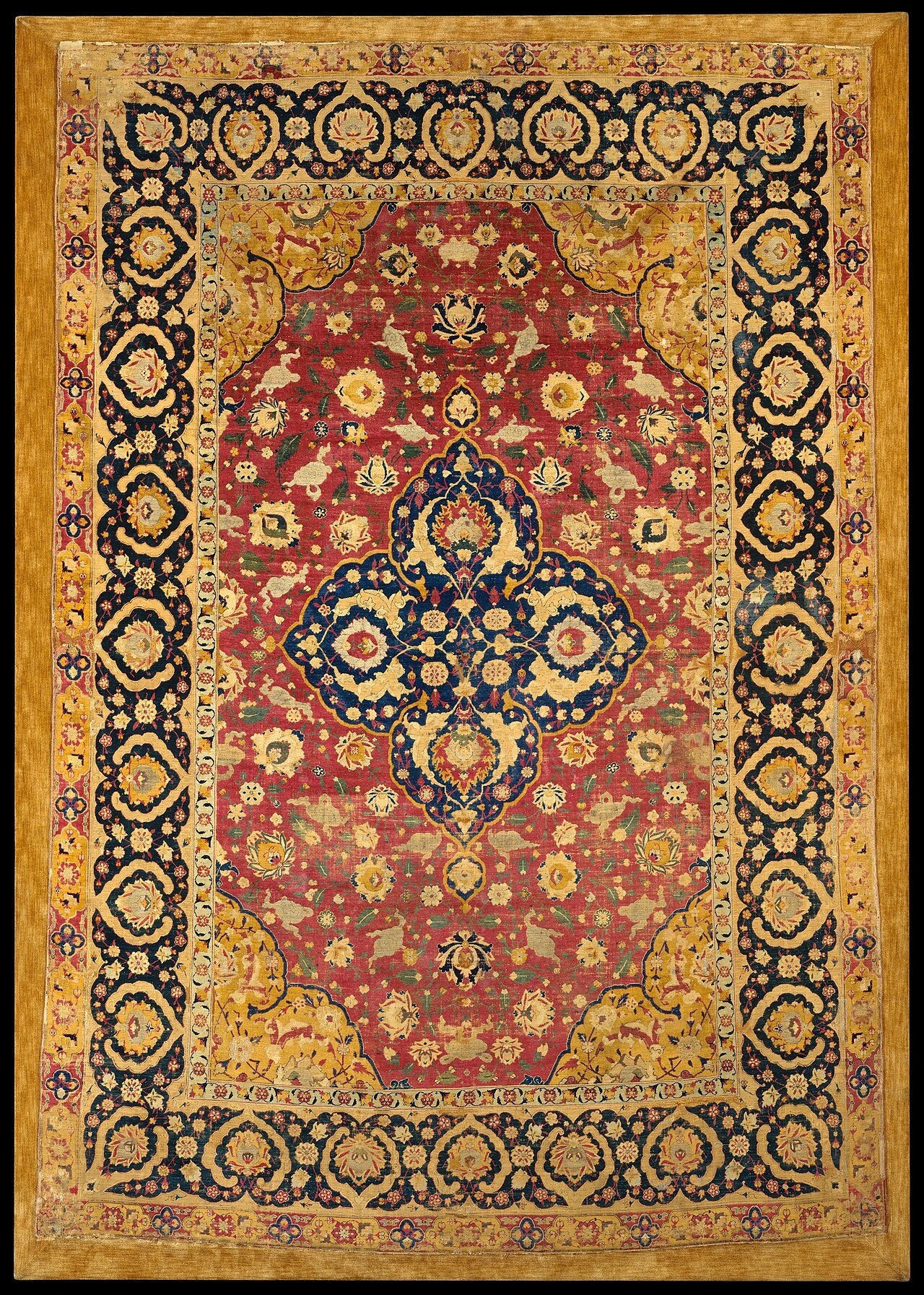
Representative photographs only. Marketplace examples rely on seller descriptions; CraftPersia has not independently authenticated their maker, origin, or rights status. Follow each source link for the listing context.
Illustrative calculations only: 10 × 12 = 120; 15 × 20 = 300; 20 × 25 = 500. Not measured specimens, market bands or quality grades.
| Record or observation | What to do | What it cannot establish |
|---|---|---|
| KPSI claim | Request both directional counts and scale | Origin or workmanship |
| Raj claim | Request interval and direction | Area density from one number |
| Reverse photograph | Check scale and counting units | Reliable count if blurred or distorted |
References and further reading
- [1] Encyclopaedia Iranica — Carpets: overview and bibliography ↗Historical and technical context; not a valuation or authentication of the photographed objects.
- [2] The George Washington University Museum and The Textile Museum ↗Collection and textile-study resources; a photograph cannot substitute for structural examination.
These sources provide context, not authentication or provenance for an individual object. Editorial interpretations remain under review.