
Buying guide · 6 min
Reading a Persian rug label or listing
Editorial team · updated 2026-09-29

17th century · accession 53.214 · The Metropolitan Museum of Art · CC0 (Met Open Access) · Photo source ↗
- Type
- Buying guide
- Reading
- 6 min
- Chapters
- 8
- Photos
- 6
What terms such as 'Persian', 'Iranian', 'Persian design', 'kork wool' and 'KPSI' really mean when you see them in a shop or online listing.
Origin words
'Made in Iran' or a named Iranian town is a claim about origin. 'Persian design', 'Persian style' or 'oriental' is a claim about looks only, and is often used for rugs woven elsewhere.
- Made in Iran: origin claim, ask for proof
- Persian design or style: looks only
- Oriental: a broad trade word, not an origin
Material words
'Kork' means fine under-fleece wool. 'Art silk' or 'bamboo silk' usually means viscose, not silk. 'Silk highlights' means only some areas are silk.
Knot density
KPSI (knots per square inch) or raj counts describe density. Higher density allows finer drawing but does not by itself mean better colour, wool or value.
Questions to ask
Ask the seller where and roughly when it was woven, whether dyes are natural or synthetic, whether it has been repaired and whether they will accept a return after an independent check.
- Separate fields
- Origin, structure, materials, attribution and condition
- Keep evidence
- Original listing, invoice, photographs and correspondence
- Do not confuse
- A regional design name with a manufacturing place
Separate the claims before assessing them
A label combines different kinds of statement: where an object was made, how it was constructed, what fibres it contains and how it has been attributed. Copy each claim into its own field instead of treating a confident title as evidence for all of them.
“Tabriz design” describes a design association, not necessarily manufacture in Tabriz. “Hand-knotted” describes construction, not country. “Made in Iran” is an origin statement that needs supporting documentation; an invoice records the seller’s assertion but does not independently verify it.
- Country and place of manufacture
- Maker or workshop, when documented
- Pile and foundation fibres separately
- Construction, dimensions and condition
Translate fibre words cautiously
Art silk and bamboo silk often refer to regenerated cellulose fibres rather than silkworm silk, but ambiguous marketing terms need an explicit fibre declaration. Silk highlights do not mean a wholly silk pile or foundation. Kork is a wool trade term, not a laboratory grade.
Do not use lustre, touch, price or a home burn test to resolve uncertainty. Ask what the supplier can substantiate and whether a specialist examination or non-destructive assessment is available.
Keep uncertainty in the description
“Attributed to”, “in the style of”, “circa” and “possibly” are meaningful qualifications. Preserve them when saving or sharing a listing. A woven inscription may be original, copied or later altered; translation and structural examination are separate tasks.
A semi-antique or antique label uses trade language, not a universally applicable legal category. Customs and cultural-property rules can use different criteria. Neither appealing wear nor a certificate with no method establishes age.
Turn unanswered claims into written questions
Request current reverse, side and end views and detailed condition photographs. Ask about restoration, missing ends, repiling, applied colour and changes in size. If the seller does not know, an honest unknown is more useful than invented certainty.
Save the listing before purchase and obtain the return window, exclusions and promised description in writing. CraftPersia’s contextual images do not endorse a particular label, seller or item; compare documents tied to the actual object.
Related photographs and screened examples
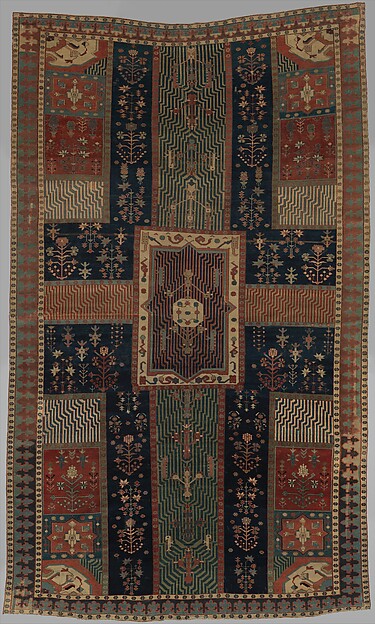

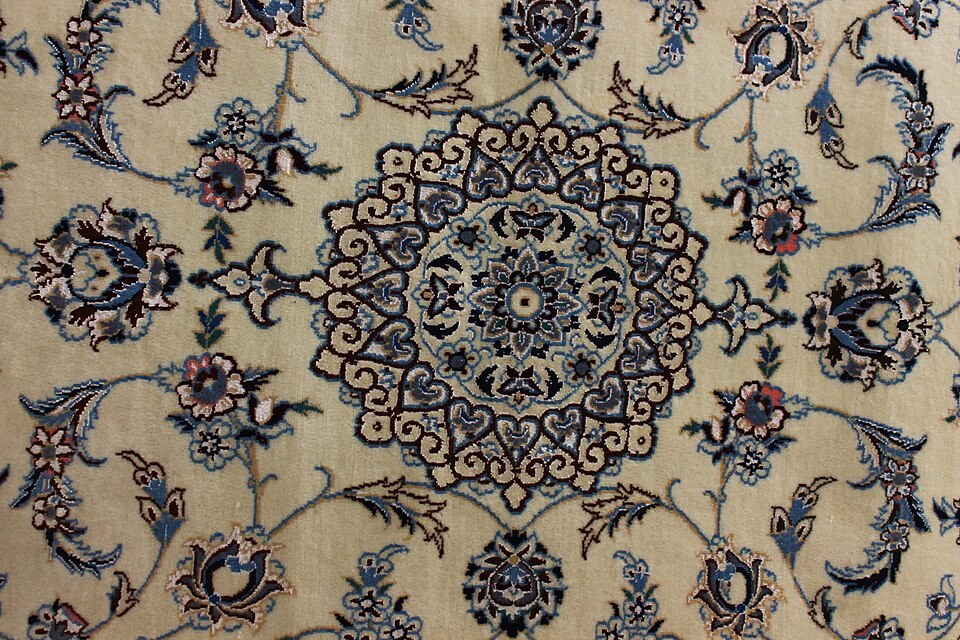
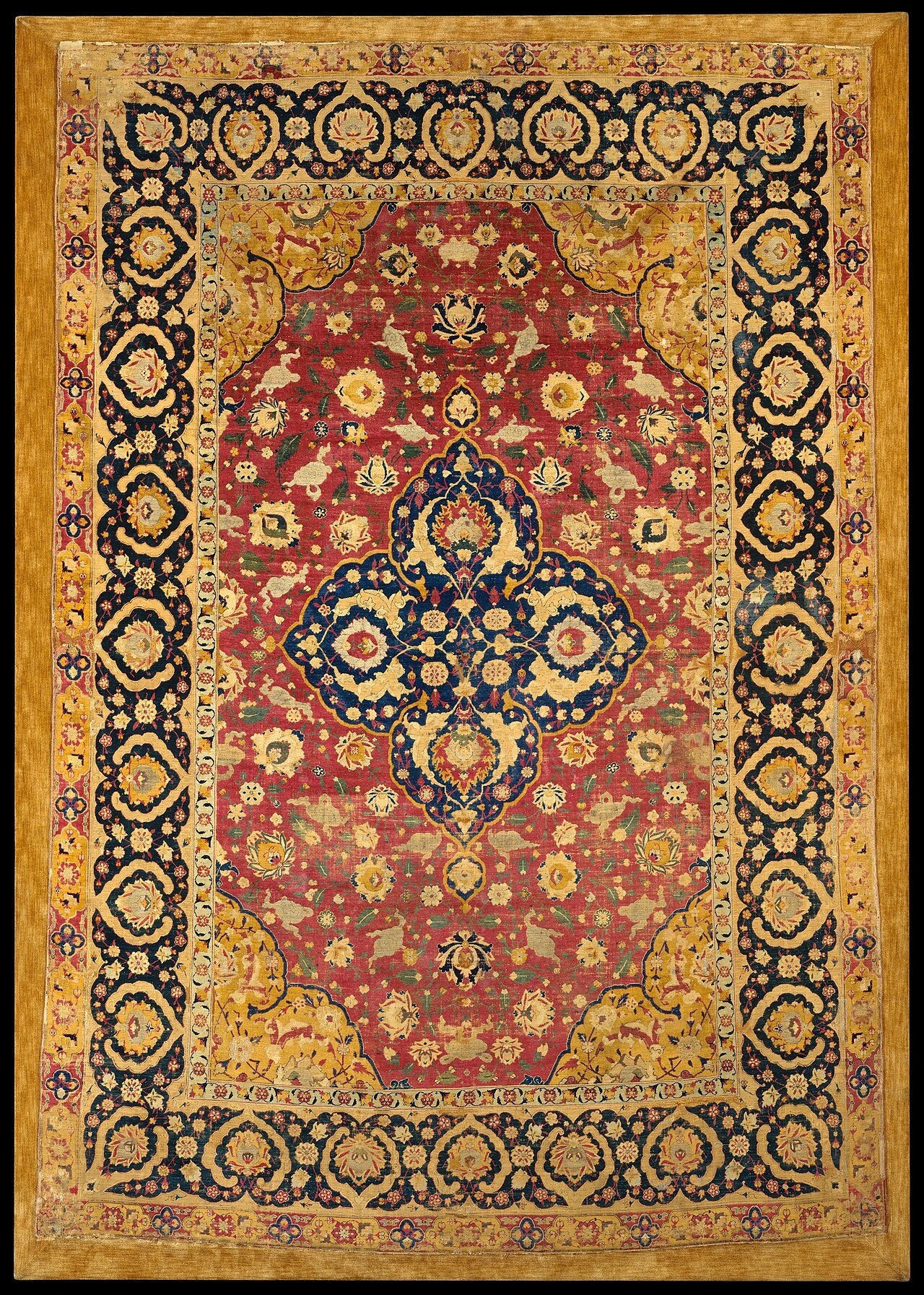
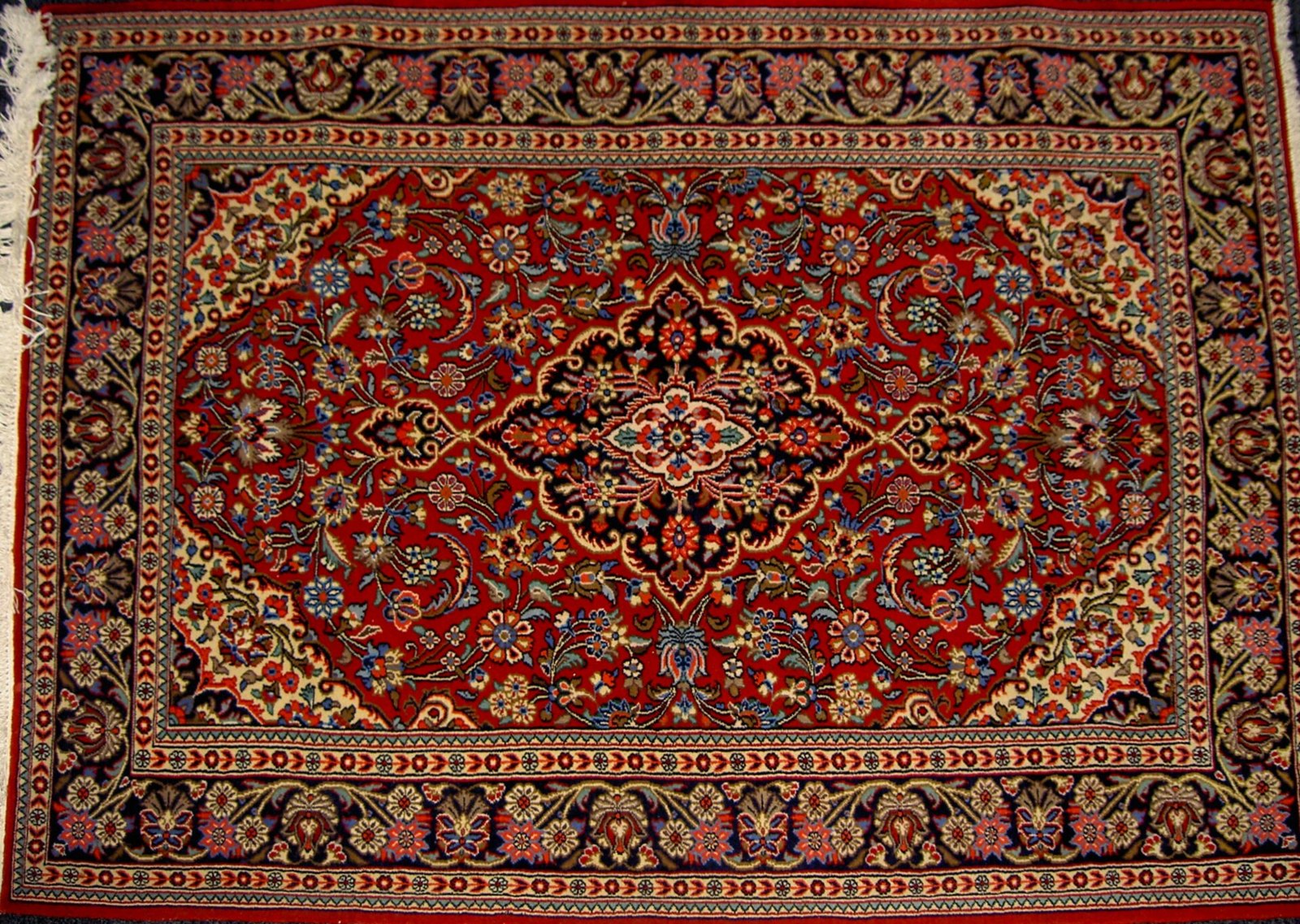
Representative photographs only. Marketplace examples rely on seller descriptions; CraftPersia has not independently authenticated their maker, origin, or rights status. Follow each source link for the listing context.
| Record or observation | What to do | What it cannot establish |
|---|---|---|
| Hand-knotted in Iran | Construction views and manufacturing documentation | Independent origin confirmation from words alone |
| Silk highlights | Identify which parts and declared fibres | A wholly silk carpet |
| Attributed Tabriz, circa date | Ask for method and qualified report | Certain workshop or exact year |
| Excellent condition | Request losses and repair map | Absence of hidden treatment |
References and further reading
- [1] Encyclopaedia Iranica — Carpets: overview and bibliography ↗Historical and technical context; not a valuation or authentication of the photographed objects.
- [2] The George Washington University Museum and The Textile Museum ↗Collection and textile-study resources; a photograph cannot substitute for structural examination.
- [3] US Federal Trade Commission — Textile and wool labeling guidance ↗US-specific commercial guidance; not a universal legal rule or origin certificate.
These sources provide context, not authentication or provenance for an individual object. Editorial interpretations remain under review.