
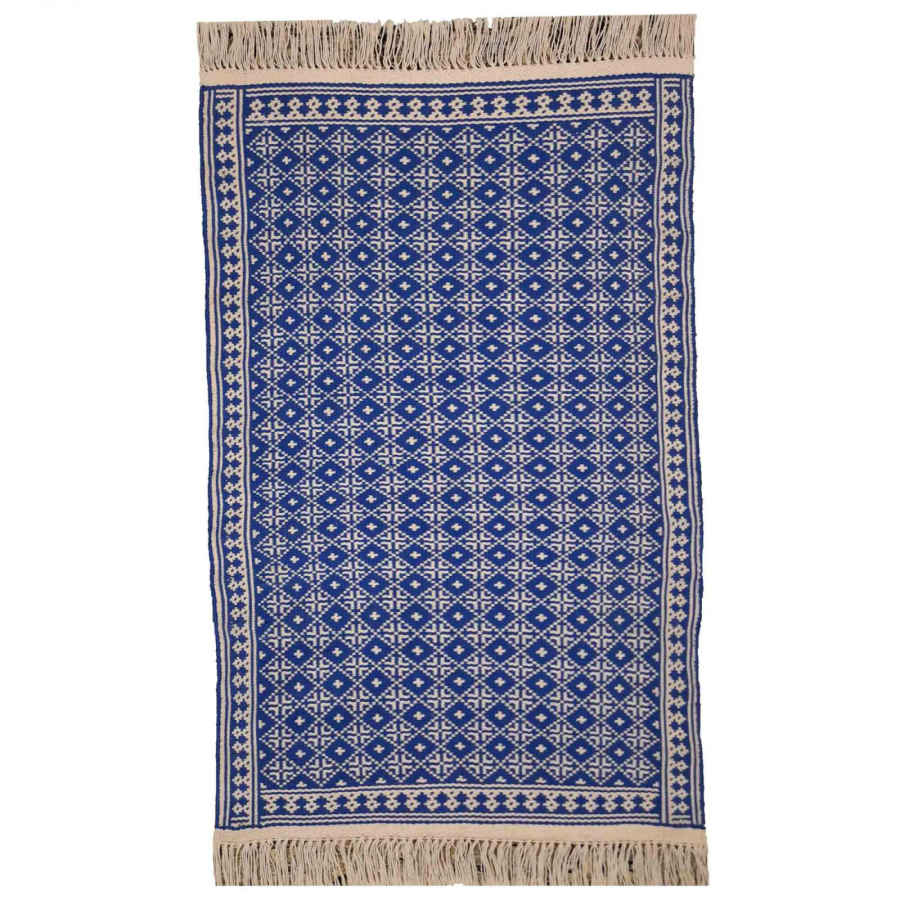
Blue-and-white handwoven cotton zilu floor covering, seller-stated Meybod, Iran
Accessed 14 October 2026 via Firecrawl. Seller states: Handwoven in Meybod, Iran; cotton, 160 x 100 cm. Origin is the seller's claim, not independently verified; no visible watermark. Illustrative commercial example, not CraftPersia stock. · ShopiPersia (seller; photographer not stated) · Seller listing photo; reuse rights not reviewed · منبع عکس ↗
معنا
Complementary photographs of an entire object and a selected area; a detail must retain its connection to the actual object and cannot replace a complete condition record.
املا و تلفظ
- فارسی: نمای کلی و نمای جزئی
- آوانویسی: namay-e kolli va jozi
- کاربرد انگلیسی: Whole view and detail view
املا در میان فروشندگان، موزهها و مناطق متفاوت است.
بخشهای تکمیلی زیر هنوز به فارسی ترجمه نشدهاند و فعلاً به انگلیسی نمایش داده میشوند.
Two scales, different questions
A whole view records the object’s format, boundaries and arrangement. A detail isolates a selected area to make threads, edges or surface features easier to see. They answer different questions: a fine close-up cannot establish complete dimensions, and a room photograph cannot show the weave at thread scale. Keep the images linked to the same object rather than treating an attractive detail as a generic craft illustration.
The ShopiPersia zilu photographs provide a useful example. One shows the seller-stated Meybod floor covering as a whole, while the other focuses on its weave and finishing. The seller’s origin claim remains a separate written statement; neither scale of photograph independently establishes manufacture in Iran. Preserve that distinction when captioning or comparing the images.
Scale, orientation and coverage
A close-up should state where it was taken and, where possible, include a scale without hiding the feature being discussed. Record whether the view shows front, reverse, edge or an assembled seam. A turned or folded object is not automatically a reverse photograph. If an area is not shown, leave it unknown rather than describing it as undamaged.
Retain the full source image when using a crop and do not alter colours to make a material look more convincing. Lighting, exposure and screen display affect apparent colour and texture. A digital detail cannot determine fibre chemistry, age, internal repairs or strength. Those questions need maker documentation, condition information or qualified examination.
Photographs are individual rights records
Two photographs of one object can have different creators and licences. Assign each a stable identifier and preserve its own source, credit and permission status. Agreement to reuse one image does not automatically include every image in the listing. Credit and source links assist traceability but do not supply permission.
For removal, use the individual image identifier or original filename, not only the object’s changing retail title. Record both visible placements and related galleries. Whole-view and detail-view images may share an object record, but their rights and removal records must remain individually addressable.
Compare the evidence
| Object or term | What to examine | Limit of the evidence |
|---|---|---|
| Whole view | Format, borders and complete outline | Does not reveal every surface detail. |
| Detail view | Local weave, attachment or finish | Not the whole object or a condition report. |
| Process photograph | Documented operation and maker connection | Not proof that the pictured workshop made a retail item. |
Practical questions
- Can a detail authenticate a handwoven textile?
- No. It can document visible structure but must be combined with actual maker and production evidence.
- Does permission for a whole view cover a detail photograph?
- Not automatically. Confirm the scope of permission and who owns each image.
Sources and further reading
- ShopiPersia: handwoven Zilou, DKP-3840078
Seller-stated Meybod, Iran; commercial example; rights not reviewed.
Editorial draft awaiting specialist review. References provide context, not verification of every statement, object attribution or current workshop access.
کاربرد در این صنایع دستی
A pileless, reversible cotton floor covering associated especially with Meybod near Yazd, woven on a vertical loom with ground heddles and pattern harnesses that control its geometric, often two-colour design.