
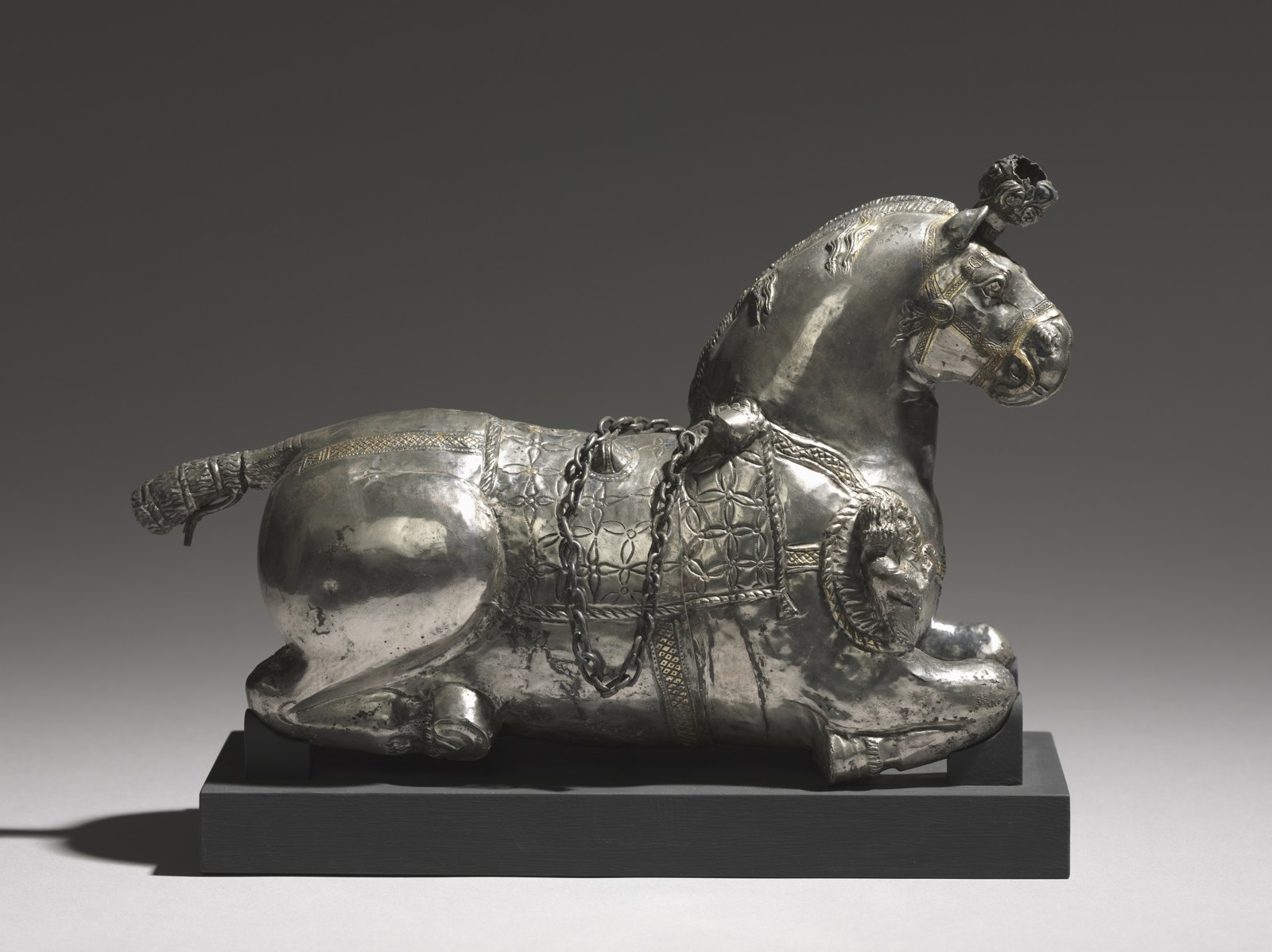
Horse-Shaped Drinking Vessel, 1964.41; Iran, 200–325 CE
200–325 CE · CP-LIB-CMA-1964-41 · Cleveland Museum of Art · CC0 (museum open access; resized JPEG) · منبع عکس ↗
معنا
طلایی که به بخشهایی از بستری با جنس دیگر افزوده شده است؛ به معنای طلای خالص بودن کل شیء یا اثبات روش مشخص زراندودکاری نیست.
املا و تلفظ
- فارسی: زراندودکاری جزئی
- آوانویسی: zar-andudkari-ye jozi
- کاربرد انگلیسی: Partial gilding
املا در میان فروشندگان، موزهها و مناطق متفاوت است.
بخشهای تکمیلی زیر هنوز به فارسی ترجمه نشدهاند و فعلاً به انگلیسی نمایش داده میشوند.
Substrate and applied gold are different materials
A partially gilded object has gold on selected areas of a substrate. Cleveland describes the horse-shaped drinking vessel as silver, partially gilt. Retain both parts of that material statement: the silver vessel and its gold-bearing areas are not interchangeable descriptions. A similar yellowish appearance in another photograph may come from lighting, coating or a different metal.
Begin with the institution’s wording, then record the distribution of visible surface tones as a separate observation. The photograph cannot determine how much gold remains, its thickness, purity or whether all visible areas are original. Material identification and the interpretation of a design relationship answer different questions; one should not quietly substitute for the other.
Do not invent the gilding method
Leaf, foil and other gilding practices have different histories and technical requirements. The brief phrase “partially gilt” does not establish mercury gilding or a particular recipe. To identify a method, use a technical catalogue or analysis that actually addresses the object. Its age and luxurious appearance are insufficient evidence on their own.
In a commercial description, ask whether “gilt” is based on maker documentation, examination or a general visual judgement. Keep plating, gilding and solid gold separate in the written record. A museum parallel cannot establish precious-metal content in an unrelated listing, and a high price cannot resolve the distinction.
Conservation and collecting questions
Gilded areas can be vulnerable to rubbing and aggressive cleaning. Do not polish a historical object to expose an assumed substrate, and do not use household chemical tests to identify gold. Those actions can alter the surface and remove evidence. Condition reports should record wear and prior treatment by location rather than diagnosing them from colour alone.
For a new Iranian handmade vessel, request an explicit material statement and the actual maker’s process. For old metalwork, add lawful ownership and export documentation, a treatment history where available and photographs of every face. The image shown here records a museum object; it is not an actual-item photograph for any commercial offering.
Compare the evidence
| Object or term | What to examine | Limit of the evidence |
|---|---|---|
| Silver, partially gilt | Substrate and selected gold areas | Not a solid-gold object. |
| Gilding method | Technical publication or analysis | Not established by yellow colour. |
| Surface wear | Dated condition report | A photograph cannot quantify gold loss. |
Practical questions
- Does partially gilt mean mercury-gilded?
- No. The material wording does not specify the application method. A more detailed technical source is required.
- Can I polish the surface to identify the metal?
- No. Polishing can remove material and evidence; use documentation and qualified assessment instead.
Sources and further reading
- Cleveland Museum of Art: Horse-Shaped Drinking Vessel (1964.41)
Object-specific catalogue; consulted 14 October 2026. Comparative terminology, not authentication of another object.
Editorial draft awaiting specialist review. References provide context, not verification of every statement, object attribution or current workshop access.
کاربرد در این صنایع دستی
سنت ایرانی تزئین ظروف مسی، برنجی و نقرهای با قلمهای ریز که با چکش کوبیده میشوند و فلز را به خط، زمینه و برجستگی میسازند.