
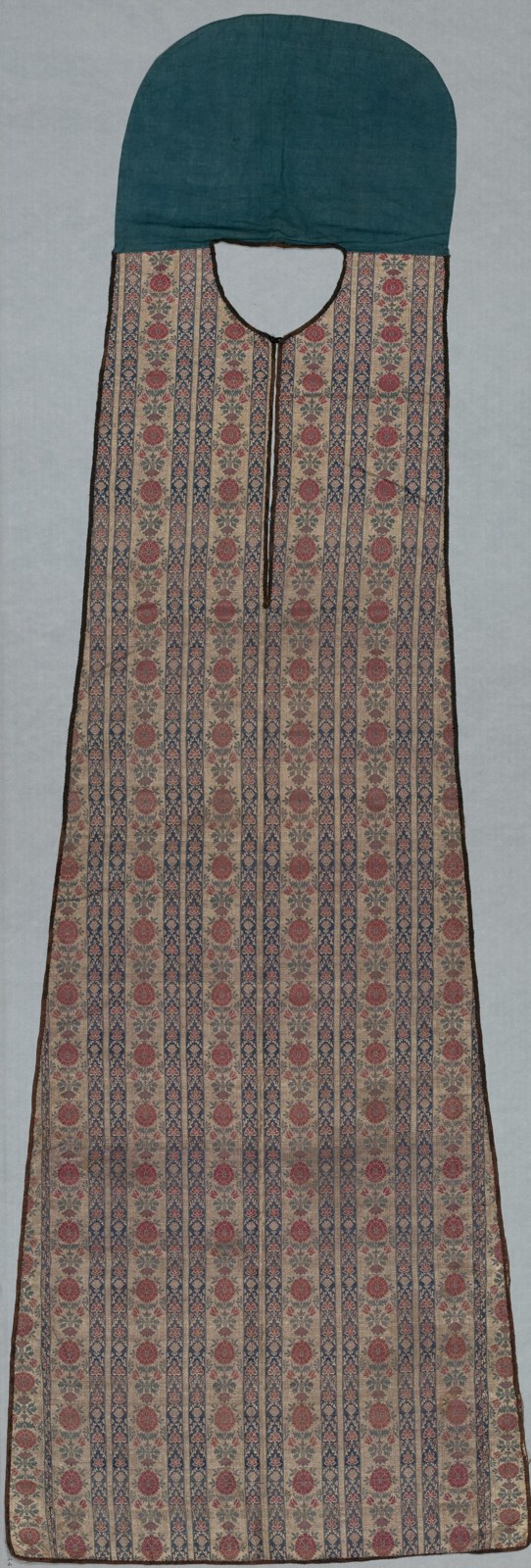
Barber's Apron, 2013.1144; Iran, late 18th century
late 18th century · CP-LIB-MET-458906 · The Metropolitan Museum of Art · CC0 (museum open access; resized JPEG) · منبع عکس ↗
معنا
نخی دارای فلز، گاه به صورت نوار پیچیده دور مغزی. این نام بهتنهایی طلای خالص، آلیاژ یا ساختار مشخصی را تعیین نمیکند.
املا و تلفظ
- فارسی: نخ فلزی
- آوانویسی: nakh-e felezzi
- کاربرد انگلیسی: Metal-thread
املا در میان فروشندگان، موزهها و مناطق متفاوت است.
بخشهای تکمیلی زیر هنوز به فارسی ترجمه نشدهاند و فعلاً به انگلیسی نمایش داده میشوند.
A material category, not a precious-metal guarantee
Metal-thread describes thread incorporating metal. Some constructions use a metal strip around a core; others differ. The term alone does not establish alloy, core material, plating or solid gold. A catalogue’s exact medium statement is preferable to upgrading every reflective yarn to “gold thread.”
The Met’s barber’s apron is described as silk and metal-thread in a weft-faced compound plain weave. That identifies a woven textile, not a general metal embroidery technique. Woven pattern, added stitching and applied braid must remain separate processes even when all use metallic components.
Record shine, wear and construction separately
A photograph can show reflective areas and pattern placement, but lighting alters shine and colour. Darkened areas cannot automatically be diagnosed as corrosion. Nor can a bright surface certify precious-metal content. Detailed construction and material analysis belong to specialist examination or a technical catalogue.
Do not polish metallic yarns or test them with household chemicals. Threads, cores, surrounding fibres and joins may react differently. For contemporary handmade Iranian textiles, ask for a material statement and the maker’s technique; for historic work, keep conservation history and lawful provenance alongside the descriptive record.
Compare the evidence
| Object or term | What to examine | Limit of the evidence |
|---|---|---|
| Metal-thread | Stated construction and composition | Not necessarily solid gold. |
| Woven ornament | Yarn interlacement | Not added embroidery. |
| Reflective surface | Lighting and material evidence | Shine is not an assay. |
Practical questions
- Is all metal-thread zari?
- Trade and historical terms vary. Preserve the source’s terminology and documented construction rather than treating names as interchangeable.
Sources and further reading
- The Metropolitan Museum of Art: Barber's Apron (2013.1144)
Object-specific catalogue comparison; not proof of another object’s identity or provenance.
Editorial draft awaiting specialist review. References provide context, not verification of every statement, object attribution or current workshop access.
کاربرد در این صنایع دستی
A figured silk weaving technique in which supplementary wefts, often including gold- or silver-wrapped thread, create pictorial or floral designs on a silk ground.
A metal-thread embroidery technique in which fine gold or silver wire, or wire-wrapped thread, is couched onto velvet or other heavy cloth to create raised, reflective patterns, historically used on ceremonial garments and furnishings.