
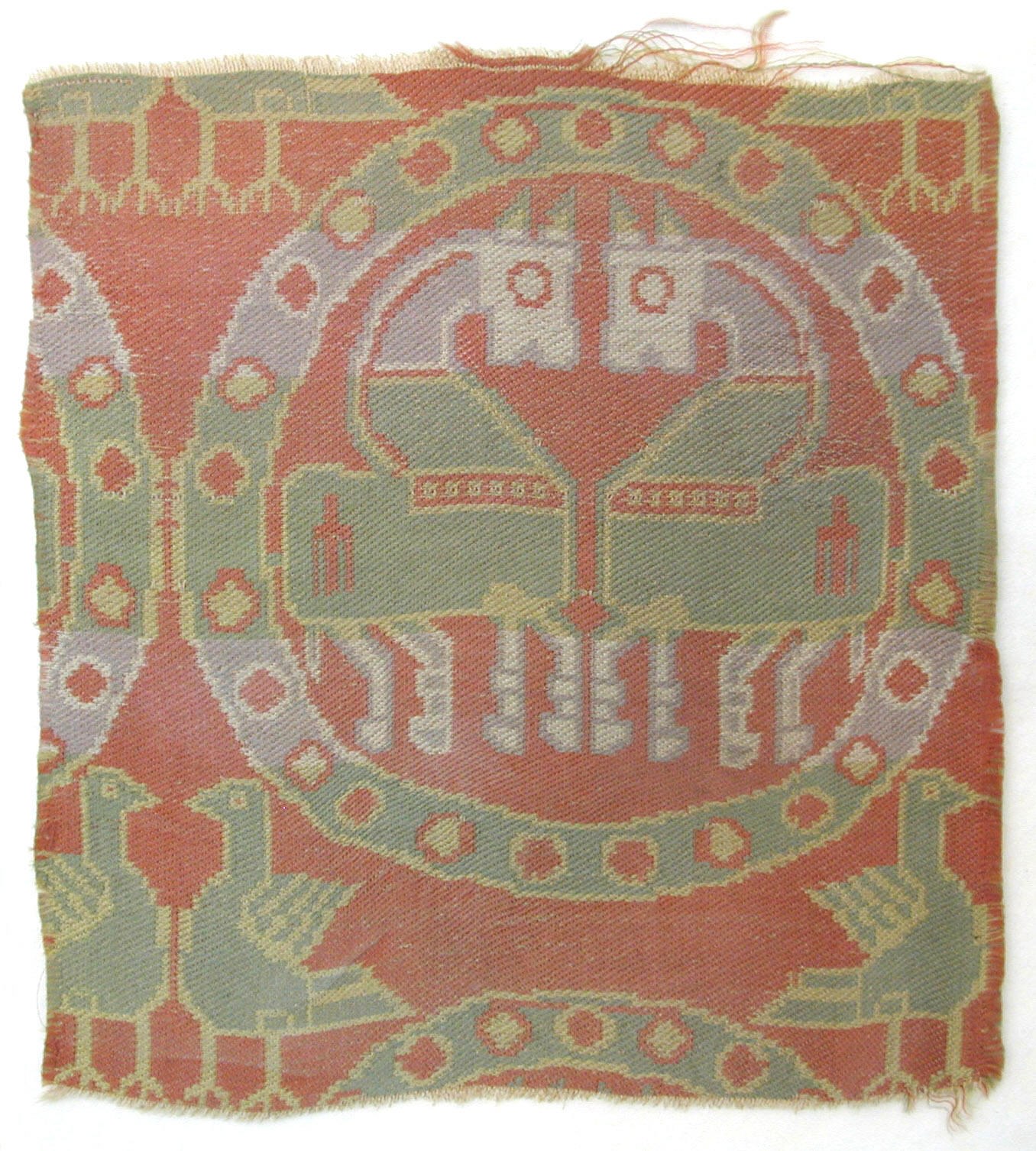
Textile Fragment, 38.147; Iran, 8th–9th century
8th–9th century · CP-LIB-MET-449532 · The Metropolitan Museum of Art · CC0 (museum open access; resized JPEG) · منبع عکس ↗
معنا
واحد یا قاب دایرهای آرایشی که میتواند پیکره یا نقشمایهها را در بر گیرد. وجود آن منشأ بافته یا معنایی همگانی را ثابت نمیکند.
املا و تلفظ
- فارسی: نقش دایرهای
- آوانویسی: naqsh-e dayere-i
- کاربرد انگلیسی: Roundel (circular ornament)
املا در میان فروشندگان، موزهها و مناطق متفاوت است.
بخشهای تکمیلی زیر هنوز به فارسی ترجمه نشدهاند و فعلاً به انگلیسی نمایش داده میشوند.
A frame within a larger textile design
Roundel names a circular ornamental unit or frame. It may enclose figures, vegetal forms or other motifs and may itself sit within a repeat. Describe the frame, contents and relationship to neighbouring units separately. The early Iranian silk fragment illustrated here preserves a paired-animal composition within such a circular arrangement.
A fragment does not necessarily preserve the full repeat. Missing edges limit what can be said about spacing, original width or neighbouring units. Do not complete the surrounding design silently or call the original object a garment without catalogue evidence.
Motif description before cultural attribution
Roundels occur across many periods, regions and materials. Their presence is not a secure Iranian-origin test or a universal symbol. A useful comparison includes the object’s documented date, medium, construction and attribution before interpreting the motif.
The Met dates this particular fragment to the eighth–ninth century. That date should not become Safavid simply because later silk textiles also use framed animals. The broad term “Persian silk” can obscure a long chronology; precise catalogue facts restore the distinction. For contemporary work, the actual maker and place of manufacture remain essential.
Compare the evidence
| Object or term | What to examine | Limit of the evidence |
|---|---|---|
| Roundel | Circular unit and enclosed forms | Not a universal meaning. |
| Repeat | Surviving relationships between units | Fragments may omit neighbouring units. |
| Origin attribution | Catalogue and provenance | Motif alone is insufficient. |
Practical questions
- Does a roundel identify an Iranian textile?
- No. Use documented attribution and structure; circular frames circulated widely.
Sources and further reading
- The Metropolitan Museum of Art: Textile Fragment (38.147)
Object-specific catalogue comparison; not proof of another object’s identity or provenance.
Editorial draft awaiting specialist review. References provide context, not verification of every statement, object attribution or current workshop access.
کاربرد در این صنایع دستی
A figured silk weaving technique in which supplementary wefts, often including gold- or silver-wrapped thread, create pictorial or floral designs on a silk ground.