
Definition
Gereh-chini, literally arranging or piecing knots, is the construction of an openwork lattice from many small wooden sticks and shaped pieces joined at notched intersections, without nails, screws or glue at the structural joints. The resulting panel is rigid because each piece locks its neighbours in place through the geometry of the joint, not through applied fastening.
The technique produces the star-and-polygon patterned wooden screens, called orosi when combined with coloured glass, seen in traditional windows, skylights and room dividers across much of the Iranian plateau's historic domestic and religious architecture.
History
Geometric wooden lattice construction shares its underlying compass-and-straightedge geometry with tile and stucco gereh patterns, and is documented in Iranian architecture from at least the Safavid period, when elaborate orosi windows combining wood lattice with coloured glass became a feature of grand houses and public buildings, particularly in Isfahan. The technique's origins likely draw on a longer regional tradition of geometric ornament whose earlier chronology in wood is less completely documented than in stone and tile.
Qajar-period domestic architecture in cities such as Yazd, Kashan and Shiraz made extensive use of orosi lattice windows, and the craft continued into the Pahlavi period both in restoration of historic houses and in continued construction, though changing building styles and materials reduced everyday demand for hand-built lattice openings over the twentieth century.
Materials
Walnut is a commonly used wood for its workability and stability, though other locally available hardwoods are also used depending on the region and period. Coloured and clear glass panes are set into the lattice openings in orosi windows, held by the wood itself rather than by separate glazing bars.
- Walnut or other stable hardwood strips and shaped pieces
- Coloured and clear glass for orosi window infill
- No glue or metal fastening at the primary lattice joints
Technique
The underlying geometric pattern, typically a repeat of stars and polygons generated with compass and straightedge, is worked out at full scale, and each small wooden element is cut and notched to fit precisely at the points where sticks cross. Pieces are assembled by hand, each notch interlocking with its neighbour, building outward until the panel reaches its full size and locks together as a rigid unit.
Where glass is included, coloured or clear panes are cut to fit the individual openings and set into the completed lattice, giving orosi windows their combination of structural geometric woodwork and coloured light. The craft demands precise, consistent cutting since an inaccurate notch will not lock properly or will distort the overall pattern.
Motifs
The repertoire is built from the same family of compass-generated star and polygon grids used in tilework and khatam inlay, typically six-, eight- or twelve-pointed star forms tessellated across the panel, rather than figural or floral imagery, since the technique's logic is geometric rather than pictorial.
Collecting and identification
Gereh-chini is predominantly an architectural, in-place craft, and salvaged historic panels or windows removed from demolished buildings raise both preservation and provenance concerns; buyers should seek clear removal and ownership documentation rather than assume legitimacy.
Genuine hand-joined lattice shows the notched intersections without applied fasteners or visible glue lines at the joints, and slight, consistent hand-tool marks; modern reproductions sometimes use glued or nailed lattice grids that mimic the look but not the structural method.
Preservation
Wooden lattice is vulnerable to humidity-driven swelling and shrinkage, which can loosen notched joints over time, and to insect damage in untreated wood; stable indoor conditions and periodic inspection are more protective than any surface treatment applied after damage occurs.
Repairs should replace individual broken elements with matching wood and matching notch geometry rather than reinforcing failed joints with glue or metal brackets, which alters both the structural logic and the appearance of the original work.
Gallery
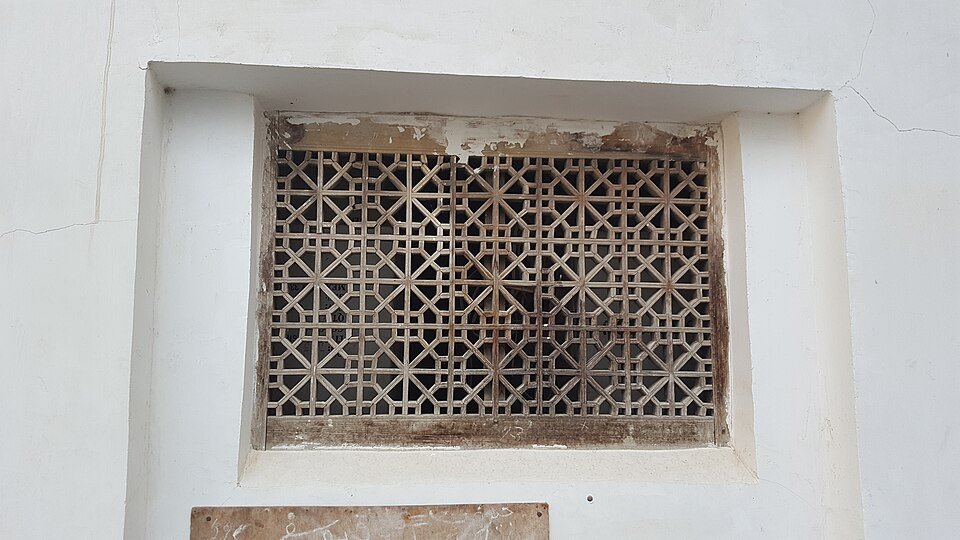
Images are representative examples, not evidence for the sample marketplace records. Their sources and permission status are listed in the photography credits.
Marketplace
No objects of this craft are currently listed.
- Construction
- Geometry becomes joinery
- Object reading
- Structure, materials and condition before attribution
- Evidence status
- Educational summary under editorial review
Geometry becomes joinery
Gereh-chini turns a drawn geometric grid into fitted wooden lattice members, often set in a larger architectural frame. Some windows hold coloured glass. The example photograph depicts a wooden lattice window, not a named workshop.
Read the frame
Examine repeating units, the joints and how the screen is held. Do not dismantle an old screen to infer technique or origin.
- Fitted small timber members
- Repeating grid and polygons
- Optional glazing or coloured inserts
Context, preservation and evidence
Workshops, households, museums and contemporary makers can use the same craft name in different ways. Record who made, sold and documented a piece before assigning a date or location. Condition and technique are observable; origin, attribution and value require further evidence.
These reading notes are educational, not an authenticity certificate or valuation. The associated source list is a starting point; many claims and translations still require specialist review.
Technique: what to look for
Small timber pieces are cut to a geometric plan and fitted into a frame, sometimes enclosing coloured glass. Inspect joints and frame support before attributing an architectural screen.
Historical and regional context
Geometric pattern occurs in multiple media; a painted lattice motif is not automatically wooden joinery. Replacement glass and timber are common possibilities in an architectural object's life.
Collecting and documentation
Ask about original location, legal removal, frame repairs and glazing; photograph front and back. Avoid lifting large screens by individual bars.
These checks are non-destructive educational prompts, not an authentication, attribution or appraisal. Keep a record of which claims were observed and which came from a seller.
Gereh-chini lattice in photographs
Representative photographs, not of any specific catalogued object. Sources on the credits page.
| Type | How to distinguish it |
|---|---|
| Gereh-chini | Wooden geometric lattice assembly |
| Khatamkari | Tiny inlaid veneers on a substrate |
| Monabbat | Relief carved from a larger piece of wood |
| Observed process | Often confused with | What to examine |
|---|---|---|
| Joined wooden lattice | Laser-cut decorative panel | Individual fitted members and joinery differ from a perforated single sheet; modern hand joinery also exists. |
Timeline
- Layout
Draw the repeat and size the timber members.
- Joinery
Cut and fit pieces into a supporting frame.
- Repair
Document replaced wood and glass separately from surviving fabric.
Key terms
- Gereh گره
- Geometric knot or network; meanings depend on medium.
References and further reading
- [1] Wulff, H. E. The Traditional Crafts of Persia. MIT Press, 1966.Background reference; individual statements and attributions still require editorial verification.
These sources provide context, not authentication or provenance for an individual object. Editorial interpretations remain under review.
Sources & references
- Book: Wulff, H. E. The Traditional Crafts of Persia. MIT Press, 1966.
- Journal article: Encyclopaedia Iranica, entry on geometric ornament and Persian architectural woodwork.
Where origins, dates or symbolism are contested, this entry states the competing readings rather than choosing between them. Editorial analysis is not presented as documented fact.