
What documented Persian miniature looks like
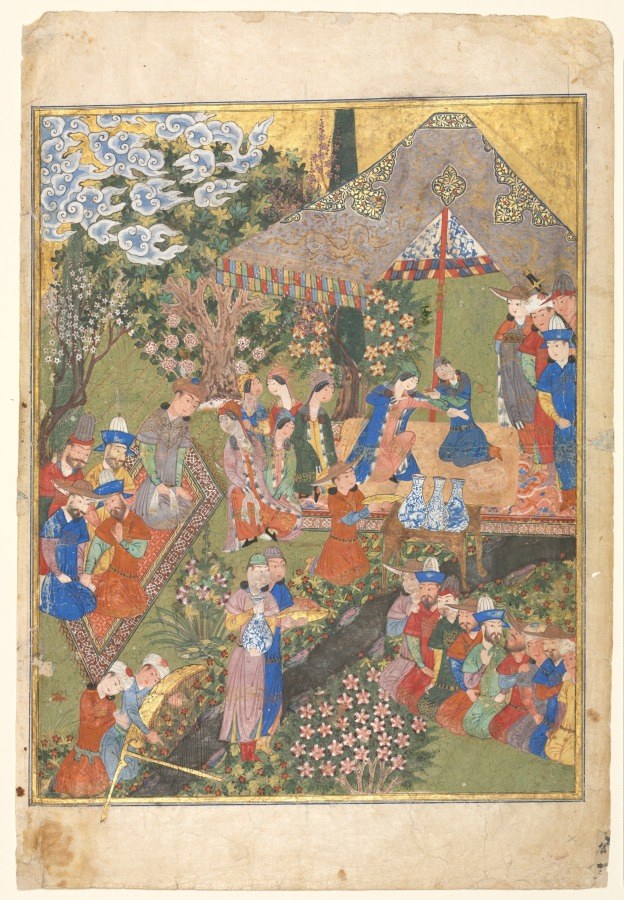
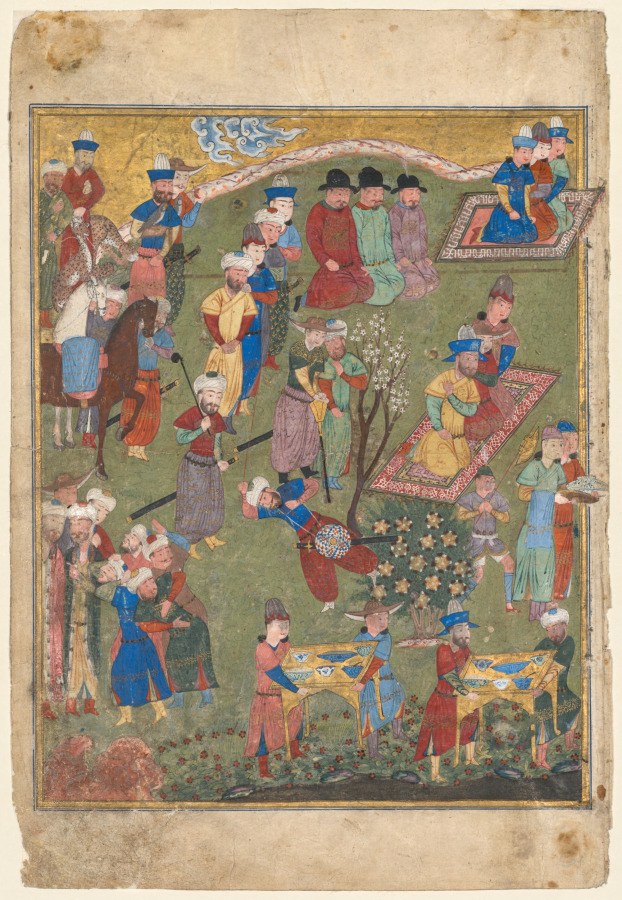
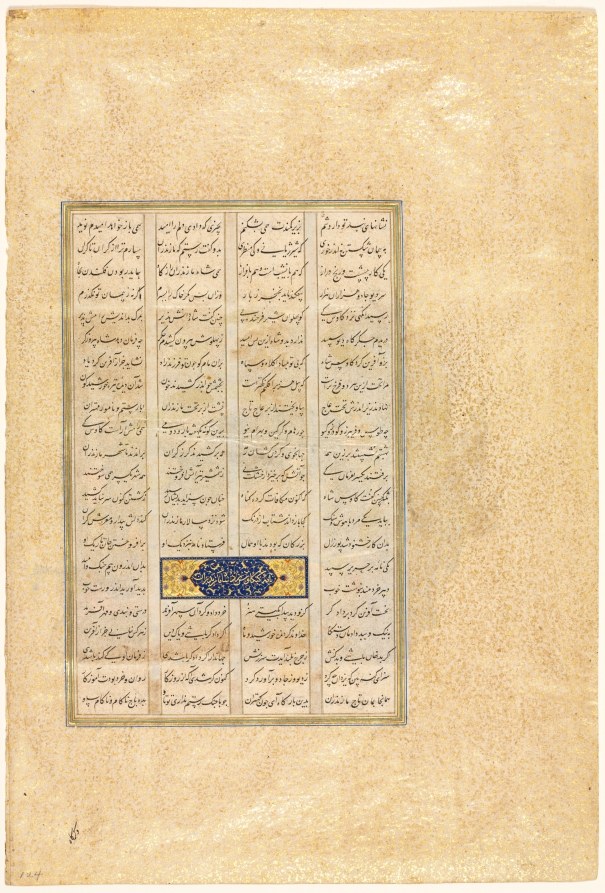
Reference photographs of documented Persian miniature pieces, credited to their sources. Compare construction, surface and wear with any piece you are offered — a resemblance is not proof of origin.
Persian miniature at a glance
| Persian name | نگارگری ایرانی |
| Category | Painting · Manuscript painting |
| Main techniques | tazhib-illumination |
| Typical materials | paper, lapis-lazuli, shell-gold |
| Places of making | isfahan, shiraz, tabriz |
| Current vitality | Living tradition |
Understanding Persian miniature
What Persian miniature is and how it is made
Definition
Persian painting of this kind was an art of the book, produced in ateliers where calligrapher, painter, illuminator, gilder and binder each contributed. Space is organised by overlapping planes and raised ground lines; figures are scaled by role rather than distance.
History
Distinct schools are conventionally identified at Tabriz, Shiraz, Herat and later Isfahan, each with recognisable conventions of palette, figure type and landscape. Attribution to a named painter is possible for a small number of artists and remains contested for many well-known works.
Materials
Sized and burnished paper, mineral and organic pigments bound in gum, gold leaf and shell gold, and brushes made from a few hairs. Lapis-based blue and verdigris green behave very differently over time, which affects how a page reads today.
General background on the craft, not a statement about any individual object; dates and attributions summarise common positions in the literature and remain under review. Read the full Persian miniature entry.
Before you buy: what to inspect
- Under magnification, hand-painted work shows brushstrokes; prints show dot patterns.
- Gold on genuine illumination is applied by hand and catches the light unevenly.
- Check the paper: handmade paper has an irregular texture and edges.
Typical materials: paper, lapis-lazuli, shell-gold.
Red flags: copies and 'Persian style' imports
- 'Giclée', 'art print' or 'reproduction' in the listing.
- Paintings on photo paper.
- Old-looking pages with modern printed text.
A genuine Persian miniature piece should come with a named place of making in Iran (often isfahan, shiraz, tabriz) and a clear statement that it is handmade.
Questions to ask the seller
- Is this an original or a print?
- Who is the artist, and is it signed?
- What pigments and paper were used?
What affects the price
| Original vs. print |
| Artist |
| Detail and gold |
| Size |
| Age |
Care and cleaning
- Frame behind UV-filtering glass.
- Keep out of direct sunlight and away from damp.
- Handle with clean, dry hands at the edges.
Storage
- Store flat in acid-free folders.
- Keep humidity stable.
Shipping
Ship flat between rigid boards, or rolled only if the maker agrees.
Illustrative examples in the archive
- Illuminated Album Page · Illustrative example · not for sale here
- Persian Miniature Painting on Bone - Polo Scene - Handmade Khatam Kari Inlay Frame - Iranian Folk Art - Isfahan Vintage Wall Decor - Middle · Illustrative example · not for sale here
- Vintage Persian miniature painting in khatamkari inlaid frame, hunting scene · Illustrative example · not for sale here
Disclaimer
This guide is educational. It cannot confirm that any particular object is genuine, old or valuable. For important purchases, ask an independent specialist. Read the full Persian miniature entry.