
Definition
The carving and moulding of gypsum plaster into architectural ornament, including mihrabs, inscriptions, muqarnas and wall panels.
History
Carved stucco is documented in Iran from before Islam and flourished in Seljuk and Ilkhanid mihrabs; it remains an active building craft in restoration and new architecture.
Dates and attributions here summarise common scholarly positions and are under editorial review; they are not definitive.
Technique
Plaster is applied in layers and carved while still workable, or cast in moulds; deep undercut work creates layered arabesques and inscriptions.
Collecting and identification
Moisture damage, repainting and replacement sections are typical in historic buildings; removed panels in museums may have unclear building origins.
This guidance is educational only and is not an authentication or valuation service.
Reference samples
The reference samples on this page are documented objects in public collections, shown with their holding institution's attribution and licence. They illustrate the craft and are not for sale.
Gallery
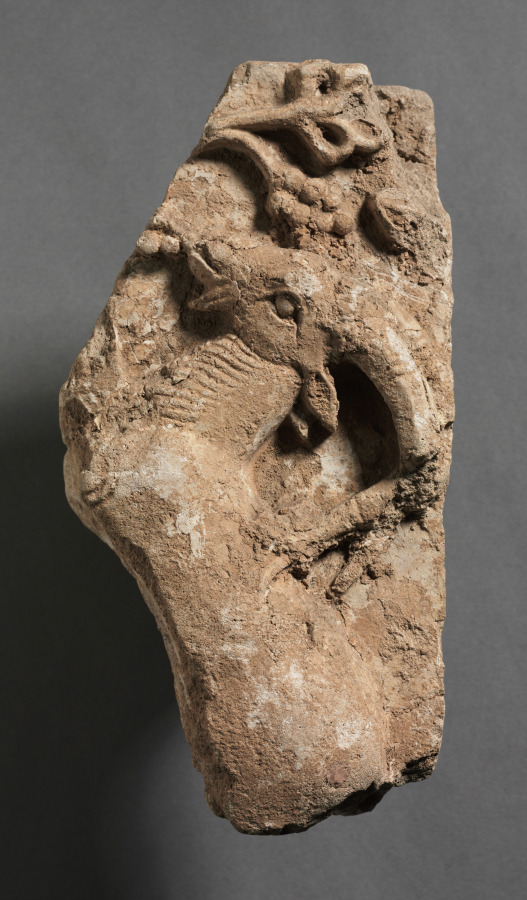
Images are representative examples, not evidence for the sample marketplace records. Their sources and permission status are listed in the photography credits.
Marketplace
No objects of this craft are currently listed.
Reference samples in collections
Documented objects from museums, archives and auction records, shown for study. Not for sale; attributions are the holding institution's, not CraftPersia's.
Ibex Eating
c. 400–600 CE
stucco (gypsum plaster) with traces of paint
Cleveland Museum of Art · 1941.24 · CC0 (museum open access)
Sources & references
- Book: Wulff, H. E. The Traditional Crafts of Persia. MIT Press, 1966.
- Museum catalogue: Cleveland Museum of Art, Open Access collection records for Iranian objects (accessed 2026-09-24).
Where origins, dates or symbolism are contested, this entry states the competing readings rather than choosing between them. Editorial analysis is not presented as documented fact.