
What documented Gereh-chini lattice looks like
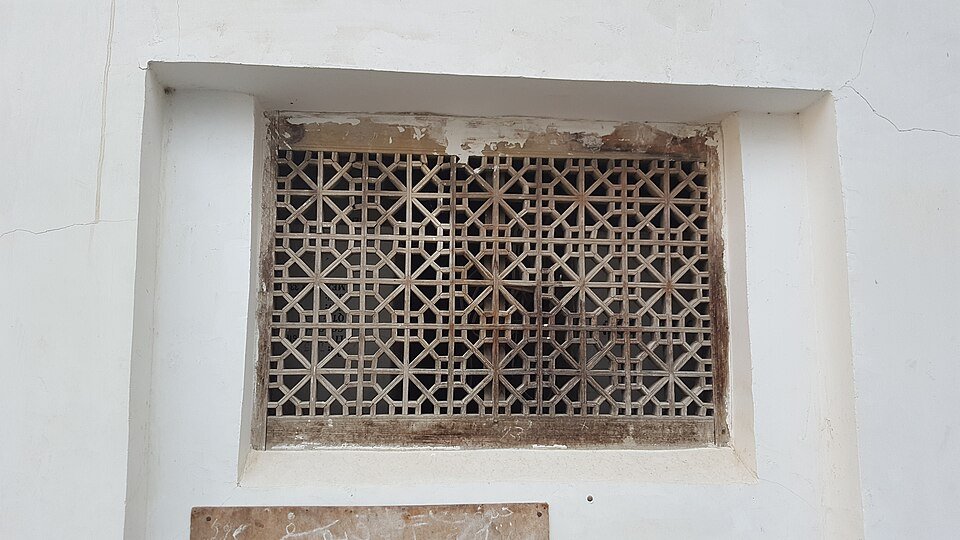
Reference photographs of documented Gereh-chini lattice pieces, credited to their sources. Compare construction, surface and wear with any piece you are offered — a resemblance is not proof of origin.
Gereh-chini lattice at a glance
| Persian name | گرهچینی |
| Category | Woodwork · Latticework |
| Main techniques | lattice-joinery |
| Typical materials | walnut-wood |
| Places of making | isfahan, yazd, shiraz |
| Current vitality | At risk |
Understanding Gereh-chini lattice
What Gereh-chini lattice is and how it is made
Definition
Gereh-chini, literally arranging or piecing knots, is the construction of an openwork lattice from many small wooden sticks and shaped pieces joined at notched intersections, without nails, screws or glue at the structural joints. The resulting panel is rigid because each piece locks its neighbours in place through the geometry of the joint, not through applied fastening.
The technique produces the star-and-polygon patterned wooden screens, called orosi when combined with coloured glass, seen in traditional windows, skylights and room dividers across much of the Iranian plateau's historic domestic and religious architecture.
History
Geometric wooden lattice construction shares its underlying compass-and-straightedge geometry with tile and stucco gereh patterns, and is documented in Iranian architecture from at least the Safavid period, when elaborate orosi windows combining wood lattice with coloured glass became a feature of grand houses and public buildings, particularly in Isfahan. The technique's origins likely draw on a longer regional tradition of geometric ornament whose earlier chronology in wood is less completely documented than in stone and tile.
Qajar-period domestic architecture in cities such as Yazd, Kashan and Shiraz made extensive use of orosi lattice windows, and the craft continued into the Pahlavi period both in restoration of historic houses and in continued construction, though changing building styles and materials reduced everyday demand for hand-built lattice openings over the twentieth century.
Materials
Walnut is a commonly used wood for its workability and stability, though other locally available hardwoods are also used depending on the region and period. Coloured and clear glass panes are set into the lattice openings in orosi windows, held by the wood itself rather than by separate glazing bars.
- Walnut or other stable hardwood strips and shaped pieces
- Coloured and clear glass for orosi window infill
- No glue or metal fastening at the primary lattice joints
General background on the craft, not a statement about any individual object; dates and attributions summarise common positions in the literature and remain under review. Read the full Gereh-chini lattice entry.
Before you buy: what to inspect
- Gereh-chini lattice is assembled from many small cut pieces that interlock without nails; look at the joints.
- Check that the pieces fit tightly and that the panel is flat, without warping.
- If coloured glass is set in the lattice, check for cracked or replaced panes.
Typical materials: walnut-wood.
Red flags: copies and 'Persian style' imports
- Laser-cut sheet panels sold as hand-assembled lattice.
- Salvaged doors or windows from historic buildings without documented, legal provenance.
A genuine Gereh-chini lattice piece should come with a named place of making in Iran (often isfahan, yazd, shiraz) and a clear statement that it is handmade.
Questions to ask the seller
- Was it assembled from individual pieces by hand?
- Which wood was used?
- Is it new or salvaged?
What affects the price
| Number and fineness of pieces |
| Wood |
| Size |
| Coloured glass |
Care and cleaning
- Dust with a soft, dry cloth.
- Avoid water, direct sunlight and radiators.
- Keep humidity steady to prevent cracking.
Storage
- Store away from damp walls and heat sources.
Shipping
Pad corners well; wooden items can crack if dropped.
Disclaimer
This guide is educational. It cannot confirm that any particular object is genuine, old or valuable. For important purchases, ask an independent specialist. Read the full Gereh-chini lattice entry.