
Exhibition
The Engraver's Line
خطِ قلمزنQalamzani: hammer, chisel and copper in Isfahan
Curatorial narrative
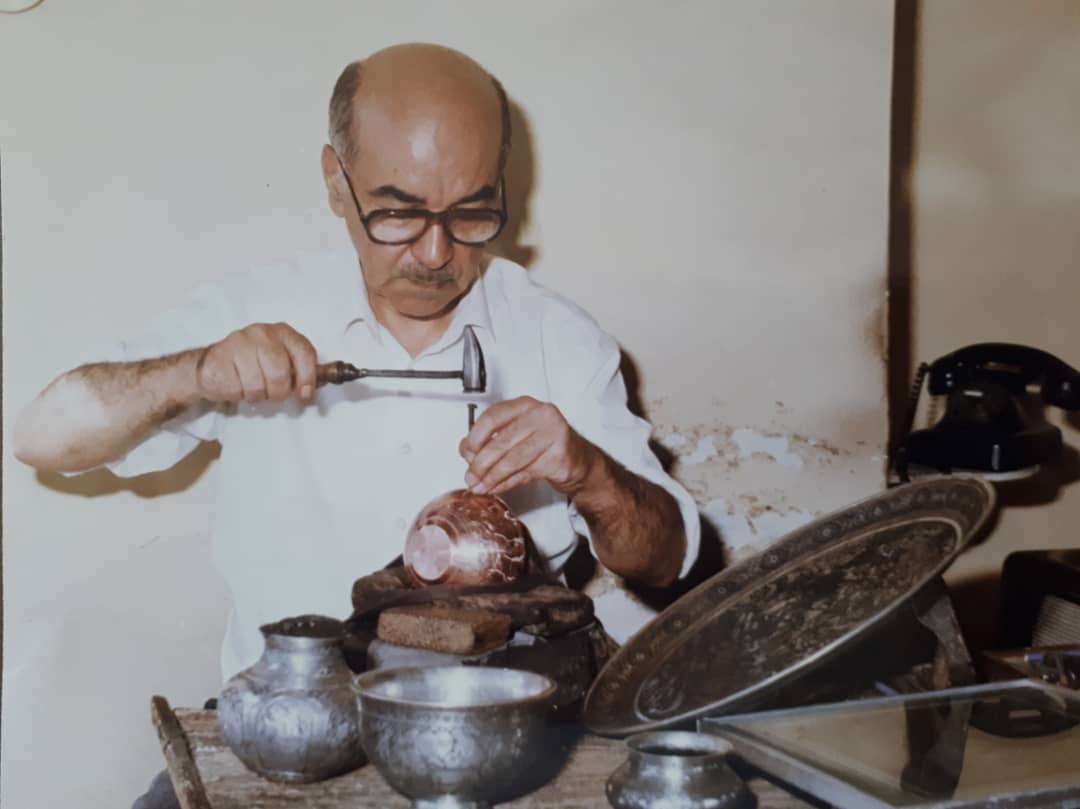
A qalamzan works with no ink. The design is driven into copper, brass or silver with small steel chisels struck by a light hammer, line by line, until the background sinks and the pattern stands in relief.
This exhibition follows one engraved vessel back to its workshop method, showing how depth, line and background texture separate hand engraving from etched or pressed metal.
Room 1 · Tools
The engraver uses dozens of small steel chisels with different tips for lines, dots and textured backgrounds, struck with a light hammer. The vessel is often filled with or set on a pitch-like compound so the metal does not dent while it is worked.
Room 2 · Depth
Styles range from shallow line work to deep relief, where the background is cut away so figures and plants stand out. Deep work takes much longer and leaves crisp walls around each motif.
Room 3 · Isfahan workshops
Isfahan is the best-known centre today, producing trays, vases and plaques. Designs include arabesques, hunting scenes and poetry inscriptions. Dating older pieces needs specialist study.
What to look for
- Small chisel marks along lines and in the textured background
- Real depth you can feel with a fingertip
- Slight differences between repeated motifs
- No sign of the even, blurred edges left by acid etching
Visitor questions
- Is pressed metal qalamzani?
- No. Pressed or stamped metal is shaped in one go by a die. Hand engraving shows separate tool marks.
- How should I clean engraved copper?
- Wipe gently with a soft dry cloth. Avoid harsh polishes, which wear down fine lines and may remove a lacquer or patina.
This exhibition is an editorial arrangement of archive material. Objects shown are sample marketplace records, and photographs are representative examples — not images of a physical collection.
More exhibitions
Other curated readings of the archive.