Definition
Qalam-zani covers a family of related operations: tracing an outline, sinking grounds, raising relief from the front, and texturing with named punches. The metal is displaced rather than largely cut away, so the reverse of a hand-worked vessel carries the impression of the design.
History
Persian inlaid and engraved metalwork of the Seljuk period is widely represented in museum collections and set standards later workshops referred back to. Safavid and Qajar Isfahan produced trays, bowls, ewers and boxes in quantity, and the Isfahan bazaar remains the main centre today.
Technique
The vessel is filled with pitch so the metal is supported without being rigid. The engraver works seated, striking a chisel held between the fingers, advancing the line in a continuous rhythm. Grounds are then textured to throw the design forward.
Identification
Hand work shows slight variation in line depth and small overlaps where chisel strokes meet, and the pattern reads faintly on the reverse. Stamped or acid-etched imitations have uniform depth, no reverse impression, and often a mechanically perfect repeat.
Care
Avoid abrasive polishes and repeated aggressive cleaning; both round the chisel edges that carry the design. Where a piece is tinned inside, do not strip the tinning. Stabilise rather than remove an even patina.
Gallery
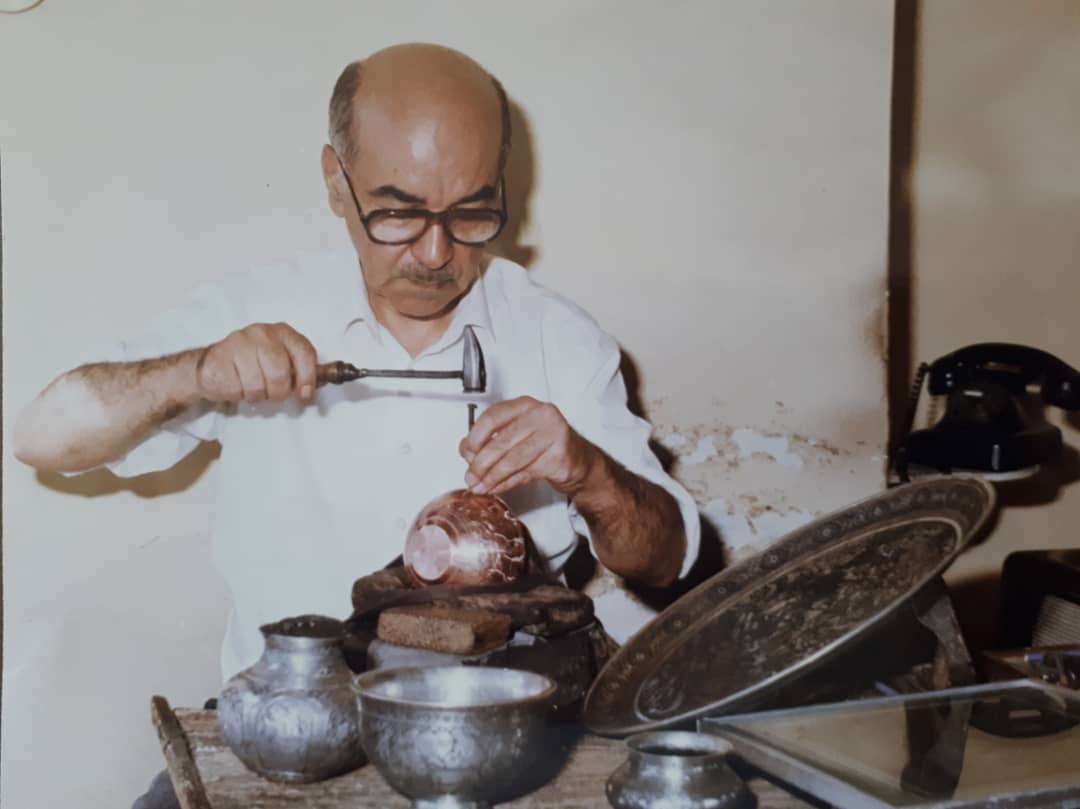
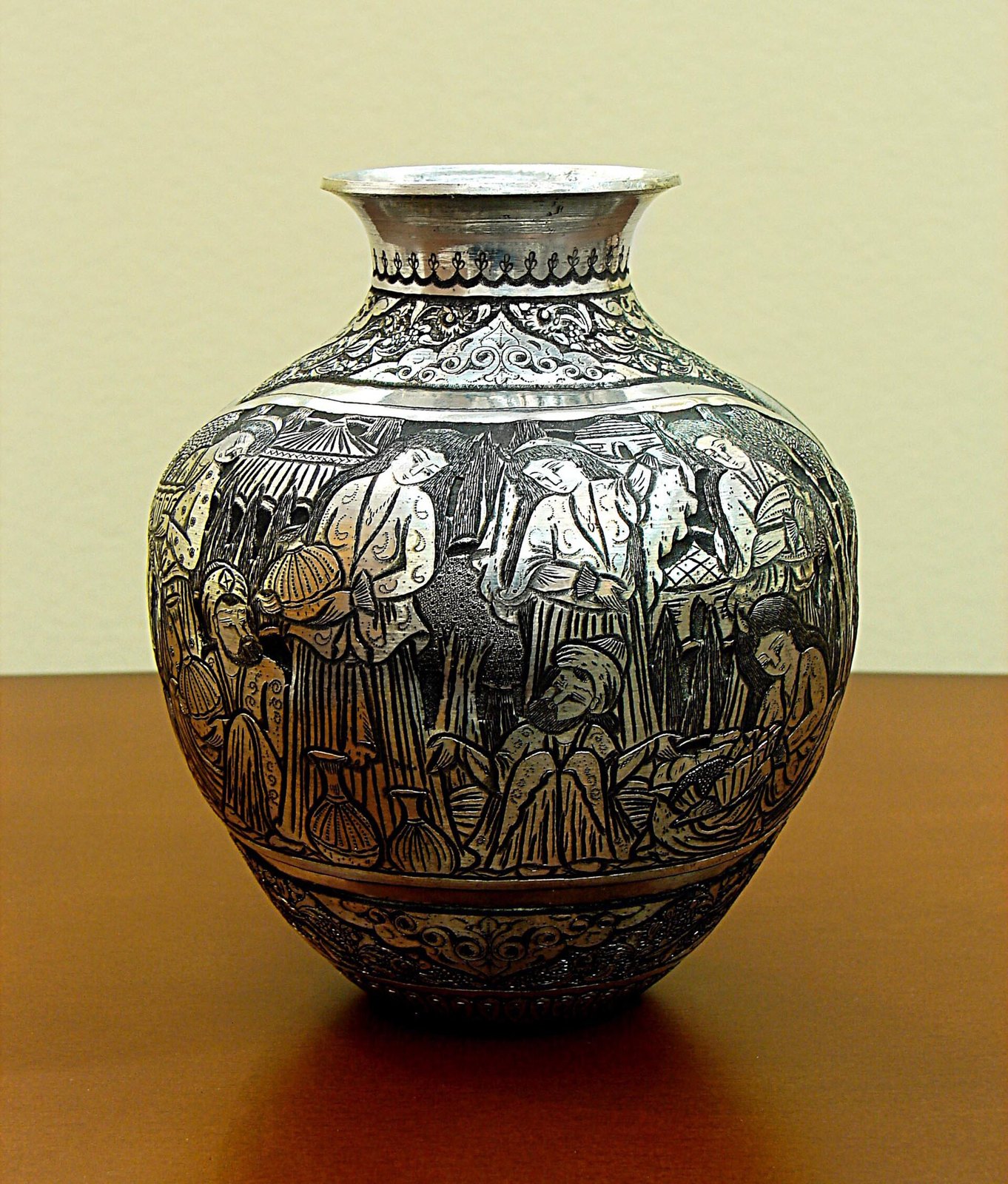
Images shown are documented examples and objects currently listed. Captions record what is known; where origin or date is an estimate it is labelled as such.
Marketplace
Sources & references
- Book: Melikian-Chirvani, A. S. Islamic Metalwork from the Iranian World. V&A, 1982.
- Museum catalogue: Victoria and Albert Museum, Islamic metalwork records.
Where origins, dates or symbolism are contested, this entry states the competing readings rather than choosing between them. Editorial analysis is not presented as documented fact.