Definition
Termeh is a figured cloth in which extra patterning wefts float across a plain or twill ground to build dense bands of ornament, usually running along the length of the fabric with elaborate end borders.
It is used for sofreh cloths, ceremonial covers, cushion faces, prayer cloths and garments, and appears in Iranian domestic ritual as much as in dress.
History
Brocade weaving is documented in Yazd and Kerman over several centuries, with the drawloom allowing many colours in a single repeat. Hand production contracted sharply with mechanised weaving; power looms now supply most cloth sold as termeh.
Technique
Hand weaving on a drawloom is slow, historically producing only a short length per day, which is why handwoven termeh commands a substantial premium. Reverse floats are trimmed after weaving.
Identification
Turn the cloth over. Handwoven termeh shows cut or floating supplementary wefts on the reverse and small irregularities in the repeat. Power-loom or printed cloth shows a mechanically exact repeat, and printed imitation shows no structural pattern on the reverse at all.
Care
Store rolled rather than folded, since floats abrade along fold lines. Keep out of direct light: the dyes used on silk are among the most light-sensitive in Iranian textile practice.
Gallery
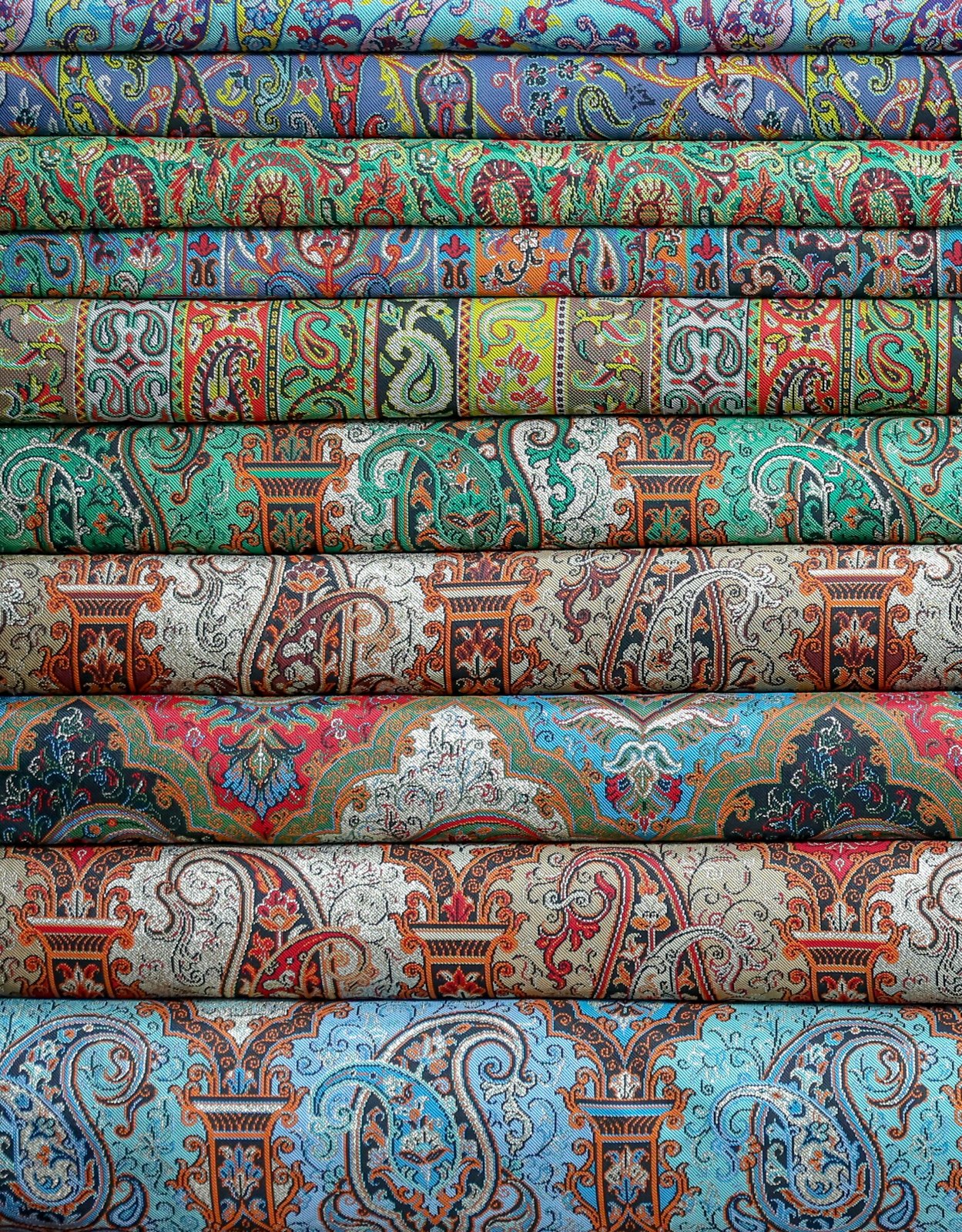
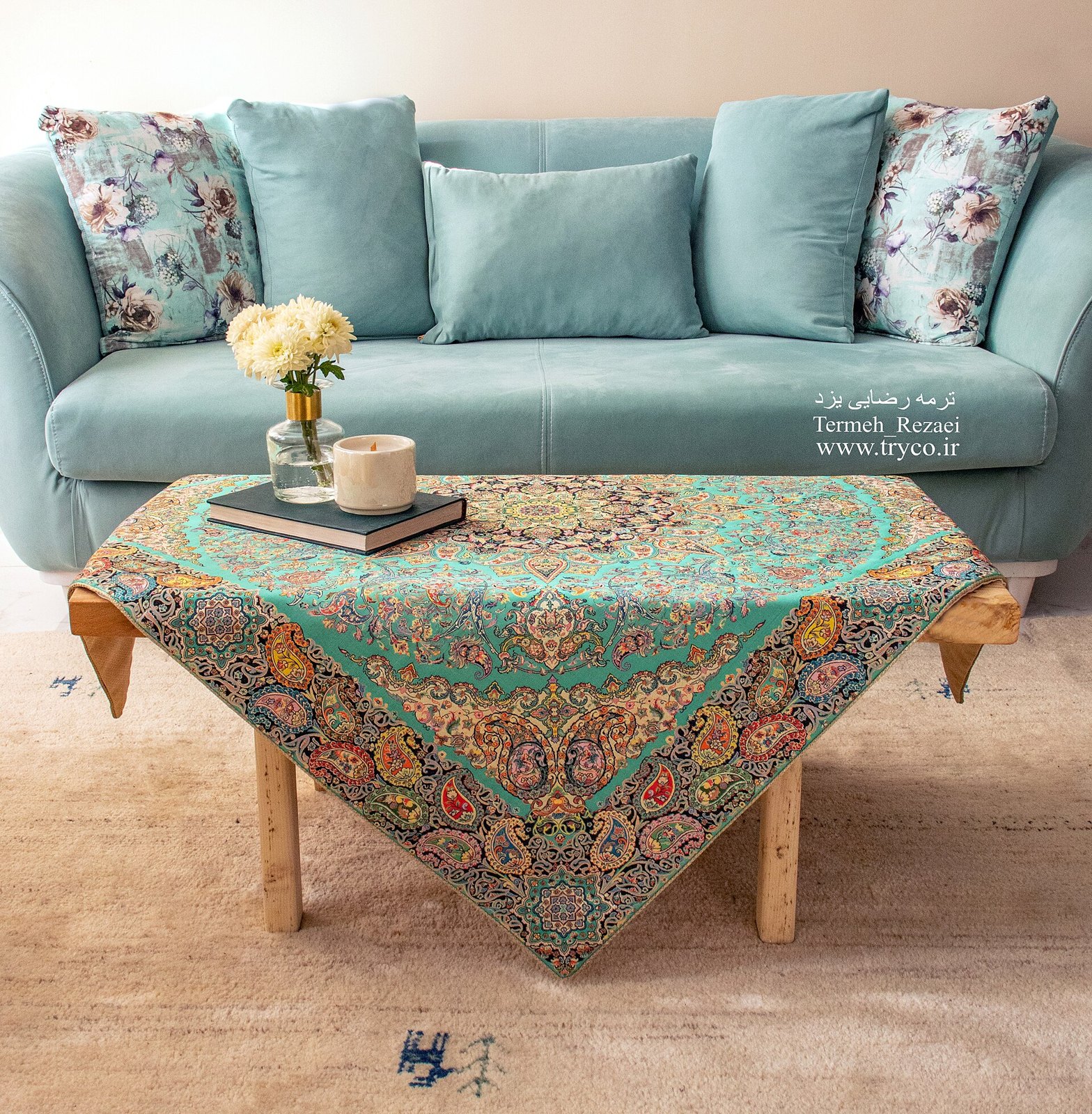
Images shown are documented examples and objects currently listed. Captions record what is known; where origin or date is an estimate it is labelled as such.
Marketplace
Sources & references
- Book: Wulff, H. E. The Traditional Crafts of Persia. MIT Press, 1966.
- Museum catalogue: Victoria and Albert Museum, Iranian textiles collection records.
Where origins, dates or symbolism are contested, this entry states the competing readings rather than choosing between them. Editorial analysis is not presented as documented fact.