
Preservation · 8 min
Storing and caring for Iranian textiles
Editorial team · updated 2026-06-12
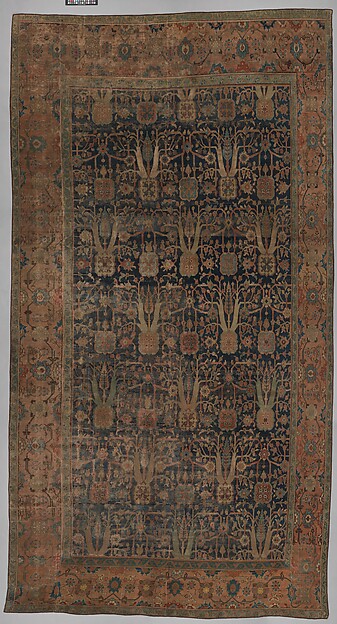
probably late 17th–early 18th century · accession 14.40.710 · The Metropolitan Museum of Art · CC0 (Met Open Access) · Photo source ↗
- Type
- Preservation
- Reading
- 8 min
- Chapters
- 8
- Photos
- 6
Light, humidity, pests and physical support — in that order of importance.
Light
Light damage accumulates and cannot be reversed. Keep textiles out of direct sun, rotate displayed pieces, and accept lower light levels for silk, whose dyes are the most vulnerable.
Humidity and pests
Aim for steady moderate humidity and good air movement. Inspect for moth and carpet beetle regularly — larvae work on the underside and in folds, out of sight.
Physical support
Roll rather than fold wherever possible, face outward on a padded tube, interleaved with unbuffered tissue. Support the full weight when moving a heavy carpet; dragging tears the foundation.
- Ideal RH
- Roughly 45–55%, kept steady
- Light
- Low, no direct sun
- Main pests
- Clothes moths, carpet beetles
Set the environment first
Most textile damage at home is environmental. Wool and silk suffer when relative humidity swings: high humidity invites mould and moth, very dry air embrittles silk. Choose an interior cupboard or room away from radiators, exterior walls and windows. Steadiness matters more than hitting an exact number.
Rolling versus folding
Rugs and long textiles should be rolled, pile-side out, along the warp around an acid-free tube or a tube wrapped in clean cotton. Folding creates hard creases that break fibres, especially in termeh with metal-wrapped or silk wefts. If a textile must be folded, pad each fold with rolled acid-free tissue and refold along different lines every few months.
- Clean before storage — soil attracts pests
- Wrap in washed cotton sheeting, not plastic
- Raise off the floor
- Inspect every three to six months
Dealing with moth
Moth larvae prefer dark, undisturbed, soiled wool. Regular vacuuming of the back of a rug and of storage areas is the best prevention. If larvae are found, isolate the item in a sealed bag; freezing protocols used by museums can be effective but must be followed carefully to avoid condensation damage. Seek a conservator for silk or metal-thread pieces.
Technique and evidence
Start with condition assessment. Light exposure accumulates, folds can become permanent weaknesses and dampness can encourage mould. Insect activity should be isolated and documented rather than treated with household sprays on a historic textile.
Collecting and next steps
Record measurements, fibres where known, existing damage and storage conditions. For loose or powdering fibres, mould, significant stains or valuable objects, seek a textile conservator before cleaning. Never assume a generic washing instruction applies to an old textile.
The steps here are educational; identification, conservation and valuation of an individual object require appropriate independent expertise.
Related photographs and screened examples
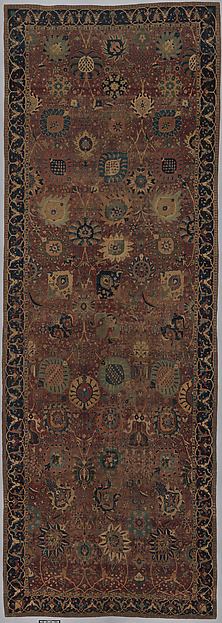

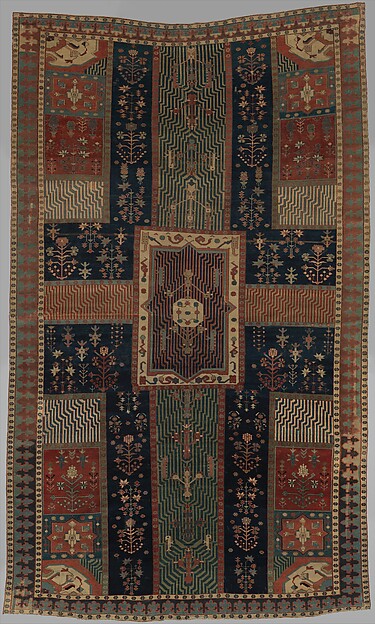

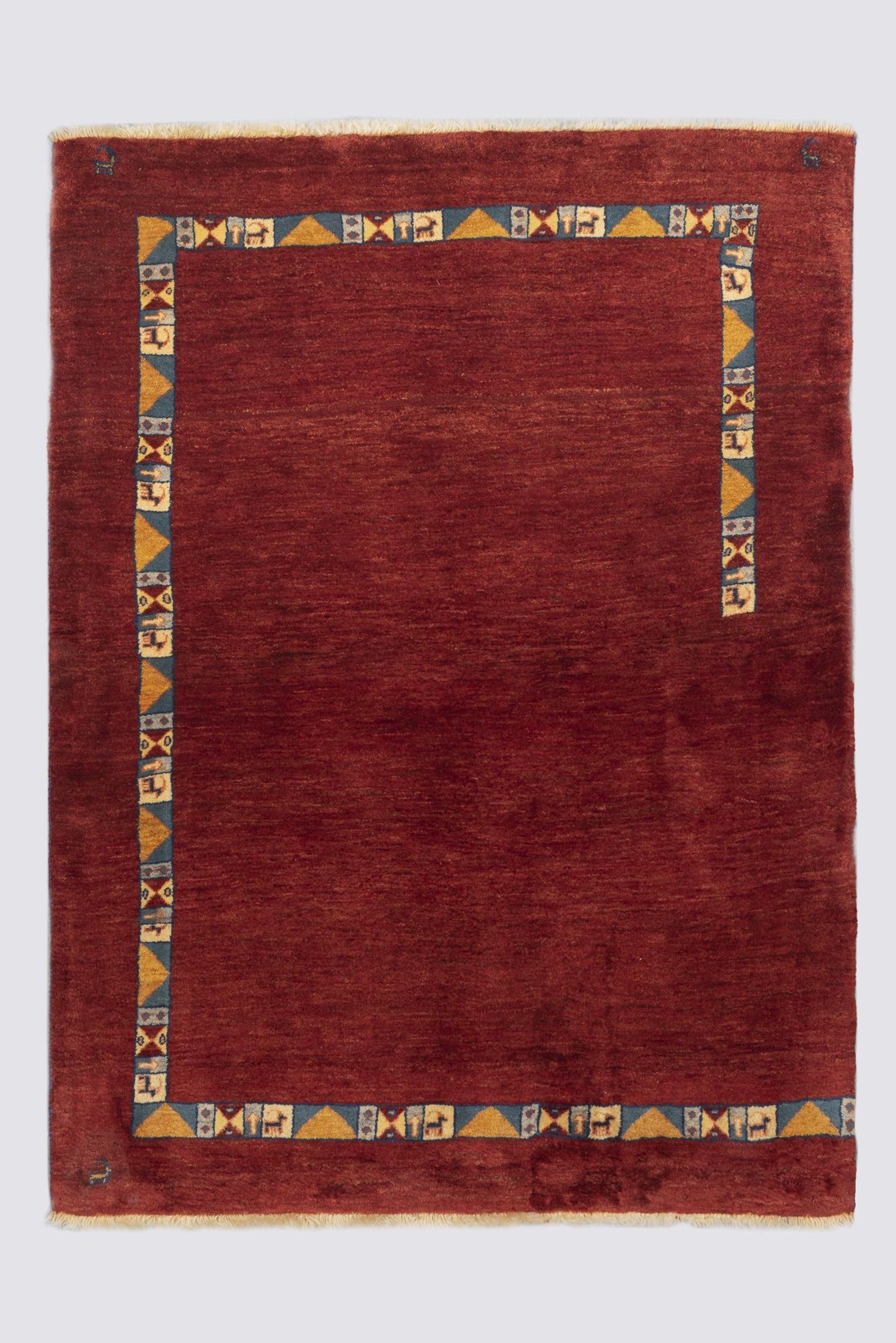
Representative photographs only. Marketplace examples rely on seller descriptions; CraftPersia has not independently authenticated their maker, origin, or rights status. Follow each source link for the listing context.
| Textile | Store | Avoid |
|---|---|---|
| Hand-knotted wool rug | Rolled pile-out on tube | Plastic wrap, damp basements |
| Termeh | Rolled or flat with padded folds | Hard creases, hangers |
| Gabbeh | Rolled; felt-like pile tolerates handling | Long folded storage |
| Pateh embroidery | Flat in drawer with tissue | Direct light |
| Subject | What differs | What to do |
|---|---|---|
| Light | Fading and weakening | Shade and rotate displays |
| Pests | Larvae, holes or frass | Isolate and seek conservation guidance |
| Folds | Sharp creases or splits | Support and roll if structure permits |
Timeline
- On acquisition
Photograph both faces and record condition.
- During storage
Maintain stable, clean, low-light conditions and inspect regularly.
- On damage
Stabilise handling and consult a qualified conservator.
References and further reading
- [1] Victoria and Albert Museum — Caring for your textiles ↗
- [2] Canadian Conservation Institute Notes 13 series ↗
- [3] Canadian Conservation Institute, CCI Notes, care and storage guidance for textiles.General preventive-conservation context; individual treatments require a qualified conservator.
These sources provide context, not authentication or provenance for an individual object. Editorial interpretations remain under review.