Definition
Haft-rang means seven colours, a conventional rather than exact count. The design is painted across whole square tiles which are then laid as a grid, in contrast to mosaic faience where each colour is a separately cut piece.
History
The method became widespread in the Safavid period, when the scale of building programmes made cut mosaic impractical for every surface. Kashan's earlier reputation in ceramics is preserved in the Persian word for tile, kashi.
Technique
Tiles are pressed and biscuit-fired, painted with pigments that mature at a lower temperature than the body, then fired again. Colours that would run together at higher temperatures can coexist on one tile.
Identification
On haft-rang, the grid joints cut straight across the design. On cut mosaic, joint lines follow the outline of each colour. Replacement tiles in a historic scheme often differ slightly in glaze depth and are usually visible in raking light.
Conservation
Salt migration from mortar is the main threat to historic tile. Do not attempt cleaning of crazed glaze; document the condition and consult a specialist.
Gallery
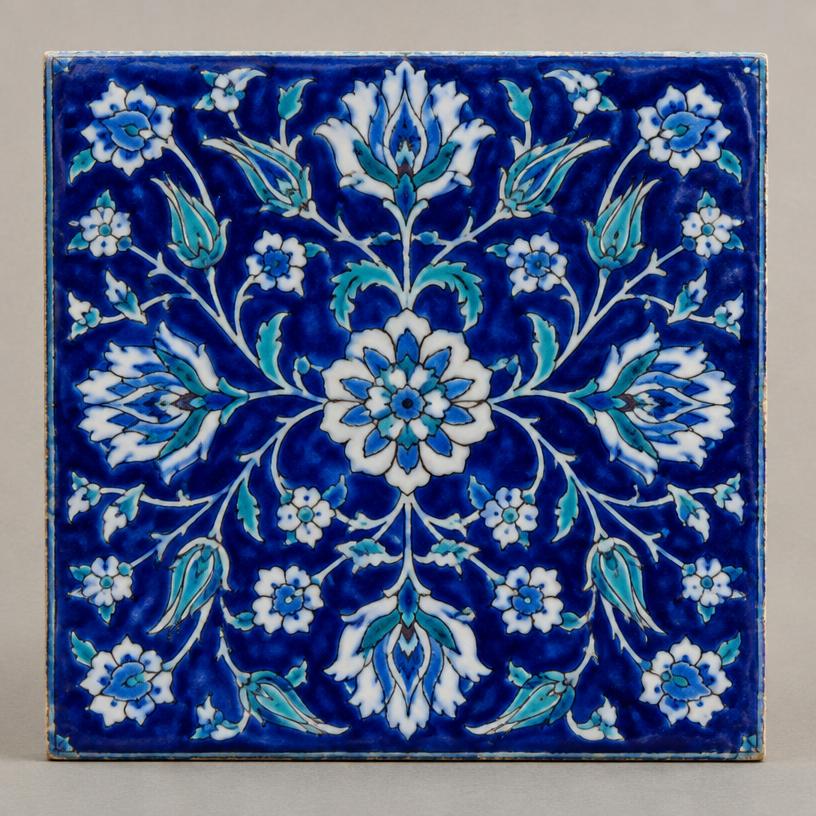
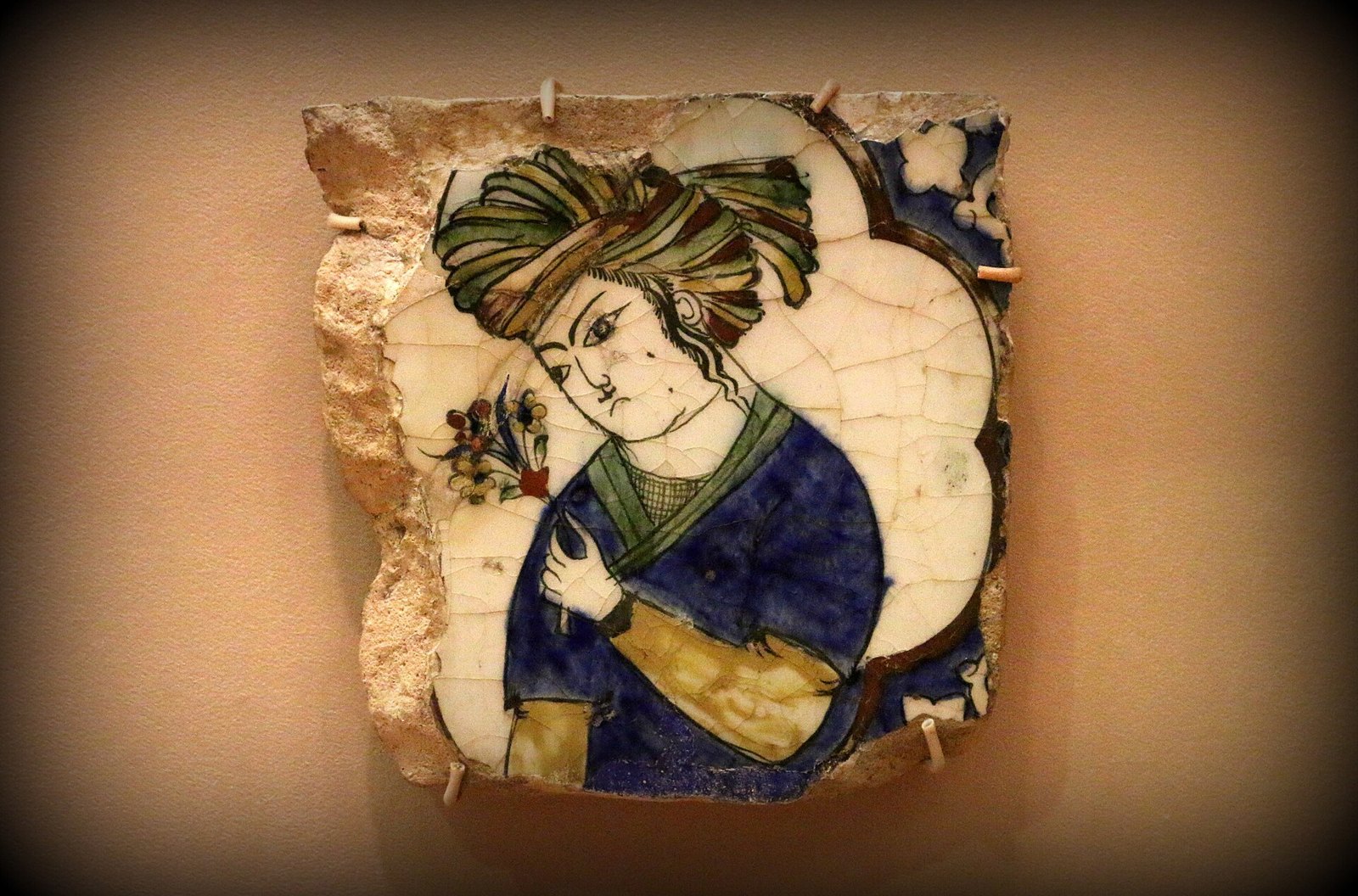
Images shown are documented examples and objects currently listed. Captions record what is known; where origin or date is an estimate it is labelled as such.
Marketplace
Sources & references
- Book: Porter, V. Islamic Tiles. British Museum Press, 1995.
- Institution: Iranian Cultural Heritage documentation on architectural tile.
Where origins, dates or symbolism are contested, this entry states the competing readings rather than choosing between them. Editorial analysis is not presented as documented fact.