
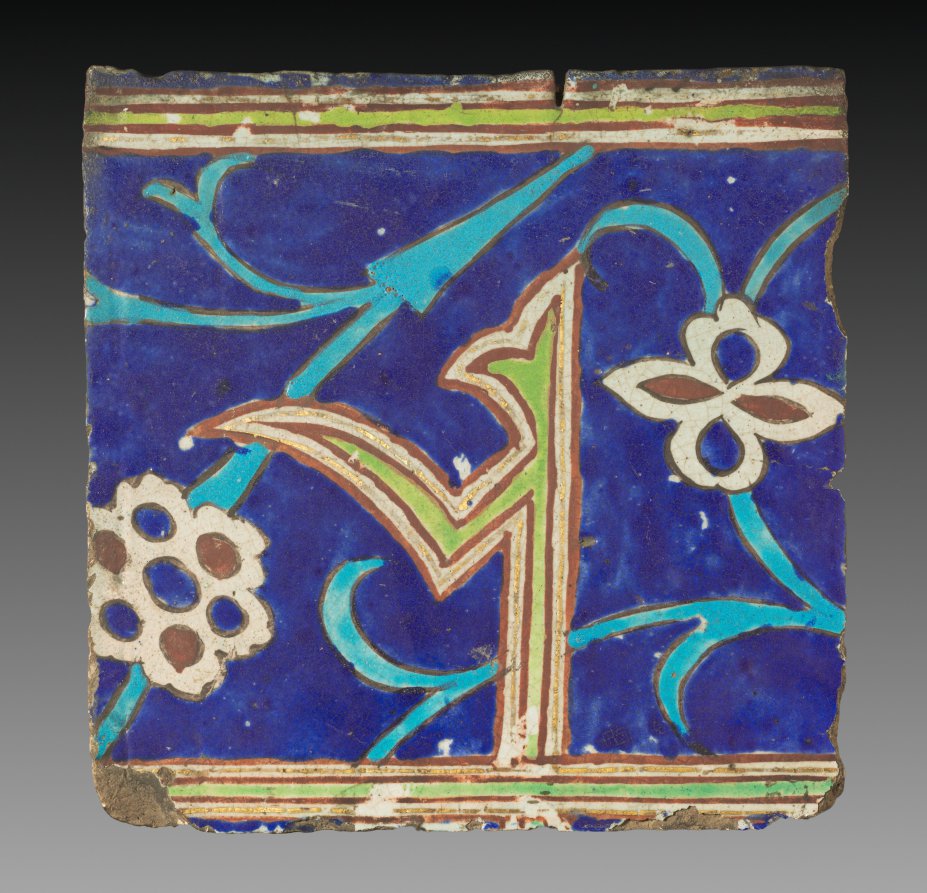
Representative image from an independent shop or archive, not a photograph of the listed object. The seller, price, date, materials, provenance and documentation described on this page have not been verified against the pictured item. Colour varies between screens.
Haft-rang Tile Panel
A four-tile panel painted with a symmetrical floral scheme in cobalt, turquoise, white and manganese, fired as whole squares in the haft-rang manner.
- Craft
- Haft-rang tilework
- Region
- Kashan
- Technique
- Underglaze painting
- Materials
- Frit body, overglaze pigments
- Dimensions
- Four tiles, 40 × 40 cm overall
- Weight
- 5.2 kg
- Date
- 2025
Condition
New, unused
Provenance
Made in the seller's studio.
Documentation
Studio invoice and firing record.
This is illustrative sample documentation, not evidence for the pictured object. No seller or object claim has been independently verified. The archive does not certify authenticity.
Care
Follow the preservation guidance in the Haft-rang tilework entry: light, humidity and physical support matter more than cleaning.
About Haft-rang tilework
Definition
Haft-rang means seven colours, a conventional rather than exact count. The design is painted across whole square tiles which are then laid as a grid, in contrast to mosaic faience where each colour is a separately cut piece.
History
The method became widespread in the Safavid period, when the scale of building programmes made cut mosaic impractical for every surface. Kashan's earlier reputation in ceramics is preserved in the Persian word for tile, kashi.
Technique
Tiles are pressed and biscuit-fired, painted with pigments that mature at a lower temperature than the body, then fired again. Colours that would run together at higher temperatures can coexist on one tile.
General background on the craft, not a statement about any individual object; dates and attributions summarise common positions in the literature and remain under review. Read the full Haft-rang tilework entry.
Checklist before buying Haft-rang tilework
Inspect
- Most architectural craft is seen in place; portable panels and tiles are the exception.
- Look for hand-cut edges and slight variation between pieces.
- Check tiles and panels for chips, cracks and old mortar or plaster on the back.
Red flags
- Tiles or panels claimed to come from historic buildings (removal may be illegal).
- Printed or decal-decorated tiles sold as hand-painted or hand-cut work.
Ask the seller
- Where does this piece come from?
- Is it newly made or salvaged?
- Can it legally be exported?