
Definition
Giveh is a lightweight, breathable shoe with an upper made from tightly woven or crocheted cotton thread, historically favoured for its coolness in hot, dry climates and its comfort for long walking or working hours. The sole was traditionally built up from layers of pressed cotton cloth or from leather, stitched or pressed together and shaped to the foot.
The craft is closely tied to particular towns where giveh-making became a local specialty and export product, with makers dividing the work between those who weave the upper (givehbaf) and those who fashion the sole, reflecting a degree of craft specialisation within the trade.
History
Woven cotton footwear of this general type is documented in Iran through the Qajar and Pahlavi periods as everyday rural and working footwear, prized for being lighter and cooler than leather shoes in hot regions. Specific towns developed reputations for particularly fine or durable giveh, supplying wider regional and national markets.
Industrial footwear and imported manufactured shoes reduced everyday reliance on handmade giveh through the twentieth century, and heritage documentation notes a decline in the number of active givehbaf workshops, even as giveh has continued to be worn regionally and has found renewed interest in craft and heritage markets.
Materials
Fine cotton thread is used for weaving or crocheting the upper, chosen for strength and a smooth, tight surface finish. Soles have historically used pressed layers of cotton cloth, sometimes reinforced with leather or rubber in later, more durable versions.
- Cotton thread for the woven or crocheted upper
- Pressed cotton cloth for traditional soles
- Leather or rubber reinforcement for the sole in some regional or later versions
Technique
The upper is built by hand, either woven on a small frame or worked with a crochet-like needle technique, forming a dense, slightly stretchy mesh that conforms closely to the foot without stitched seams in the traditional forms. The sole is prepared separately by pressing and stitching layers of cloth into a firm, flexible base, then joined to the upper.
Skilled givehbaf work at speed once trained, but achieving an even, tight weave that will hold its shape under use requires a controlled, consistent hand technique developed over years of practice.
Motifs
Giveh is generally undecorated with figurative motifs, its visual character coming instead from the texture and weave pattern of the cotton upper and, in some regional versions, coloured thread used to vary the surface pattern of the weave itself.
Collecting and identification
Hand-woven giveh shows a distinctive dense, slightly irregular texture in the upper compared to machine-knitted imitations, which tend to be more uniform and often use synthetic fibre blends. The join between upper and sole in a handmade pair is typically stitched rather than glued in traditional construction.
As a functional item still in regional use, giveh is less subject to the kind of speculative age or provenance claims common to decorative antiques, though claims of a specific town of manufacture should still be weighed against available evidence.
Preservation
Cotton giveh should be kept dry and aired after wear to prevent mildew developing in the dense woven upper, and stored away from damp conditions. As a wearable, functional craft object, giveh is generally maintained through use and care rather than museum-style conservation, though older or ceremonial examples benefit from the same light, dry storage recommended for other cotton textiles.
Gallery
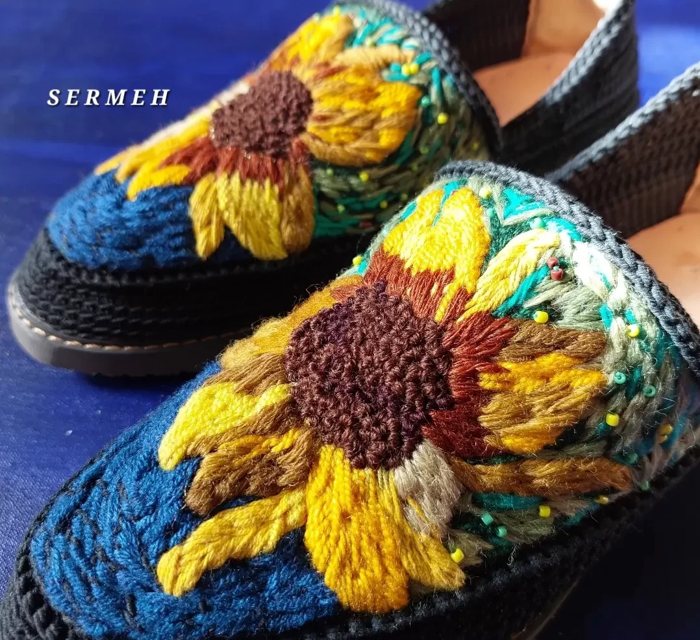
Images are representative examples, not evidence for the sample marketplace records. Their sources and permission status are listed in the photography credits.
Marketplace
No objects of this craft are currently listed.
- Construction
- Breathable shoe construction
- Object reading
- Structure, materials and condition before attribution
- Evidence status
- Educational summary under editorial review
Breathable shoe construction
Giveh brings together a stitched textile upper and a separately made sole. Materials and sole-making methods vary; a contemporary decorative shoe is not automatically representative of older local construction.
Examine components
Look inside the shoe for stitching, reinforcement, insole and how the upper joins the sole. Ask a maker about replacement soles rather than attempting a generic glue repair.
- Textile upper and separate sole
- Variation in sole material
- Joining stitches and signs of wear
Context, preservation and evidence
Workshops, households, museums and contemporary makers can use the same craft name in different ways. Record who made, sold and documented a piece before assigning a date or location. Condition and technique are observable; origin, attribution and value require further evidence.
These reading notes are educational, not an authenticity certificate or valuation. The associated source list is a starting point; many claims and translations still require specialist review.
Technique: what to look for
A breathable stitched or hooked upper is shaped and attached to a separately made sole. Materials and sole construction vary, so inspecting both components matters more than the shared footwear name.
Historical and regional context
Giveh is made in different parts of Iran; an attractive upper cannot by itself identify the workshop, date or assembly method. A worn sole may have been replaced during use.
Collecting and documentation
Ask for close views of upper stitches, inner heel, sole attachment and wear. Confirm measurements and materials in writing; do not assume historic footwear can be safely worn.
These checks are non-destructive educational prompts, not an authentication, attribution or appraisal. Keep a record of which claims were observed and which came from a seller.
Giveh footwear in photographs
Representative photographs, not of any specific catalogued object. Sources on the credits page.
| Type | How to distinguish it |
|---|---|
| Giveh | Stitched upper with regional sole constructions |
| Leather shoe | Often a leather upper |
| Klash | A related shoe term used in some Kurdish contexts |
| Observed process | Often confused with | What to examine |
|---|---|---|
| Hand-stitched upper | Machine-knit upper | Construction, seams and thread path may differ; replacement components complicate visual identification. |
Timeline
- Upper
Build and shape the open textile upper.
- Sole
Prepare a separate sole from the chosen materials.
- Assembly
Attach upper, finish edges and record later resoling.
Key terms
- Giveh گیوه
- Iranian stitched shoe; regional variants exist.
References and further reading
- [1] Wulff, H. E. The Traditional Crafts of Persia. MIT Press, 1966.Background reference; individual statements and attributions still require editorial verification.
These sources provide context, not authentication or provenance for an individual object. Editorial interpretations remain under review.
Sources & references
- Book: Wulff, H. E. The Traditional Crafts of Persia. MIT Press, 1966.
- Institution: UNESCO, intangible cultural heritage documentation on Iranian craft practice.
Where origins, dates or symbolism are contested, this entry states the competing readings rather than choosing between them. Editorial analysis is not presented as documented fact.