
What documented Inlaid metalwork looks like
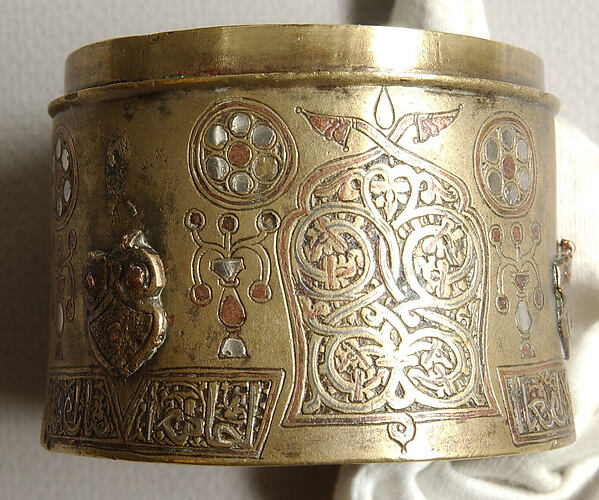
Reference photographs of documented Inlaid metalwork pieces, credited to their sources. Compare construction, surface and wear with any piece you are offered — a resemblance is not proof of origin.
Inlaid metalwork at a glance
| Persian name | فلزکاری ترصیعشده |
| Category | Metalwork · Precious-metal inlay |
| Main techniques | — |
| Typical materials | brass, silver, copper |
| Places of making | isfahan, tabriz |
| Current vitality | At risk |
Understanding Inlaid metalwork
What Inlaid metalwork is and how it is made
History
Inlaid brass and bronze are strongly associated with Khorasan and western Iran in the 12th–14th centuries; many surviving objects have lost part of their inlay.
Technique
The design is engraved and undercut into the base metal; thin sheet or wire of a contrasting metal is hammered into the recesses so that the undercut locks it in place, then chased and polished.
Collecting and identification
Check for lost inlay, later re-inlay, inscriptions and surface wear; attributions of provenance for medieval pieces are often debated.
This guidance is educational only and is not an authentication or valuation service.
General background on the craft, not a statement about any individual object; dates and attributions summarise common positions in the literature and remain under review. Read the full Inlaid metalwork entry.
Before you buy: what to inspect
- In true metal inlay, silver or gold is hammered into channels or a cross-hatched ground; look for the edges of the inlaid wire or sheet.
- Paint or plating imitating inlay sits on the surface and wears unevenly.
- Check for lost inlay, which leaves empty channels.
Typical materials: brass, silver, copper.
Red flags: copies and 'Persian style' imports
- Painted or plated decoration sold as inlay.
- Cast reproductions of historic inlaid pieces sold as antique.
A genuine Inlaid metalwork piece should come with a named place of making in Iran (often isfahan, tabriz) and a clear statement that it is handmade.
Questions to ask the seller
- Which metals are inlaid into which ground metal?
- Was the inlay done by hand?
- Is the piece new or historic, and with what provenance?
What affects the price
| Inlay metal and density |
| Age and provenance |
| Condition (missing inlay) |
| Maker |
Care and cleaning
- Dust and polish gently; aggressive polishing wears away inlay.
- Keep dry: steel grounds rust.
Storage
- Store silver in anti-tarnish cloth or a closed box.
- Keep pieces separate so they don't scratch each other.
Shipping
Small, valuable items should be sent insured with a signature on delivery.
Disclaimer
This guide is educational. It cannot confirm that any particular object is genuine, old or valuable. For important purchases, ask an independent specialist. Read the full Inlaid metalwork entry.