
What documented Blue-and-white ceramics looks like
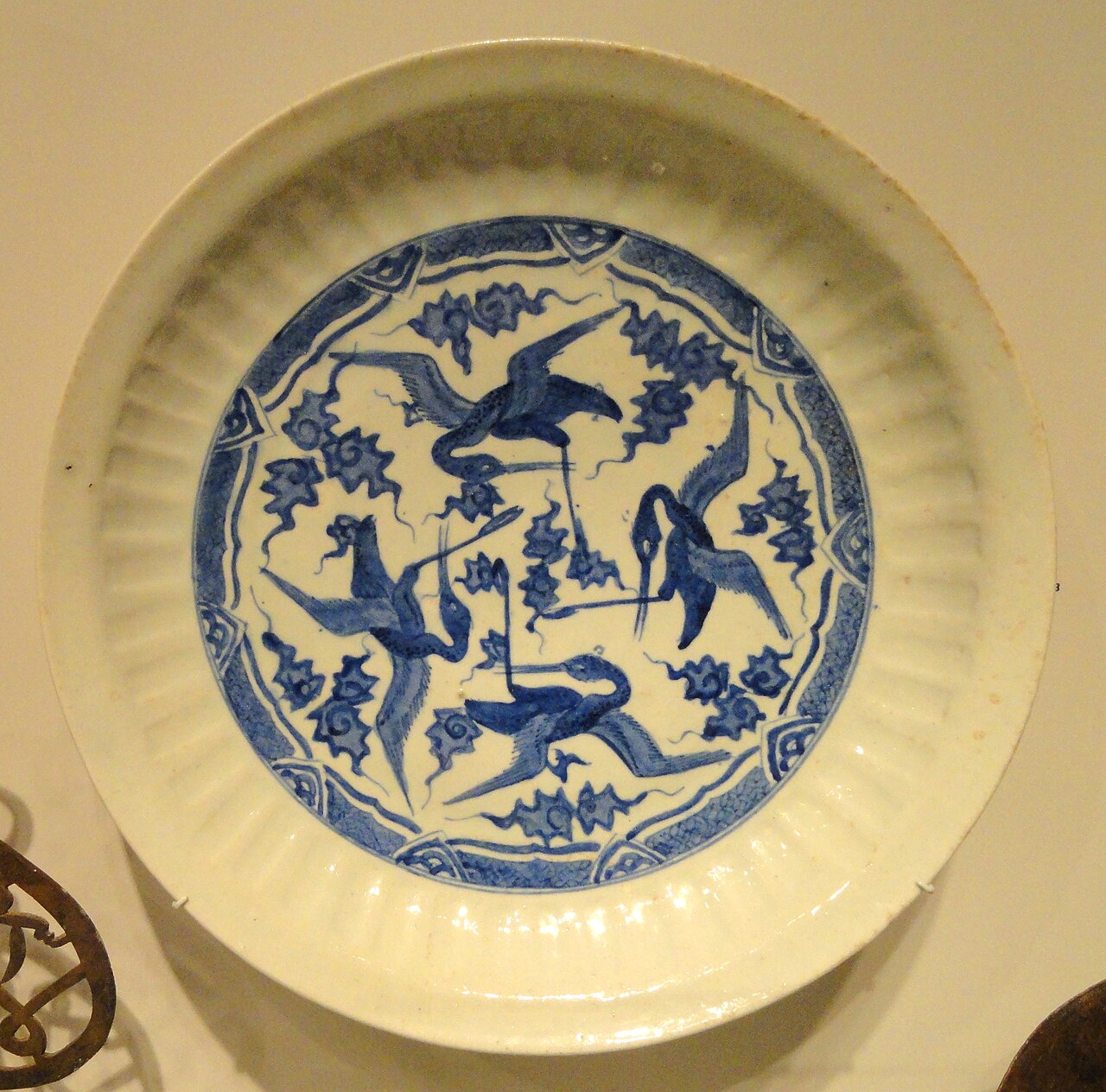
Reference photographs of documented Blue-and-white ceramics pieces, credited to their sources. Compare construction, surface and wear with any piece you are offered — a resemblance is not proof of origin.
Blue-and-white ceramics at a glance
| Persian name | سفالینه آبی و سفید |
| Category | Ceramics · Underglaze cobalt painting |
| Main techniques | underglaze-painting |
| Typical materials | frit-body |
| Places of making | kerman, mashhad |
| Current vitality | Living tradition |
Understanding Blue-and-white ceramics
What Blue-and-white ceramics is and how it is made
History
Safavid blue-and-white production is often associated with Kerman and Mashhad, though exact attribution of many pieces is debated. Some carry pseudo-Chinese marks.
Technique
Cobalt pigment is painted onto the unfired stonepaste body and covered with a transparent glaze, fixing the blue beneath the surface in a single firing.
Collecting and identification
Body colour and hardness, cobalt tone and marks help separate Iranian stonepaste from Chinese porcelain; attributions should be treated as provisional.
This guidance is educational only and is not an authentication or valuation service.
General background on the craft, not a statement about any individual object; dates and attributions summarise common positions in the literature and remain under review. Read the full Blue-and-white ceramics entry.
Before you buy: what to inspect
- Look at the unglazed foot ring — it shows the body clay (red earthenware or white stonepaste).
- Hand-painted decoration has slight variation in line weight and colour; transfers look perfectly even.
- Tap gently: a dull sound may indicate a hidden crack or old repair.
- Examine the glaze under raking light for crazing, chips and retouching.
Typical materials: frit-body.
Red flags: copies and 'Persian style' imports
- Decal or transfer printing sold as hand-painted.
- Artificial ageing (dirt rubbed into new pieces sold as antique).
- Antique claims with no provenance.
A genuine Blue-and-white ceramics piece should come with a named place of making in Iran (often kerman, mashhad) and a clear statement that it is handmade.
Questions to ask the seller
- Is the decoration hand-painted?
- Is the glaze food-safe (lead-free)?
- Has the piece been restored?
What affects the price
| Hand-painting and detail |
| Size |
| Workshop or maker |
| Age and provenance |
| Condition |
Care and cleaning
- Treat decorative and older pieces as display-only unless the maker confirms food safety.
- Wash by hand in lukewarm water with mild soap; avoid dishwashers.
- Avoid sudden temperature changes, which cause cracking.
Storage
- Store with soft padding between pieces.
- Keep away from shelf edges and vibration.
Shipping
Ask for double-boxing with padding; fragile pieces are best insured.
Disclaimer
This guide is educational. It cannot confirm that any particular object is genuine, old or valuable. For important purchases, ask an independent specialist. Read the full Blue-and-white ceramics entry.