
Historical period
Sasanian
ساسانی224–651 CE · Silver vessels, silk weaving and stucco ornament establish a visual vocabulary — roundels, confronted animals, winged motifs — carried far beyond Iran.
Key developments
- Silver gilt vessels
- Figured silk weaving
- Stucco ornament
- Rock relief
Museum objects from the Sasanian period
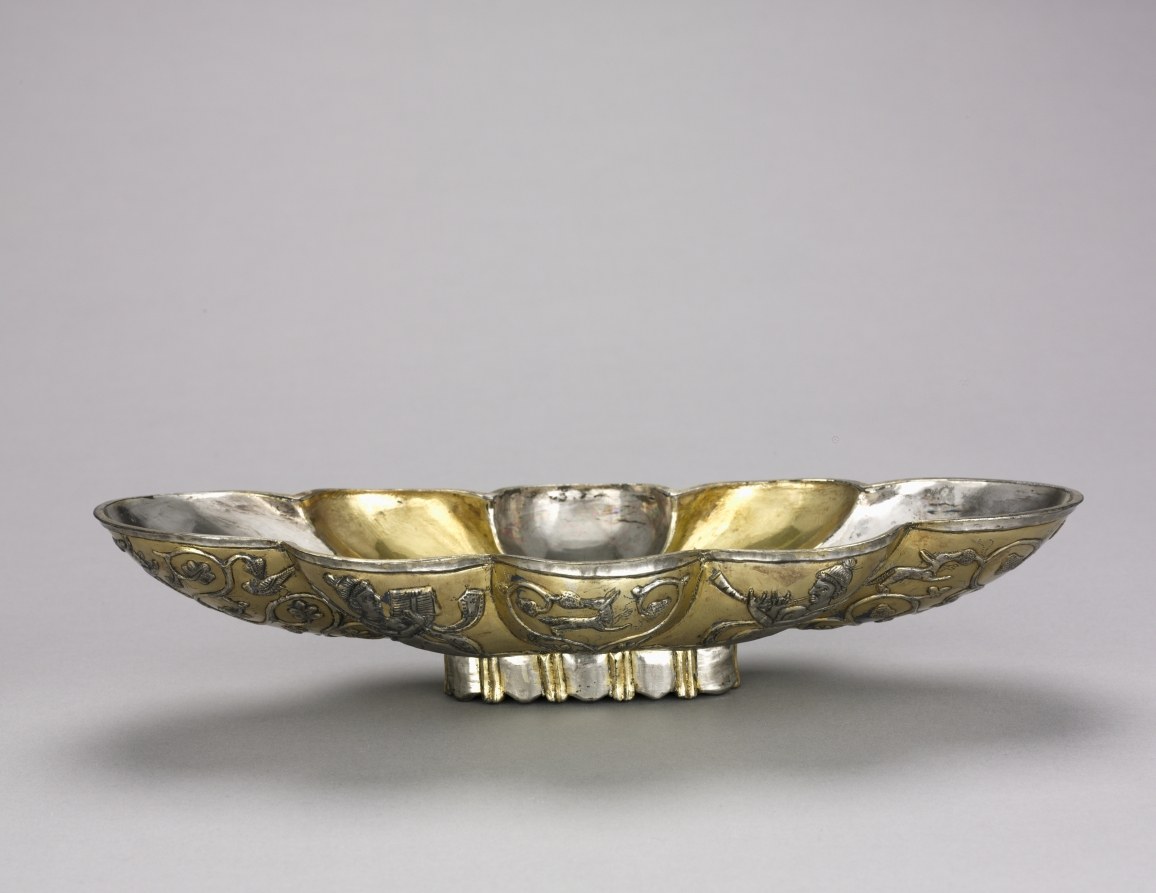
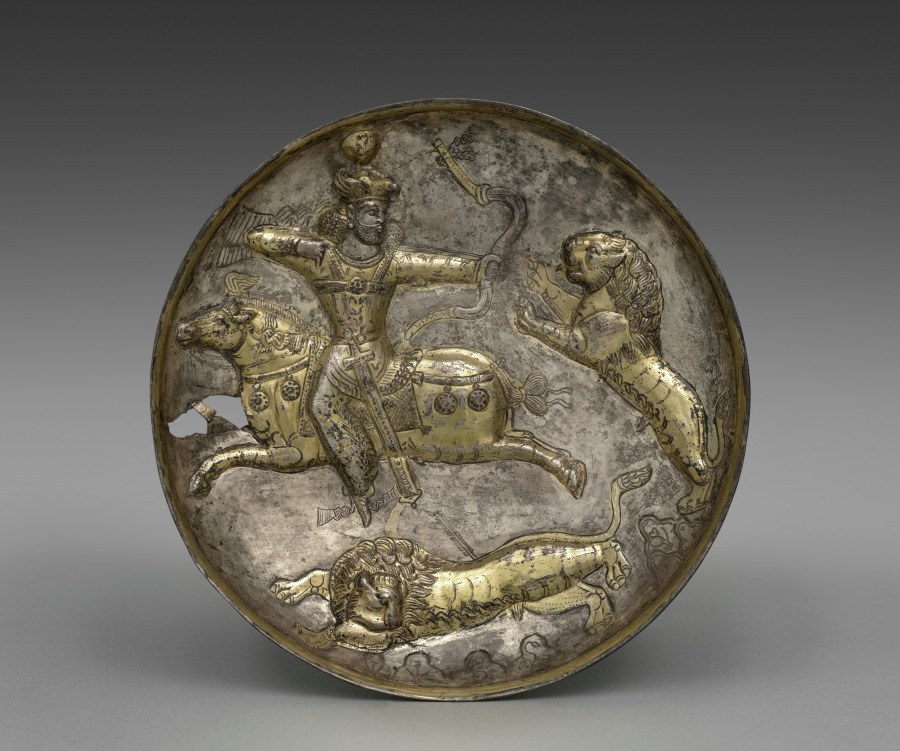
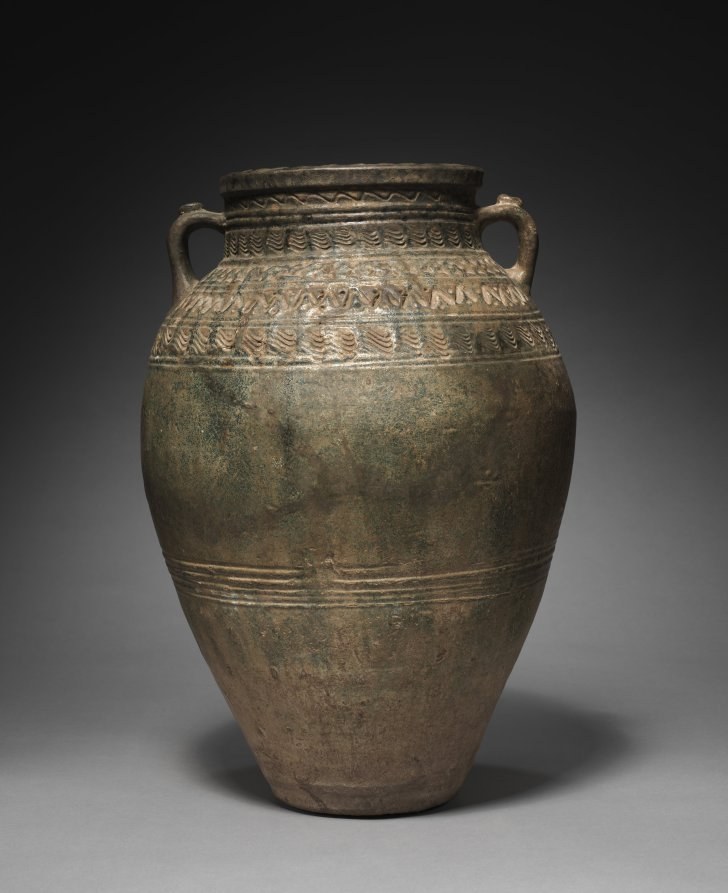
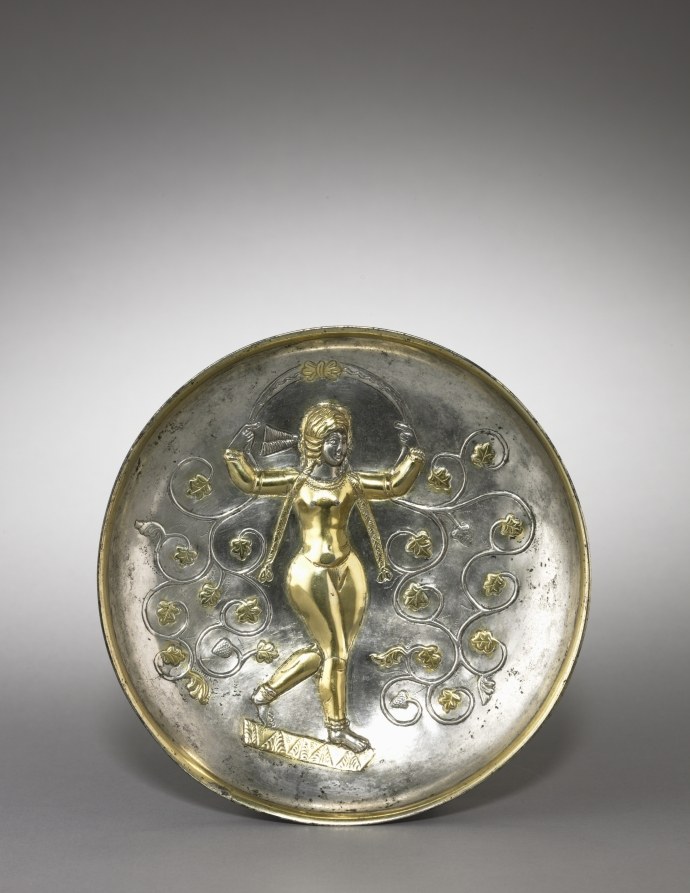
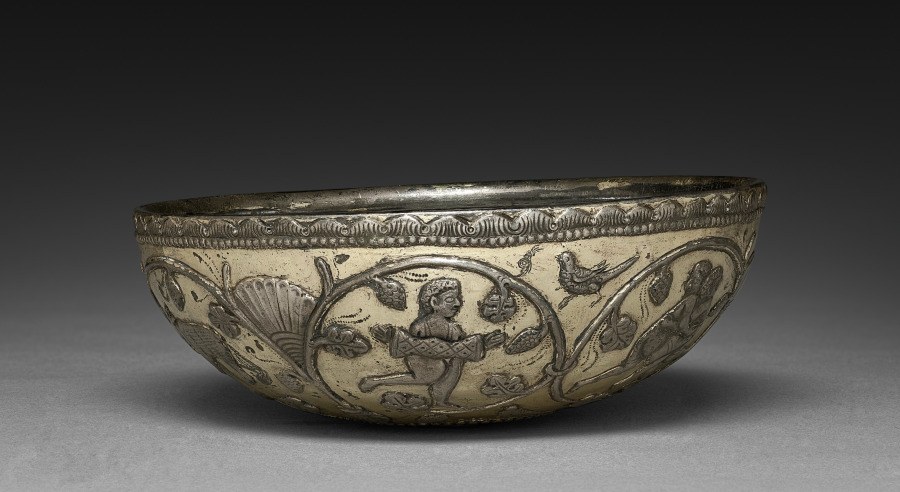
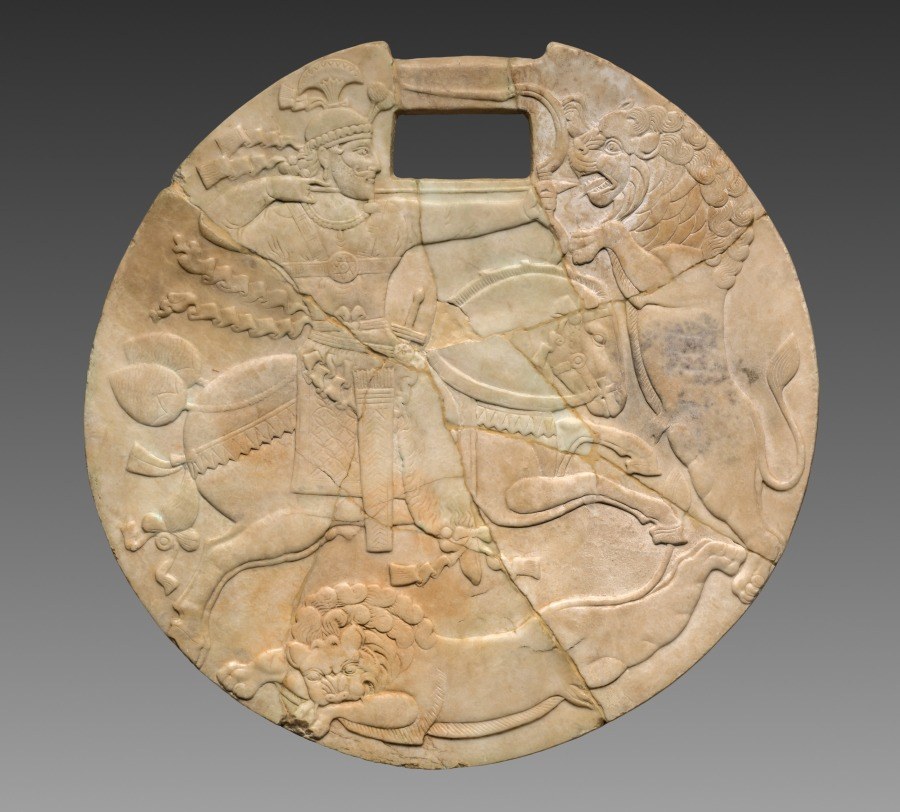
Objects whose museum catalogue record names this period; dates and places follow the museum's attribution.
Centres of production
Crafts and materials
Sasanian workshops produced silver-gilt plates with royal hunting scenes, cut glass, silk textiles with roundels (often with paired animals), and carved stucco. Many Sasanian motifs, such as the senmurv and pearl roundels, passed into early Islamic and Byzantine art.
- Silver-gilt hunting plates
- Cut and faceted glass bowls
- Patterned silks with roundels
- Stucco wall panels
Seeing the period today
Taq-e Bostan near Kermanshah has rock reliefs whose carved garments show textile patterns, and Bishapur and Naqsh-e Rostam in Fars preserve royal reliefs. Sasanian silver is held by the Hermitage, the Metropolitan Museum and the National Museum of Iran.
Silver, textiles and the royal image
Sasanian court silver typically shows the king hunting on horseback or enthroned, with crowns that differ for each ruler — a feature scholars use to group plates by reign. Silk textiles with roundels enclosing paired animals, senmurvs or birds influenced weaving from Byzantium to China, although many 'Sasanian' silks were actually woven in Central Asia or later. Glass with cut facets travelled as far as Japan (Shōsō-in).
- Silver-gilt hunting plates
- Stucco wall panels from Ctesiphon and Chal Tarkhan
- Cut glass bowls
- Roundel silks with senmurv motifs
Legacy in later Iranian crafts
Motifs associated with the Sasanian period — paired animals in roundels, the senmurv, pearl borders and royal hunting scenes — reappear in early Islamic metalwork, textiles and stucco, and later in carpet and tile design. That continuity is real but loose: a roundel or senmurv on a modern piece is a revival or reference, not evidence of age. As with Achaemenid material, privately offered 'Sasanian' silver and seals need full provenance and specialist review because copies are common.
- Pearl-border roundels
- Senmurv and winged creatures
- Hunting-king iconography in later Persian art
Crafts documented in this period
No craft entries are linked to this period yet.
Period dates follow conventional scholarly ranges. Attributing a single object to a period is often uncertain; this page is under review.