
Definition
Minakari is the fusing of powdered glass, coloured with metal oxides, onto a metal surface through repeated firing, producing a smooth, durable and often brightly coloured decorative finish. The technique is applied to both flat panels and shaped vessels, and in its most refined form combines fired background colour with fine hand-painted figurative or floral decoration fired on top.
Isfahan is the city most closely associated with Iranian minakari, where workshops developed a characteristic palette, often built around a deep blue or turquoise ground, though enamelling on metal has a long, geographically wide history and Iranian minakari should be understood as one branch of that broader craft rather than an isolated invention.
History
Enamelling on metal is documented in Iran from at least the Safavid period, when Isfahan's court-supported metalworking workshops produced enamelled vessels and jewellery alongside other decorative arts. The precise origins and lines of technical transmission for Persian enamelling relative to other regional enamel traditions are not fully settled and are treated by scholars as part of a wider shared history of the craft across the region.
Production continued through the Qajar period with court and elite patronage, and in the twentieth century minakari expanded into a wider decorative and tourist market, applied to plates, bowls, jewellery and small decorative objects sold through Isfahan's bazaars and workshops, a shift that broadened output but also increased the range of quality found in the market.
Materials
Copper is the most common base metal for minakari objects because it takes and holds enamel well and is relatively affordable; gold and silver are used for finer, more costly pieces, valued partly because their surface interacts differently with translucent enamel colours. Enamel itself is powdered glass coloured with metal oxide pigments.
- Copper as the common base metal
- Gold or silver for finer minakari work
- Powdered glass enamel coloured with metal oxides
- Fine brushes for hand-painted decorative layers
Technique
The metal object is shaped and cleaned, then a base layer of enamel is applied and fired in a kiln at a temperature sufficient to fuse the glass without melting the underlying metal shape out of form. Successive layers of colour and fine painted decoration are applied and fired in stages, since colours behave differently under heat and typically must be built up from the most heat-tolerant to the least.
Achieving an even, bubble-free enamel surface and successfully firing multiple colour layers without cracking or discolouring earlier layers requires close control of kiln temperature and timing, and is one of the more technically demanding aspects distinguishing finer minakari from simpler production.
Motifs
Floral sprays, bird-and-blossom (gol-o-morgh) scenes and arabesque scrollwork are common subjects for the hand-painted layer, often set against a plain fired background in blue, turquoise or another characteristic ground colour. Some pieces incorporate miniature-painting-style figurative scenes, reflecting minakari's overlap with Isfahan's wider decorative painting traditions.
Collecting and identification
Genuine fired enamel has a glassy, slightly domed surface with a hard, cool feel and should show no flaking when examined closely, unlike cold-painted or lacquered imitations that mimic enamel's colour and gloss without true firing and are more prone to chipping or scratching. A magnifying look at the edge of a colour field can reveal whether paint sits on top of the surface or is fused into it.
Because minakari ranges widely in quality from finely hand-painted museum-grade work to simpler mass-produced tourist pieces, price and stated origin should be weighed against visible craftsmanship rather than assumed from labelling alone.
Preservation
Fired enamel is relatively stable but brittle and can chip or crack from a sharp impact or sudden temperature change, so pieces should be handled carefully and not exposed to extremes of heat or cold. Clean with a soft, dry or barely damp cloth rather than abrasive materials, and have any chipped or cracked enamel assessed by a conservator rather than attempting repair with adhesives or paint.
گالری
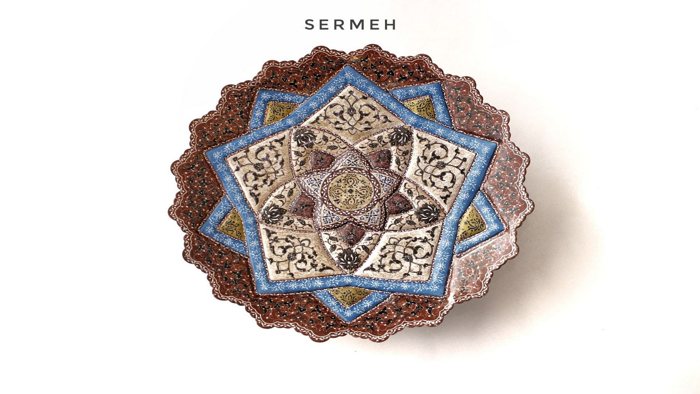
تصاویر نمونههایی معرف هستند، نه سندی برای رکوردهای نمونهٔ بازارچه. منبع و وضعیت مجوز آنها در بخش اعتبارهای عکاسی آمده است.
بازارچه
در حال حاضر هیچ شیئی از این صنعت فهرست نشده است.
- Construction
- Fired enamel on metal
- Object reading
- Structure, materials and condition before attribution
- Evidence status
- Educational summary under editorial review
Fired enamel on metal
Minakari applies glassy enamel to a metal form, commonly copper. Decorative painting and kiln firings build the surface. This metal craft must be distinguished from historical mina’i ceramics, despite similarities in English spelling.
Check surface and base
Document the metal, enamel losses, repairs and any maker stamp without treating a stamp as proof. Damage at rims and bases can reveal layers, but avoid scraping to test them.
- Metal substrate rather than ceramic body
- Glassy fired coating
- Potential chips exposing the underlying metal
Context, preservation and evidence
Workshops, households, museums and contemporary makers can use the same craft name in different ways. Record who made, sold and documented a piece before assigning a date or location. Condition and technique are observable; origin, attribution and value require further evidence.
These reading notes are educational, not an authenticity certificate or valuation. The associated source list is a starting point; many claims and translations still require specialist review.
Minakari enamel در تصاویر
این تصاویر جنبهٔ نمایشی دارند و مربوط به شیء خاصی در فهرست نیستند. منابع در صفحهٔ منابع تصاویر آمده است.
| Type | How to distinguish it |
|---|---|
| Minakari | Fired enamel on metal |
| Mina’i ware | Historical overglaze-painted ceramic |
| Painted copper | Painted or lacquered metal without fired glass enamel |
اصطلاحات کلیدی
- Mina مینا
- Enamel; the term covers different materials and practices.
منابع و مآخذ
- Book: Wulff, H. E. The Traditional Crafts of Persia. MIT Press, 1966.
- Museum catalogue: Victoria and Albert Museum, Middle East collection records, enamelled metalwork.
در جایی که خاستگاه، تاریخ یا نمادشناسی محل مناقشه است، این مدخل روایتهای رقیب را بیان میکند نه اینکه میان آنها یکی را برگزیند. تحلیل سردبیری بهعنوان واقعیتِ مستند ارائه نمیشود.