
Exhibition
Silk Lines of Yazd
خطهای ابریشمی یزدTermeh brocade and the patience of the draw loom
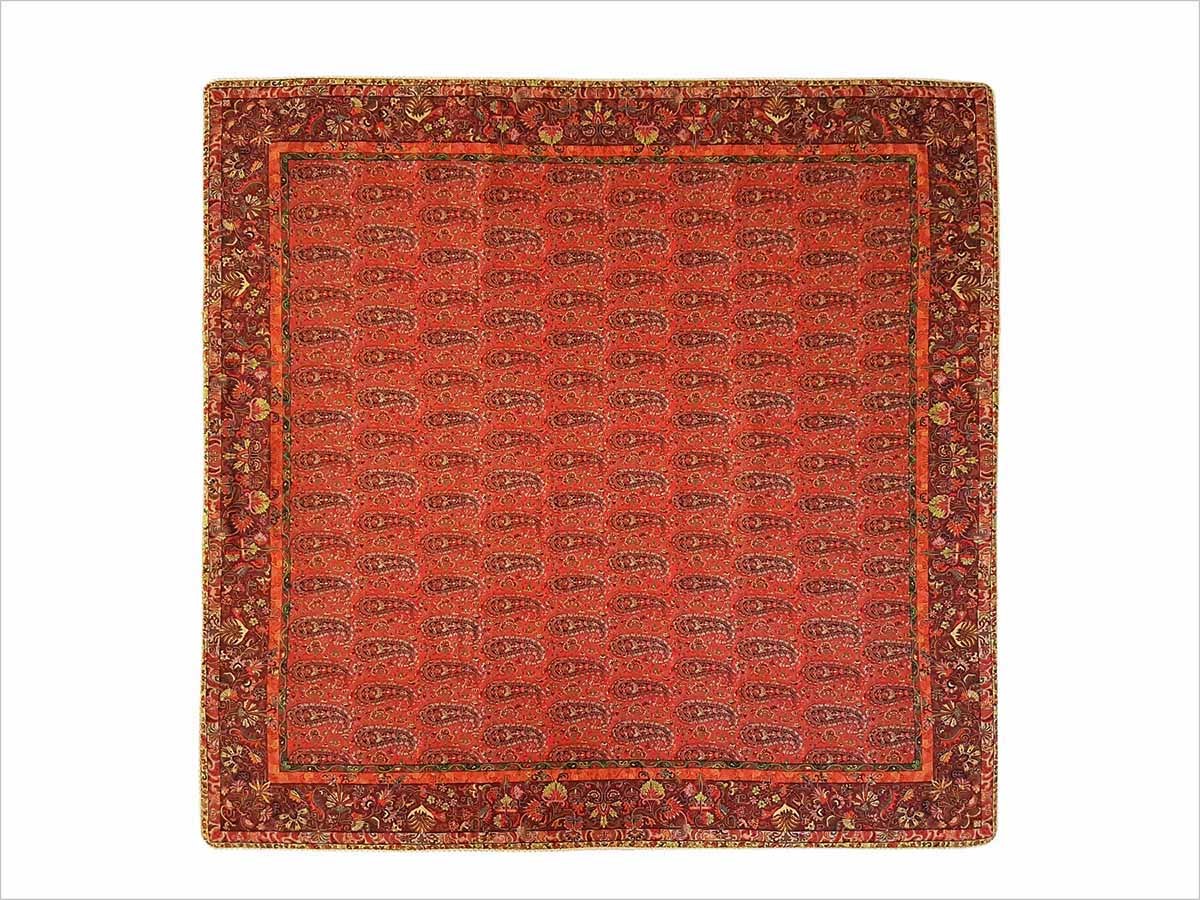
Curatorial narrative
Termeh is woven, not printed or embroidered. On a traditional draw loom, a helper lifted groups of warp threads in sequence so that the weaver could build boteh and floral patterns into dense wool or silk cloth.
Yazd kept this weaving alive while machine-woven termeh became common. The exhibition places the hand-woven cloth beside the questions a buyer should ask today.
Room 1 · The loom
Traditional termeh was woven on a draw loom operated by two people: the weaver and a helper who pulled cords to lift the warp threads for each pattern row. Progress could be only a few centimetres a day.
Room 2 · Pattern
Boteh is the best-known termeh motif, arranged in rows or within medallions and borders. Colours are often deep reds, greens and creams, with pattern threads carried on the back of the cloth.
Room 3 · Today
Machine-woven termeh is now far more common and much cheaper. Hand-woven pieces are rare and costly. Termeh is used for table covers, prayer-cloth wrappers and wedding gifts.
What to look for
- Very dense weave with no visible gaps
- Floats of pattern thread on the back
- Small irregularities in repeated boteh
- A price and seller description that match hand weaving
Visitor questions
- Is termeh embroidery?
- No. The pattern is woven into the cloth on the loom. Embroidery is stitched onto finished fabric, as in pateh from Kerman.
- How should termeh be cleaned?
- Dry cleaning by a specialist is usually advised. Avoid washing at home, as dyes may run and the dense weave may shrink.
This exhibition is an editorial arrangement of archive material. Objects shown are sample marketplace records, and photographs are representative examples — not images of a physical collection.
More exhibitions
Other curated readings of the archive.