
Exhibition
Page and Gold
برگ و زرMiniature painting and illumination on the Persian page
Curatorial narrative
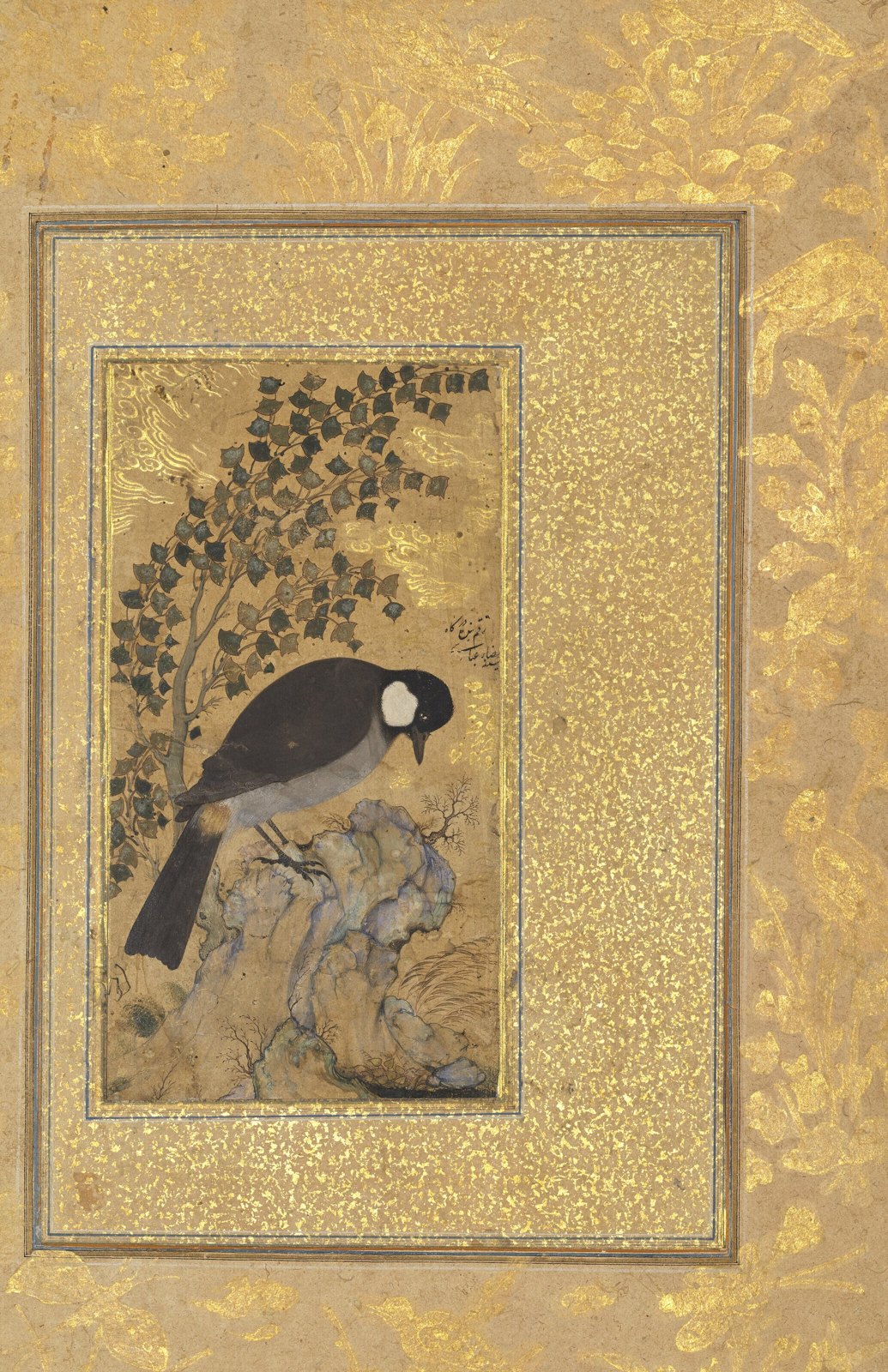
On a Persian manuscript page, painting, writing and gold are planned together. The painter fills a framed scene, the illuminator lays gold and colour around it, and the calligrapher's text sets the rhythm of the whole page.
This exhibition reads a single illuminated album page as a meeting of crafts, and explains why a printed reproduction, however good, is a different kind of object.
Room 1 · The painter
Persian miniature painters used fine brushes, sometimes of cat or squirrel hair, and mineral and plant pigments bound with gum. Scenes are seen from several viewpoints at once, with flat, jewel-like colour.
Room 2 · The illuminator
Tazhib frames the page with gold and colour: rulings, headpieces and margin ornaments. Gold was often applied as shell gold, then burnished. Tash'ir, fine gold drawings of animals and plants, can fill the margins.
Room 3 · The album
A morraqa gathers separate paintings and calligraphies mounted on decorated pages. Pages from albums and manuscripts were often separated and sold individually, which makes their history hard to trace.
What to look for
- Brushwork and raised gold under raking light
- Paper with an even, hand-burnished surface
- No printing dots under magnification
- Clear information about the artist or the source of the page
Visitor questions
- Is a giclée print a miniature?
- No. It is a reproduction. A hand-painted contemporary miniature can be genuine and valuable, but it should be described as new work.
- How should painted pages be displayed?
- Frame behind UV-filtering glazing, away from sunlight and damp. Pigments and paper fade and cockle with light and humidity.
This exhibition is an editorial arrangement of archive material. Objects shown are sample marketplace records, and photographs are representative examples — not images of a physical collection.
More exhibitions
Other curated readings of the archive.