
Definition
Zilu is a cotton floor covering woven in plain weave with a very dense, tightly packed structure that produces a hard-wearing, almost board-like flat surface distinct from both pile carpets and softer flatweaves such as kilim. Its patterning comes from the arrangement of coloured warp and weft threads rather than from knotting or supplementary weft brocade.
The craft is strongly associated with Meybod, a town near Yazd, where dedicated pit-loom workshops historically produced zilu for mosques, shrines and households, suited to the region's hot, dry climate where a cool cotton floor covering was preferable to wool pile carpets.
History
Zilu weaving in the Yazd region is documented from at least the Safavid period, with Meybod developing as the recognised centre of production, supplying floor coverings for religious buildings as well as domestic use. Surviving older examples, including pieces used in shrines, indicate a long-standing continuous practice, though precise dating of individual pieces requires technical or documentary evidence rather than assumption from pattern alone.
The craft is reported by heritage organisations to have declined sharply through the twentieth century as machine-made floor coverings became available and the labour-intensive pit-loom weaving process could not compete on cost, leaving a small number of practitioners maintaining the tradition into the twenty-first century.
Materials
Cotton is used for both warp and weft, chosen for its coolness underfoot, durability and suitability to the dense plain-weave structure. Natural or synthetic dyes colour the cotton thread depending on period and workshop.
- Cotton warp and weft, tightly set
- Natural dyes historically, with synthetic dyes in later production
Technique
Zilu is woven on a specialised pit loom that allows the weaver to apply strong, even tension and to beat the weft extremely tightly, producing the characteristic dense, hard surface. Pattern is achieved by planning the colour sequence of warp and weft threads in advance so that the interaction of the two produces geometric figures as the cloth is woven, rather than by introducing extra pattern threads afterward.
Because pattern is built into the fundamental warp and weft colour plan rather than added on top, designing a new zilu pattern requires working out the weave structure mathematically before weaving begins, a skill reported as one of the more specialised aspects of the craft.
Motifs
Zilu patterning is strictly geometric, dictated by the plain-weave structure: grids, stripes, small repeating diamonds and stepped figures are typical, generally in a limited number of colours determined by the warp and weft plan. Larger figurative motifs are not practical in this weave structure.
Collecting and identification
A genuine hand-woven zilu has a notably dense, stiff hand and a flat, tightly set weave visible on close inspection, distinct from other cotton floor coverings with looser structures. Age and wear should be assessed by a specialist, since the craft's small surviving base of practitioners makes attribution and dating claims difficult to verify independently.
Given the endangered status of the craft, pieces attributed to older Meybod workshops in particular should be treated with special caution absent documentation, as scarcity can encourage overstated claims.
Preservation
Zilu's dense cotton structure is relatively robust to foot traffic but, like other cotton textiles, is vulnerable to fading from prolonged direct sunlight and to damage from sustained damp. Store flat or rolled, avoid folding along fixed lines for extended periods, and consult a textile conservator for cleaning older or valued pieces rather than washing them domestically.
Gallery
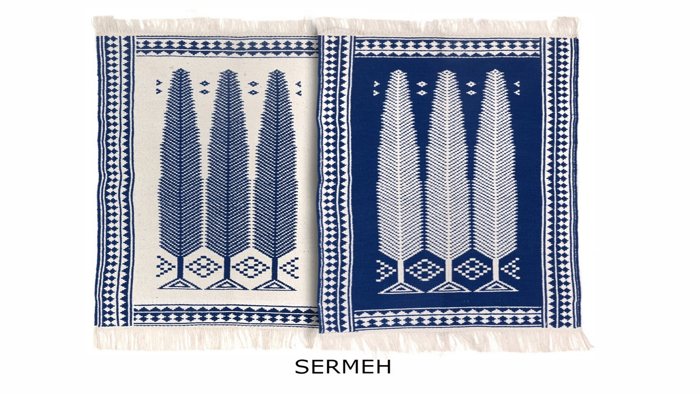
Images are representative examples, not evidence for the sample marketplace records. Their sources and permission status are listed in the photography credits.
Marketplace
No objects of this craft are currently listed.
- Construction
- Cotton floorcloth
- Object reading
- Structure, materials and condition before attribution
- Evidence status
- Educational summary under editorial review
Cotton floorcloth
Zilu is a cotton flatweave associated especially with Meybod in Yazd province. Reversible arrangements of cotton yarns produce a firm, generally low-relief surface. A shop label should not be taken as geographic proof.
Study both faces
Compare pattern visibility on front and back, count colour changes and document selvages. Cotton can yellow, stain or weaken after inappropriate wet cleaning.
- Predominantly cotton construction
- Low-relief reversible geometry
- Often a restricted colour palette
Context, preservation and evidence
Workshops, households, museums and contemporary makers can use the same craft name in different ways. Record who made, sold and documented a piece before assigning a date or location. Condition and technique are observable; origin, attribution and value require further evidence.
These reading notes are educational, not an authenticity certificate or valuation. The associated source list is a starting point; many claims and translations still require specialist review.
Technique: what to look for
Cotton warp and weft form a flat, reversible surface. Study repeat, colour change and selvedge structure to distinguish zilu from wool pile rugs or other flatweaves.
Historical and regional context
Meybod near Yazd is associated with zilu production. A textile used in a mosque or marketed under that town name still needs its own documentation.
Collecting and documentation
Measure irregularities, test neither fibres nor dyes at home, and ask about previous floor use and stains. Request front, reverse and end views before purchase or display.
These checks are non-destructive educational prompts, not an authentication, attribution or appraisal. Keep a record of which claims were observed and which came from a seller.
Zilu (Meybod) in photographs
Representative photographs, not of any specific catalogued object. Sources on the credits page.
| Type | How to distinguish it |
|---|---|
| Zilu | Cotton reversible flatweave |
| Kilim | Often wool, weft-faced tapestry family |
| Jajim | Narrow, warp-faced woven strips |
| Observed process | Often confused with | What to examine |
|---|---|---|
| Cotton zilu | Wool pile carpet | A reversible interlaced surface has no individually tied and clipped pile. |
Timeline
- Planning
Select cotton yarns and plan the two-colour repeat.
- Weaving
Build the pattern within a flatwoven structure.
- Use
Document patches, wear and any later ritual or domestic setting.
Key terms
- Zilu زیلو
- Cotton flatweave associated with Yazd-area production.
References and further reading
- [1] Wulff, H. E. The Traditional Crafts of Persia. MIT Press, 1966.Background reference; individual statements and attributions still require editorial verification.
These sources provide context, not authentication or provenance for an individual object. Editorial interpretations remain under review.
Sources & references
- Institution: UNESCO, intangible cultural heritage documentation on Iranian craft practice.
- Book: Wulff, H. E. The Traditional Crafts of Persia. MIT Press, 1966.
Where origins, dates or symbolism are contested, this entry states the competing readings rather than choosing between them. Editorial analysis is not presented as documented fact.