Definition
Tabriz carpets are woven from a squared cartoon prepared by a designer, which allows complex curvilinear and pictorial compositions to be executed consistently by several weavers on one loom.
Weavers in Tabriz typically use a hooked knife that cuts the pile as each knot is tied, a working method not general elsewhere in Iran.
History
Tabriz was an Ilkhanid capital and a repeated centre of design innovation. Its nineteenth-century workshops organised the export trade on a commercial footing, and the city has since remained the main source of designed, workshop-woven Iranian carpets.
Structure
Foundations are usually cotton, with silk used for highlights or for the whole pile in the finest work. Grades are often quoted in raj, a count of knots across a fixed width; higher raj indicates finer weave but again does not by itself indicate quality.
- Cotton warp and weft in most grades
- Asymmetric knotting, double-wefted
- Raj counts commonly from 30 to 70 in current production
- Silk highlights in medallion and corner work
Designs
Central medallion with corner spandrels is the most recognisable format, alongside all-over Herati fields, garden and vase designs, and pictorial panels. The Shah Abbasi palmette on a scrolling vine is a recurring field system.
Collecting
Late nineteenth and early twentieth century Tabriz workshop carpets are well represented in the market and in museum collections. Attributions to a named workshop or designer should rest on a signature cartouche or documentation, both of which have been imitated; treat unsupported attributions as uncertain.
Gallery
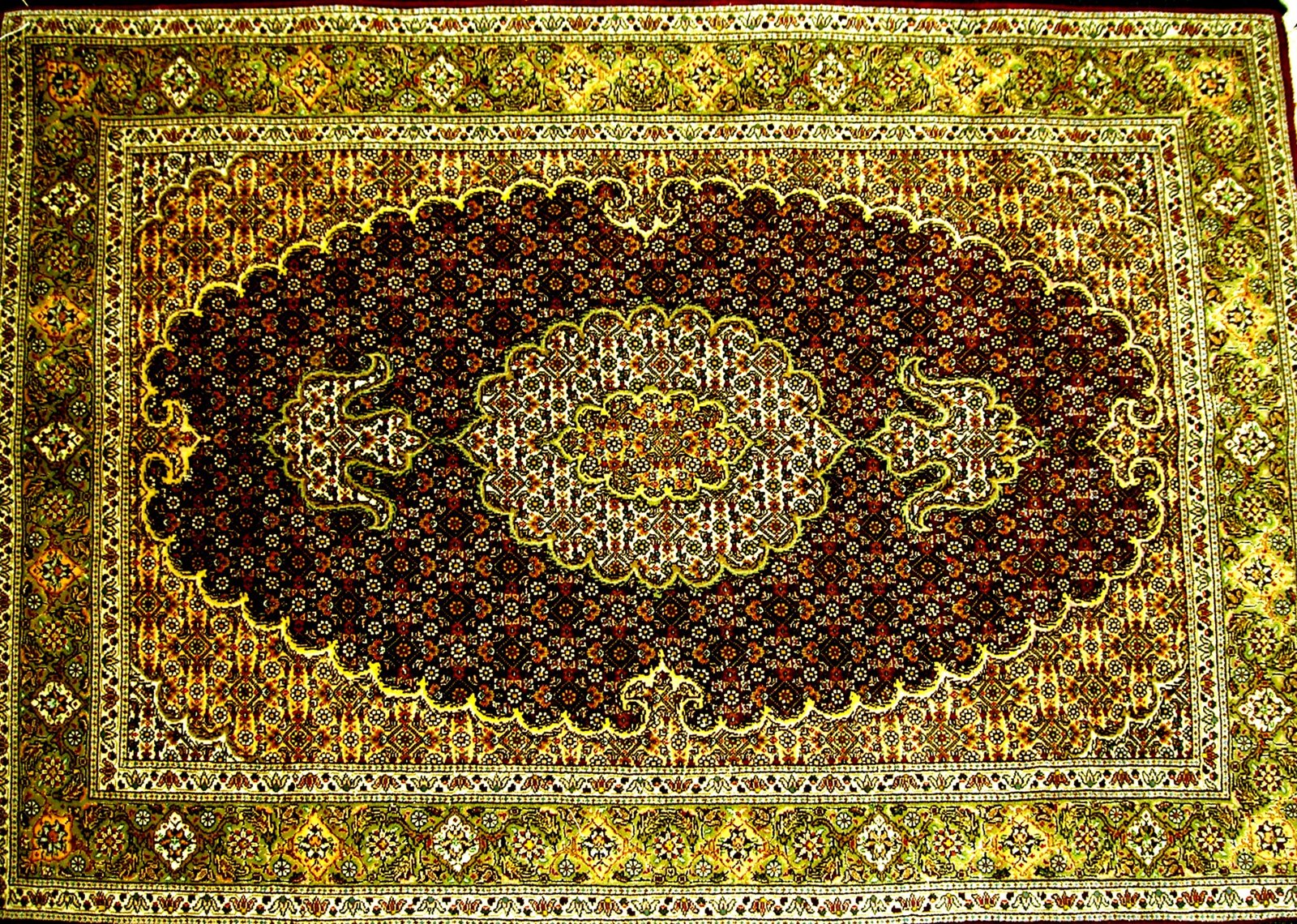
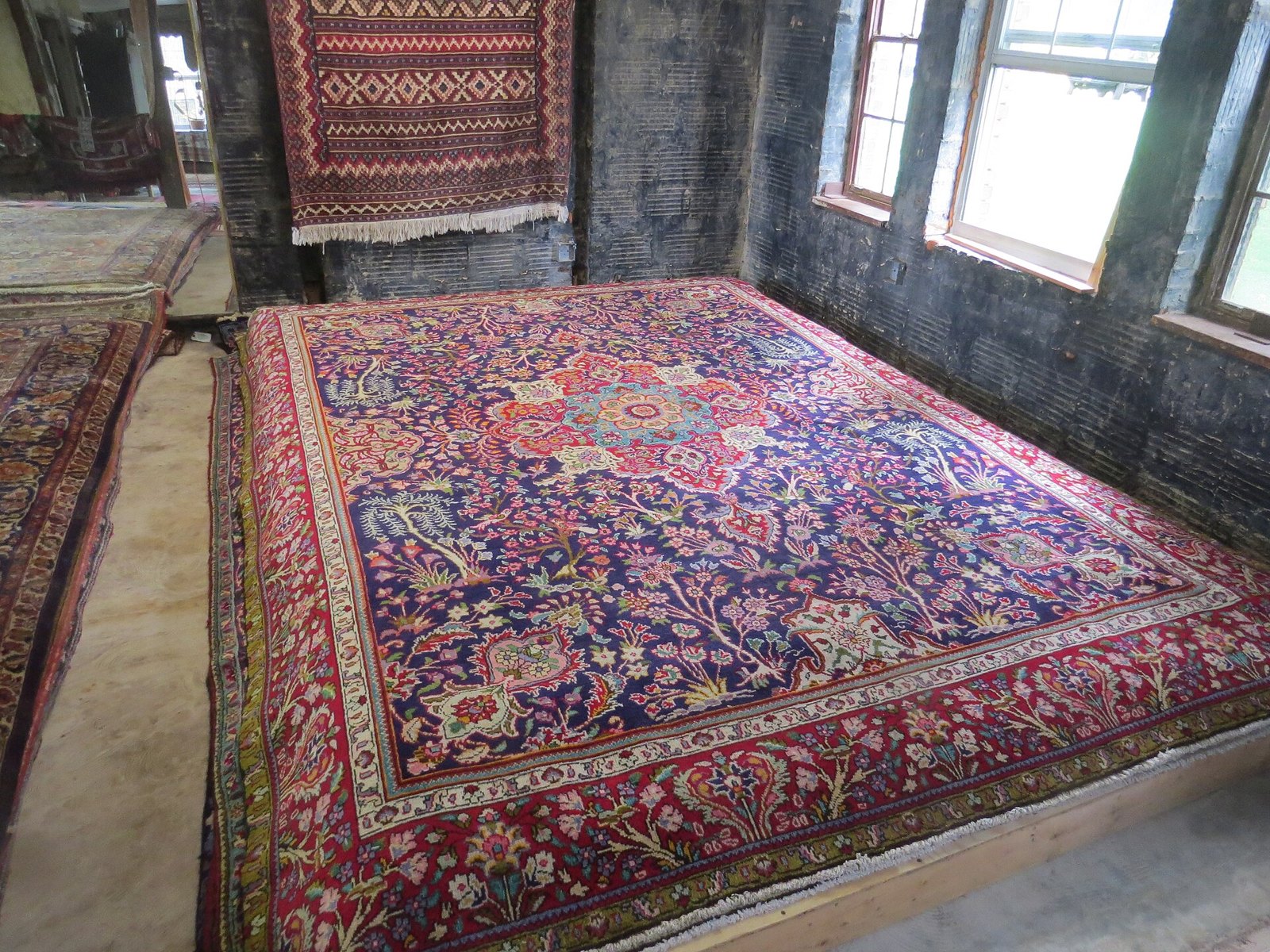
Images shown are documented examples and objects currently listed. Captions record what is known; where origin or date is an estimate it is labelled as such.
Marketplace
Sources & references
- Book: Edwards, A. C. The Persian Carpet. Duckworth, 1953.
- Museum catalogue: Tabriz Carpet Museum, collection records.
Where origins, dates or symbolism are contested, this entry states the competing readings rather than choosing between them. Editorial analysis is not presented as documented fact.