
The two crafts in photographs
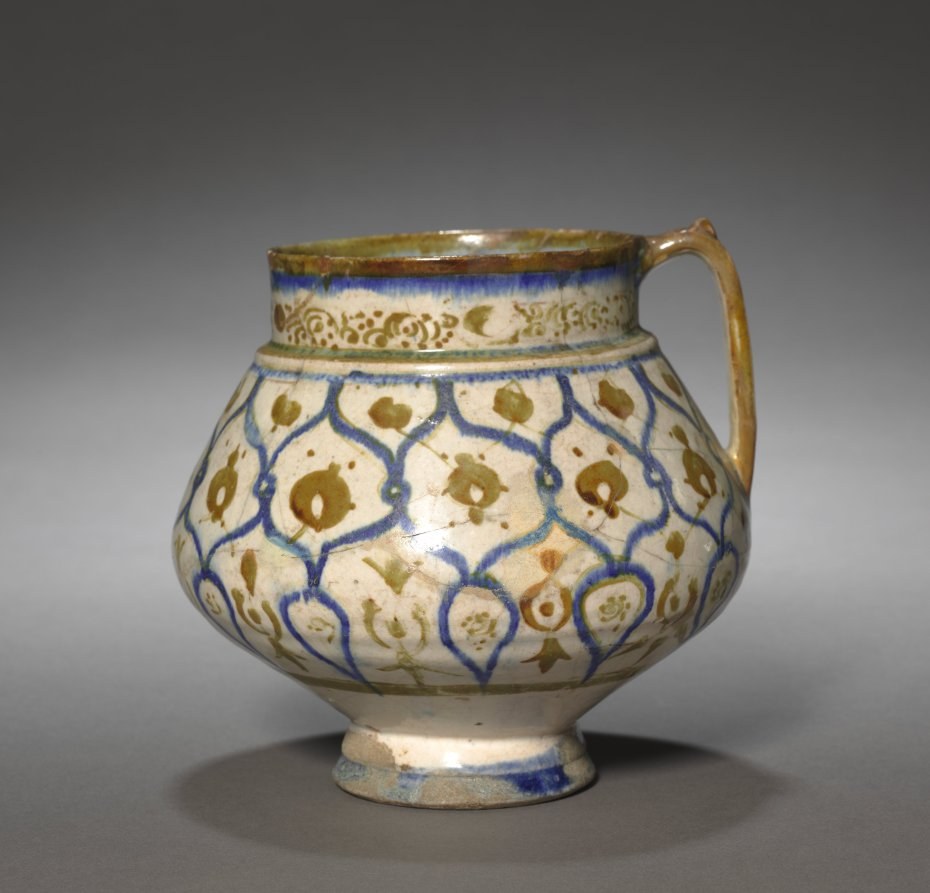
Lustreware (Zarrin-fam)
Slip-painted ceramics
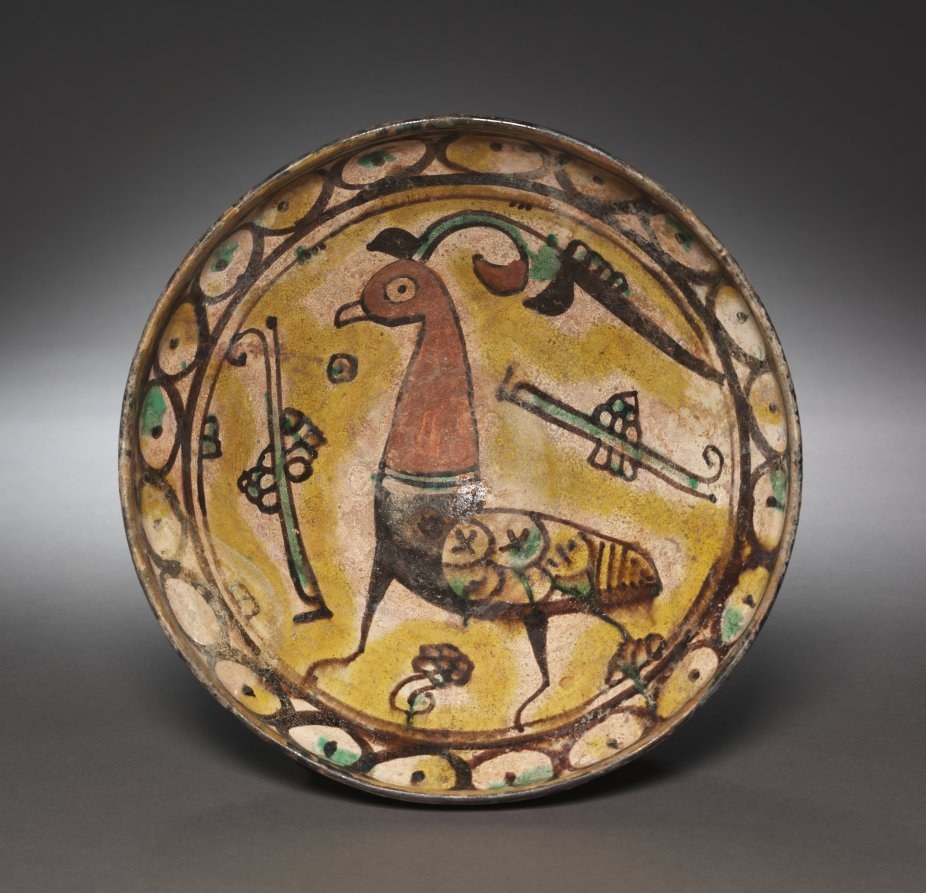
Photographs show documented examples of each craft for visual comparison; they do not prove what any other object is.
Side by side
| Lustreware (Zarrin-fam) | Slip-painted ceramics | |
|---|---|---|
| Persian name | زرینفام | سفال نقاشیشده با گلابه |
| Category | Ceramics · Lustre-painted ceramics | Ceramics · Slip decoration |
| Materials | Stonepaste (frit) | Clay (earthenware) |
| Techniques | — | Wheel throwing |
| Regions | Kashan | Hamadan and Lalejin |
| Periods | Seljuk, Ilkhanid, Safavid | Seljuk, Contemporary |
| Motifs | Eslimi arabesque | — |
| Current vitality | Endangered | Living tradition |
What they share
- Periods: Seljuk
How to tell them apart
- The Lustreware (Zarrin-fam) record lists Stonepaste (frit), which the Slip-painted ceramics record does not.
- The Slip-painted ceramics record lists Clay (earthenware), which the Lustreware (Zarrin-fam) record does not.
- Slip-painted ceramics typically involves Wheel throwing.
- A material listed for only one craft is a question to ask, not an identification test.
- The stated place of making is a useful clue, but never proof on its own.
Background on each craft
About Lustreware (Zarrin-fam)
History
Kashan lustre tiles and vessels of the 12th–14th centuries are among the most closely studied Iranian ceramics; signed and dated pieces anchor much of the chronology.
Technique
A glazed and fired stonepaste body is painted with a silver-and-copper compound, then refired at a lower temperature with restricted oxygen so a thin metallic film forms.
General background on the craft, not a statement about any individual object; dates and attributions summarise common positions in the literature and remain under review. Read the full Lustreware (Zarrin-fam) entry.
About Slip-painted ceramics
History
Slip-painted wares with inscriptions and birds are associated with 9th–10th-century Khorasan; modern Lalejin continues slip-and-glaze pottery on a village scale.
Technique
Liquid clay slips in contrasting colours are brushed, trailed or carved through before glazing and firing.
General background on the craft, not a statement about any individual object; dates and attributions summarise common positions in the literature and remain under review. Read the full Slip-painted ceramics entry.
Read more
Disclaimer
This comparison is educational and built from entries still under review. It cannot confirm what a particular object is.