
Beginner guide · 10 min
Zilu: the cotton flatweave of Meybod
Editorial team · updated 2026-09-29
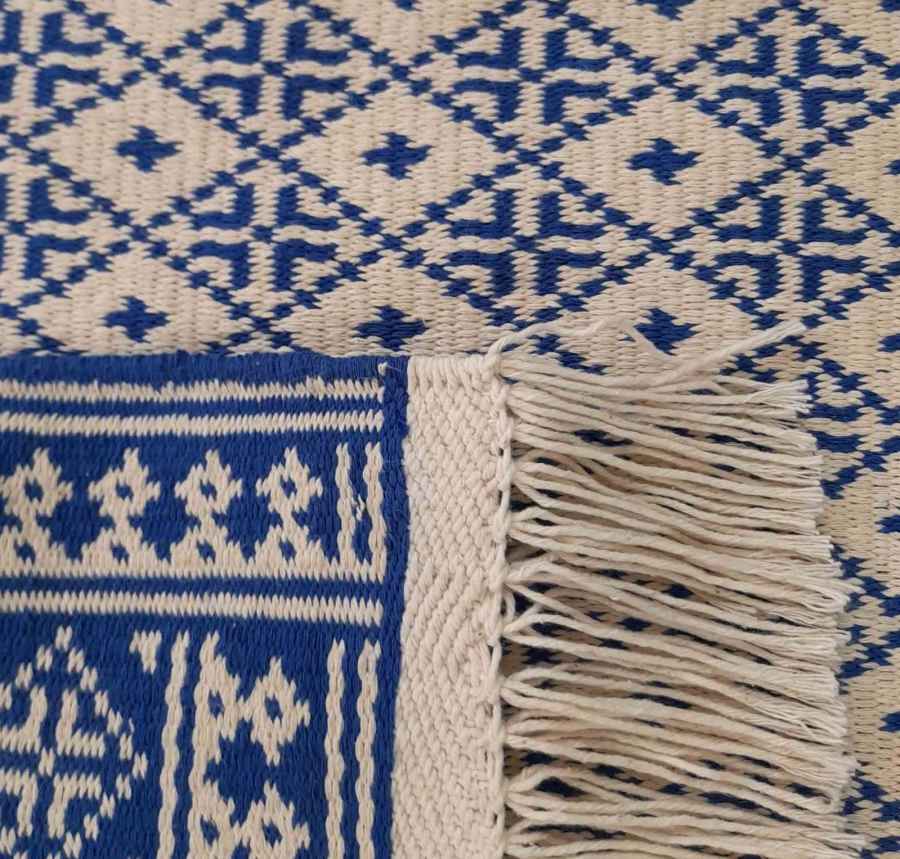
Accessed 14 October 2026 via Firecrawl. Seller states: Handwoven in Meybod, Iran; cotton, 160 x 100 cm. Origin is the seller's claim, not independently verified; Illustrative commercial example, not CraftPersia stock. · ShopiPersia (seller; photographer not stated) · Seller listing photo; reuse rights not reviewed · Photo source ↗
- Type
- Beginner guide
- Reading
- 10 min
- Chapters
- 8
- Photos
- 3
Durable cotton floor coverings long woven for homes and mosques in Yazd province.
What zilu is
Zilu is a flat-woven cotton floor covering, usually in two colours such as blue and white, with repeating geometric designs.
Meybod
Meybod near Yazd is the best-known centre, with workshops still operating.
Care
Cotton zilu can often be washed gently; check colours first.
The loom and the pattern
Zilu are woven on a vertical loom with ground heddles and pattern harnesses, typically in cotton. Many designs are two-colour, such as blue on cream or red on white, with geometric motifs, lozenges and mihrab forms for mosque use. Meybod is the best-known centre, and its Zilu Museum documents the craft.
Why zilu matter
Zilu were long associated with mosques, shrines and humble homes, and some are inscribed with dates and donors' names. They are washable and practical. The number of weavers has fallen, so commissions and workshop visits help sustain the craft.
- Craft
- Zilu — cotton weft-faced flatweave
- Centre
- Meybod, Yazd Province
- Loom
- Vertical loom, traditionally operated by two weavers
- Fibre
- Cotton, usually blue/white or red/white
Meybod and the zilu workshops
Meybod, a desert town north-west of Yazd, is the best-known centre of zilu weaving. Historically zilus were made for mosques, shrines and bathhouses, where a hard-wearing, washable cotton floor covering suited dusty conditions better than pile carpets. Inscriptions woven into older pieces sometimes name the donor and the religious building, making them datable documents as well as textiles.
How the structure works
Zilu is a weft-faced weave in which coloured cotton wefts are manipulated on a vertical loom to produce repeating geometric fields — lozenges, stepped forms, comb and prayer-arch motifs. The two-colour palette is a structural consequence of the technique as much as a taste: each pattern unit is made by exchanging the two weft colours across the warp.
- Look for dense, flat cotton with no pile
- Two-colour schemes dominate; blue/white is the classic Meybod pairing
- Long rectangular runners for mosque rows are common
- Reverse shows the colour-reversed pattern
Zilu today
Production shrank in the twentieth century as machine carpets reached mosques, but Meybod workshops and a zilu museum keep the technique visible. Contemporary pieces include smaller rugs and table runners, sometimes in new palettes. A buyer should treat seller-stated Meybod origin as a claim to confirm with workshop names and photos of the loom or reverse.
Related photographs and screened examples
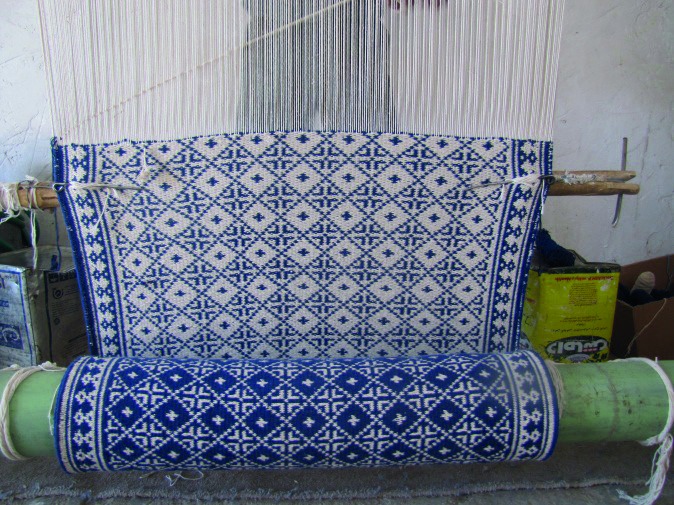
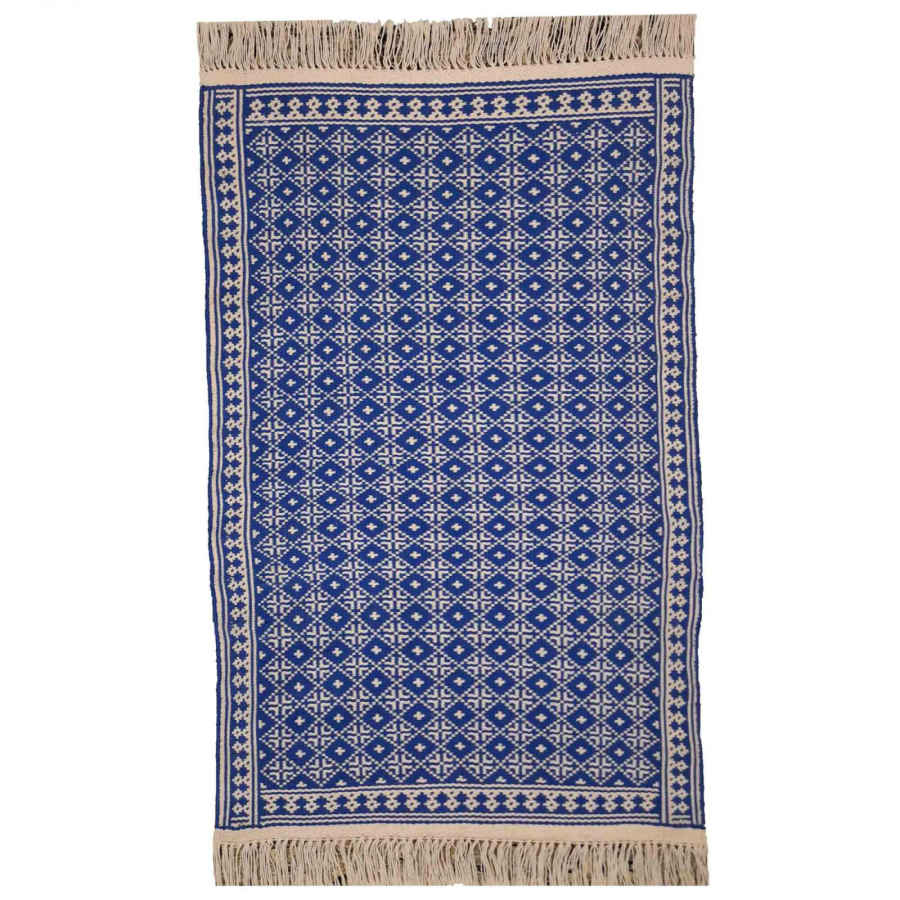
Representative photographs only. Marketplace examples rely on seller descriptions; CraftPersia has not independently authenticated their maker, origin, or rights status. Follow each source link for the listing context.
| Feature | Zilu | Gelim | Jajim |
|---|---|---|---|
| Fibre | Cotton | Wool | Wool / cotton |
| Structure | Weft-faced, two-colour exchange | Slit tapestry | Warp-faced strips sewn together |
| Traditional use | Mosque and bathhouse floors | Floor and bedding covers | Bedding wraps, covers |
Timeline
- Safavid period
Dated inscribed zilus from Yazd province survive
- Qajar period
Widespread use in mosques of central Iran
- Mid-20th century
Decline as machine carpets spread
- 21st century
Museum and workshop revival in Meybod
References and further reading
These sources provide context, not authentication or provenance for an individual object. Editorial interpretations remain under review.