
Buying guide · 11 min
Zilu: buying the cotton flatweaves of Meybod
Editorial team · updated 2026-10-03
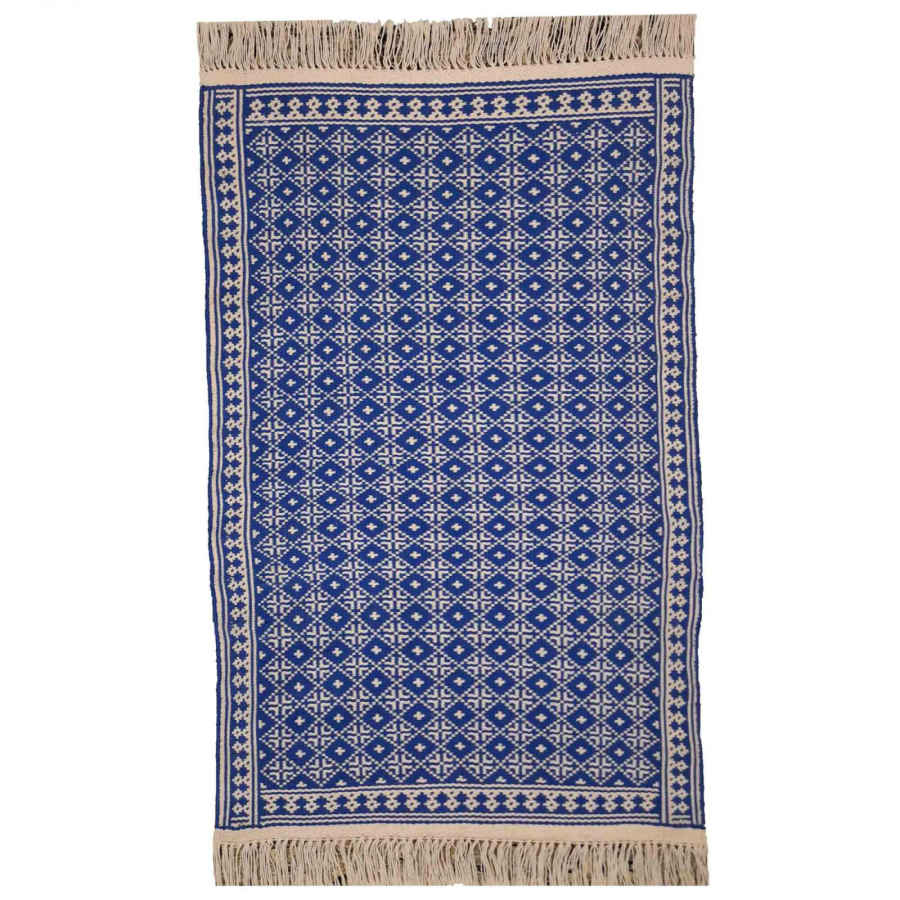
Accessed 14 October 2026 via Firecrawl. Seller states: Handwoven in Meybod, Iran; cotton, 160 x 100 cm. Origin is the seller's claim, not independently verified; Illustrative commercial example, not CraftPersia stock. · ShopiPersia (seller; photographer not stated) · Seller listing photo; reuse rights not reviewed · Photo source ↗
- Type
- Buying guide
- Reading
- 11 min
- Chapters
- 9
- Photos
- 3
Zilu are hard-wearing cotton flatweaves from Meybod, traditionally in blue, white and earth tones; check for handloom weaving and natural cotton.
Traits
Zilu are woven on vertical looms with a weft-faced plain weave and simple geometric designs. They are often made for mosques and homes.
Handloom vs machine
- Handloom pieces have slight irregularities along edges
- Warp ends finish as hand-knotted fringe
- Designs are geometric and identical on both sides
Care
Cotton zilu can be washed more readily than wool rugs, but test colours first and dry flat.
Sizes and uses
Zilu were made in long sizes for mosques and in smaller sizes for homes. The cotton makes them washable, light and cool underfoot, which suits hot climates.
Care
- Hand wash or professionally wash in cool water
- Dry flat in shade
- Use a non-slip underlay
A note on this guide
This is a general introduction written by the CraftPersia editorial team and has not yet been reviewed by a specialist. Workshop practice varies between towns and families; treat dates and figures as approximate and confirm details with makers, museums or published scholarship before relying on them.
- Origin to ask about
- Meybod or other Yazd province workshops
- Fibre
- Cotton warps and wefts
- Typical formats
- Runners, small rugs, mosque-row lengths
Confirm it is a zilu
A zilu is flat, dense and made entirely of cotton. Turn it over: the pattern appears on the back in reversed colours. Printed cotton rugs show a pale, unpatterned back, and machine flatweaves have perfectly straight, uniform edges with no hand-finished selvedges.
- No pile on either face
- Colour-reversed pattern on the reverse
- Slight width variation along the length
- Warp ends finished by hand
Asking about origin
Many 'zilu-style' rugs are made outside Iran. Ask the seller for the workshop or town, photographs of the reverse and of the edges, and, for contemporary pieces, the weaver or cooperative. Treat a bare 'Persian' label as a style claim, not origin evidence.
Condition and use
Cotton zilus are sturdy and washable by specialists, but old pieces can have brittle, yellowed cotton and holes from long mosque use. Inscribed antique zilus are documents; ask whether the inscription is complete and legible, as it may give a date and the name of the endowing donor.
Related photographs and screened examples
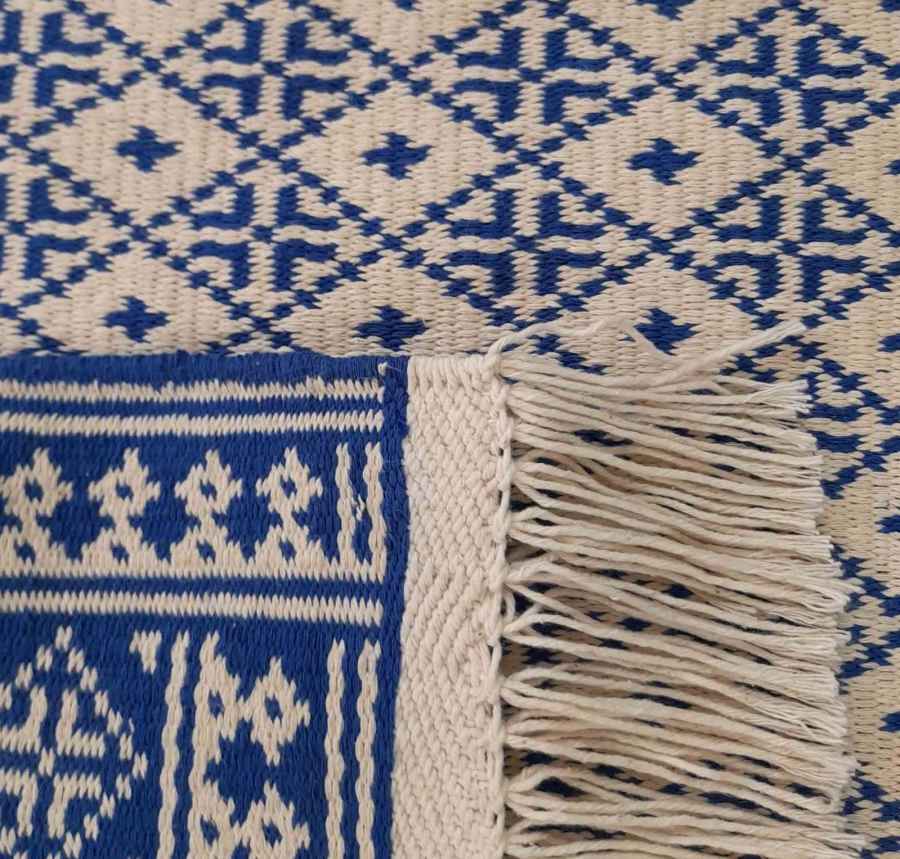
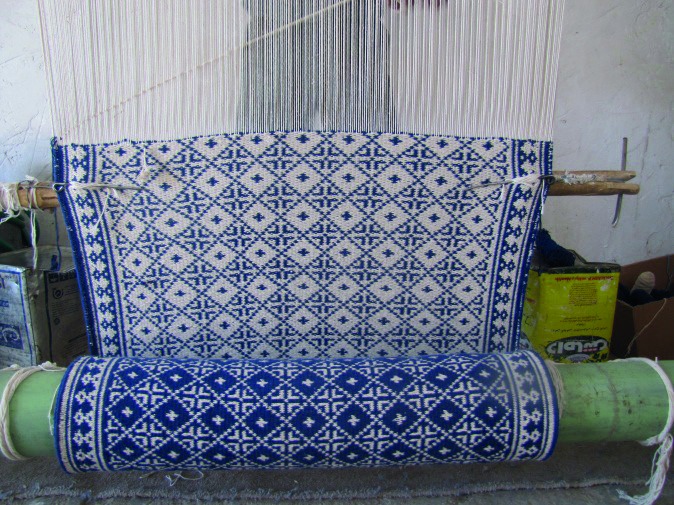
Representative photographs only. Marketplace examples rely on seller descriptions; CraftPersia has not independently authenticated their maker, origin, or rights status. Follow each source link for the listing context.
| Check | Hand-woven zilu | Printed cotton rug | Machine flatweave |
|---|---|---|---|
| Reverse | Colour-reversed pattern | Blank or faint | Pattern, very uniform |
| Edges | Hand selvedge, slight waviness | Hemmed | Machine-straight binding |
| Feel | Heavy, dense cotton | Thin | Even, often synthetic blend |
References and further reading
These sources provide context, not authentication or provenance for an individual object. Editorial interpretations remain under review.