
Beginner guide · 11 min
Wool, silk and cotton in Persian rugs
Editorial team · updated 2026-09-29
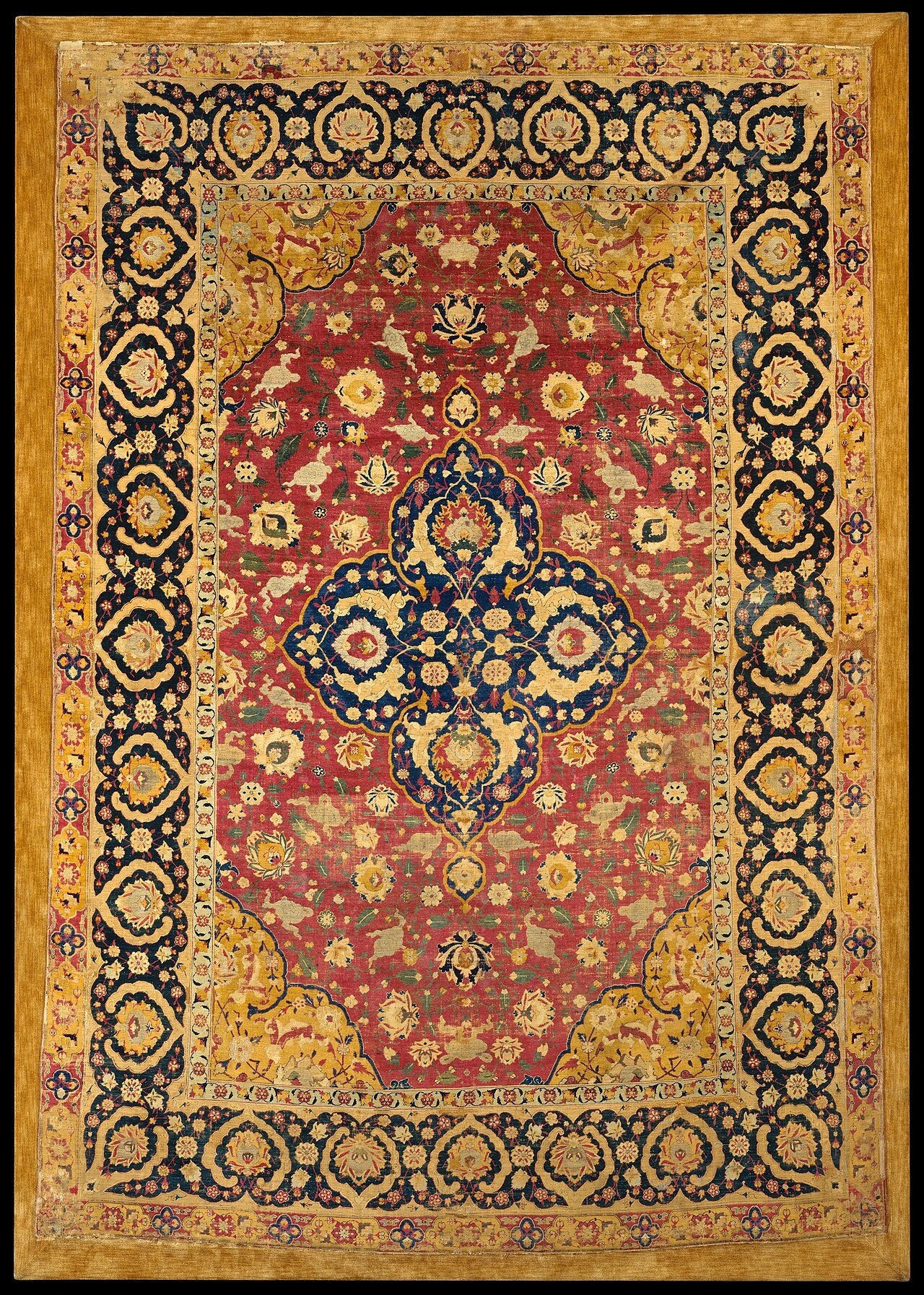
accessed 2026-09-30 · The Metropolitan Museum of Art · CC0 (Met Open Access / Wikimedia Commons) · Photo source ↗
- Type
- Beginner guide
- Reading
- 11 min
- Chapters
- 10
- Photos
- 6
Persian rugs are made mainly of wool pile on a cotton or wool foundation; finer pieces use silk for the pile, foundation or highlights.
The short answer
Most Persian rugs have a wool pile tied onto a cotton foundation. Tribal and nomadic rugs often use wool for the foundation too. Fine city rugs may use silk for the foundation, the pile, or for highlights. Dyes may be natural (plants, insects) or synthetic.
Wool
Wool is the main pile fibre. Its quality depends on the sheep breed, climate and whether it is hand-spun. Kork is soft, fine wool from the neck and shoulders, used in fine rugs.
Cotton
Cotton is strong and does not stretch, so it keeps a rug flat and square. It is the usual foundation in city rugs.
Silk
Silk allows very fine knots and has a strong sheen. It is used in Qom, Isfahan, Tabriz and Kashan rugs. Much 'silk' in the market is artificial silk (viscose).
Dyes
- Madder: reds
- Indigo: blues
- Weld and other plants: yellows
- Walnut husk and pomegranate: browns
- Synthetic dyes: common since the late 19th century; good ones are stable
Checking materials
Look at the fringe and back to see the foundation. Ask the seller in writing what the pile, foundation and dyes are.
- Pile
- Mostly wool; silk in fine city pieces; some wool-silk mixes
- Foundation
- Cotton common in workshops; wool in many tribal rugs; silk in the finest
- Not traditional
- Viscose ('art silk'), acrylic, polypropylene
Wool
Wool is the backbone of Persian weaving. Fleece from highland sheep is springy and lanolin-rich, which helps it resist dirt and take dye well. Kork, the soft wool from the neck and shoulders, is prized for fine pile. Hand-spun wool shows slight variation in thickness, adding to the character of village rugs; machine-spun wool is more uniform.
Silk
Silk allows extremely fine knotting and has a strong lustre, which is why Qom, Kashan, Isfahan and Tabriz workshops use it for their finest pieces. Silk pile wears faster than wool under heavy foot traffic, so pure-silk rugs are often hung or used in quiet rooms. Silk highlights (outlines in silk on a wool rug) are common.
Cotton
Cotton warps and wefts are strong, stable and stretch little, making them ideal for straight, flat workshop carpets. Many nomadic weavers used wool foundations instead, which are more flexible but can make the rug less regular in shape.
Look-alike fibres
Viscose, mercerised cotton and other 'art silk' fibres imitate silk's sheen at lower cost but lose strength when wet and flatten quickly. A seller's description of 'silk' should be backed by the type of fibre stated in writing; a burn test should only be done by a specialist on a loose thread.
Related photographs and screened examples
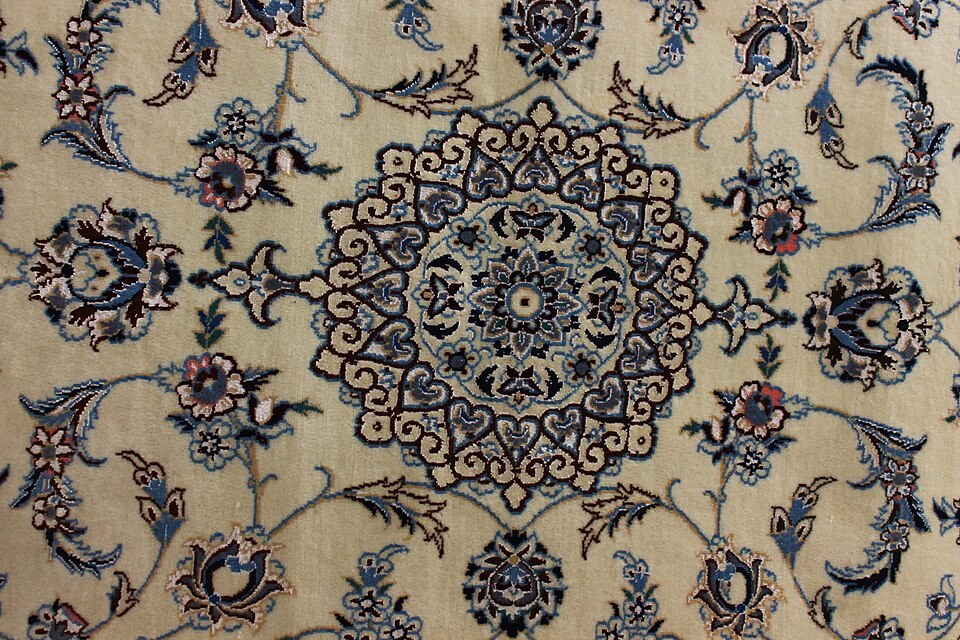
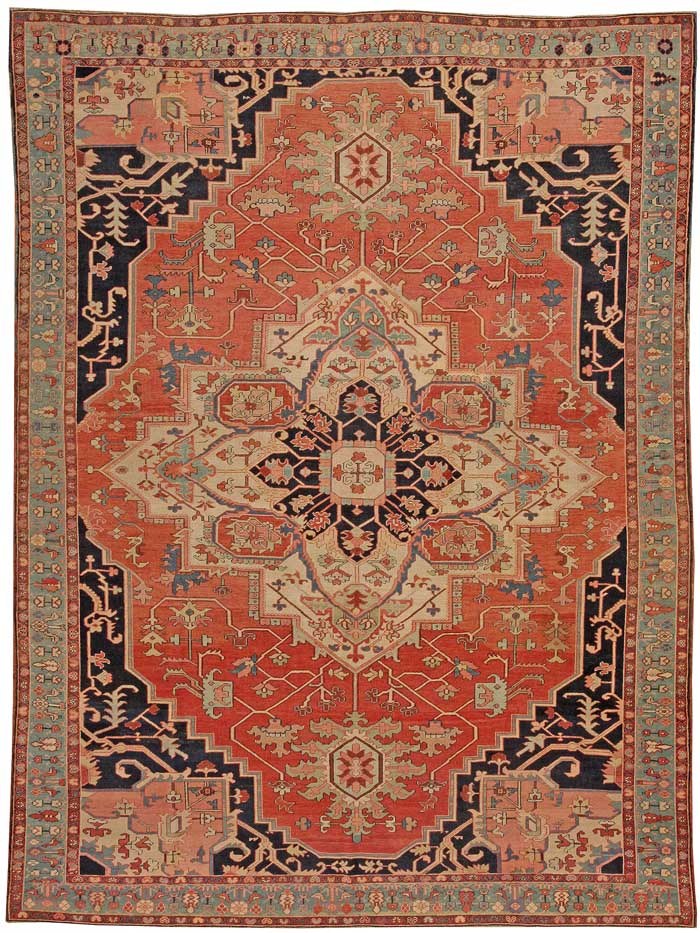
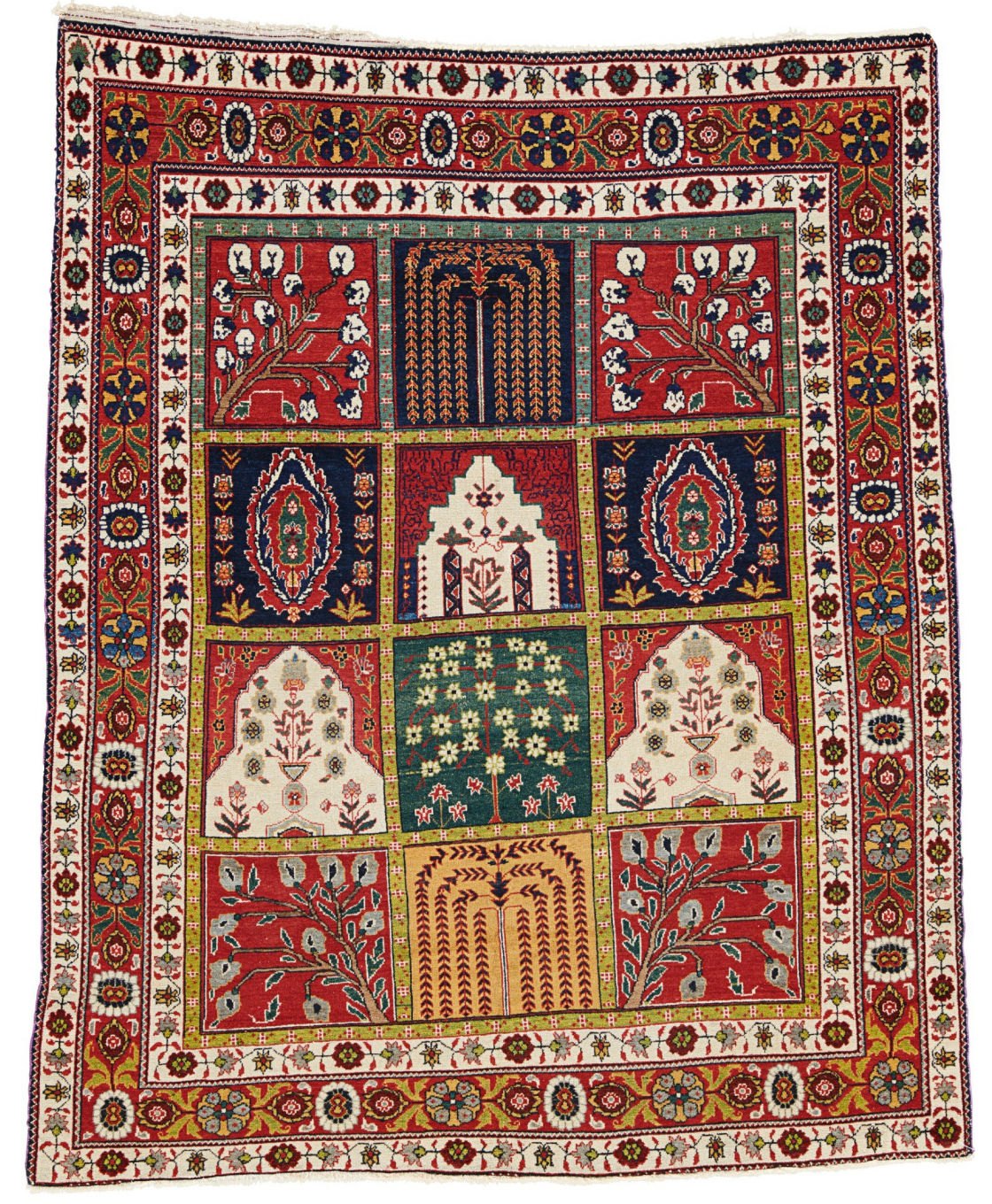

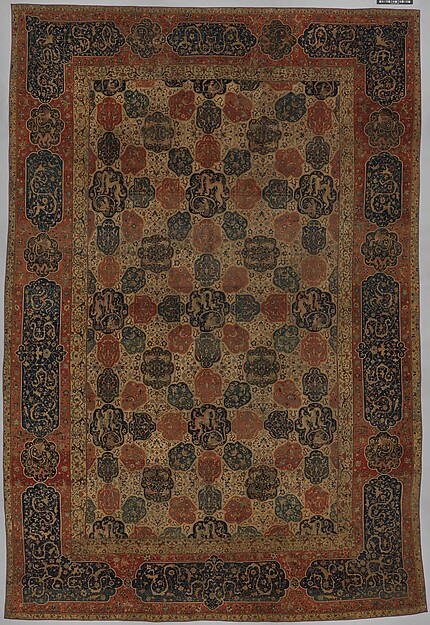
Representative photographs only. Marketplace examples rely on seller descriptions; CraftPersia has not independently authenticated their maker, origin, or rights status. Follow each source link for the listing context.
| Fibre | Typical use | Strengths | Weaknesses |
|---|---|---|---|
| Wool | Pile, tribal foundations | Resilient, dye-friendly | Moth risk |
| Silk | Fine pile, foundations | Fine detail, lustre | Wears faster, costly |
| Cotton | Warps and wefts | Stable, flat | Shrinks if soaked |
| Viscose | Imitation silk | Cheap sheen | Weak when wet, crushes |
References and further reading
These sources provide context, not authentication or provenance for an individual object. Editorial interpretations remain under review.