
Collector guide · 7 min
Understanding knot density: KPSI and raj
Editorial team · updated 2026-09-29
What is being counted
Knot density counts knots in a set area. In English listings it is often given as knots per square inch (KPSI). In Iran, Tabriz workshops use raj — knots along a set length of about 7 cm — and Nain uses a thread-count system for the warp (such as 4la, 6la, 9la).
How to count on the back
Place a ruler on the back of the rug along the warp and count knots in one inch, then along the weft. Multiply the two. Repeat in several places, because density can vary.
What density does and does not tell you
Higher density allows finer curved drawing. It does not measure wool quality, dye quality, design or condition. A tribal rug with coarse knots can be far more valued than a dense but lifeless city rug.
- Village and tribal: often coarse, bold drawing
- City workshop: finer, curvilinear
- Very fine silk: extremely dense, fragile to use on floors
Related photographs
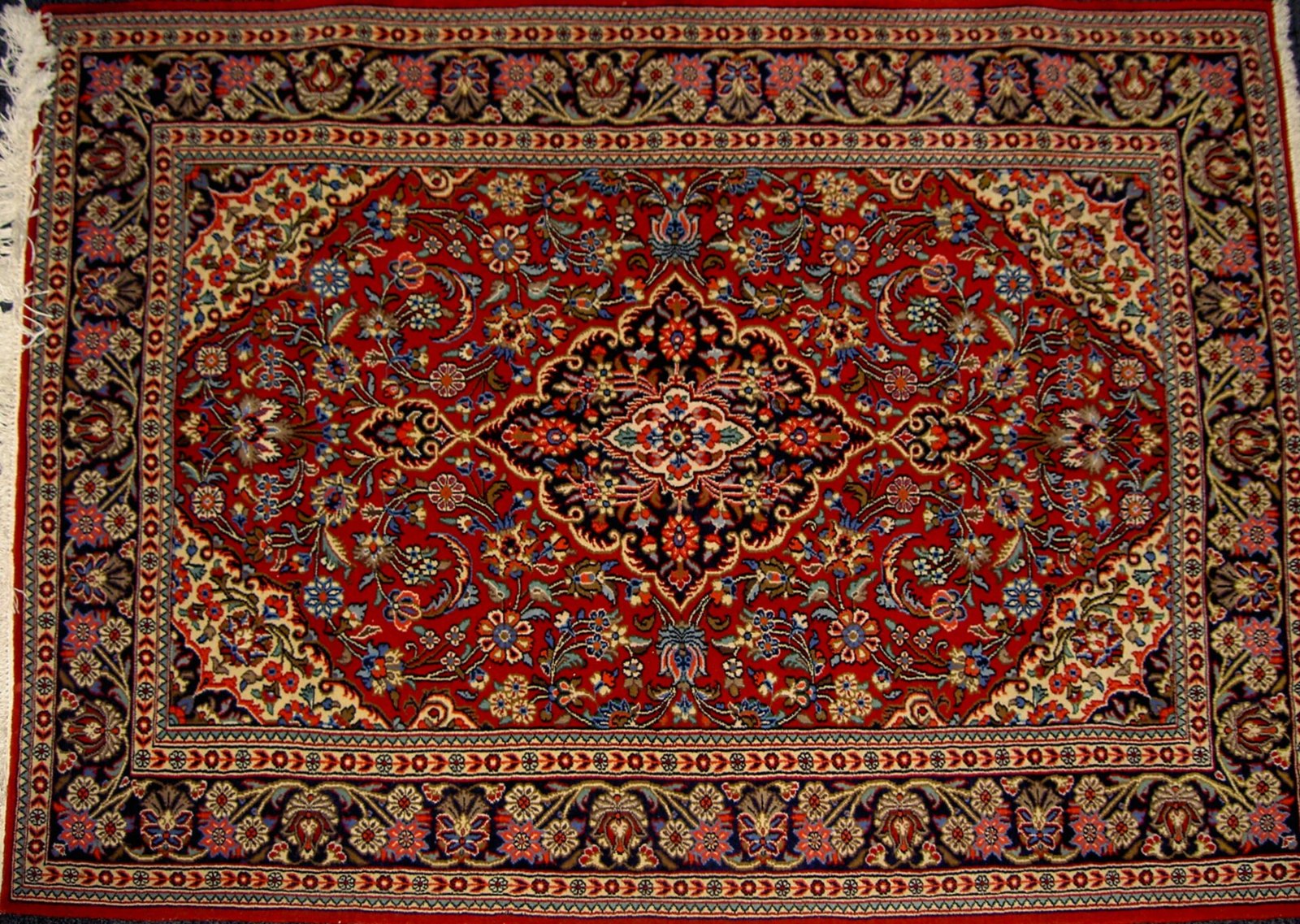
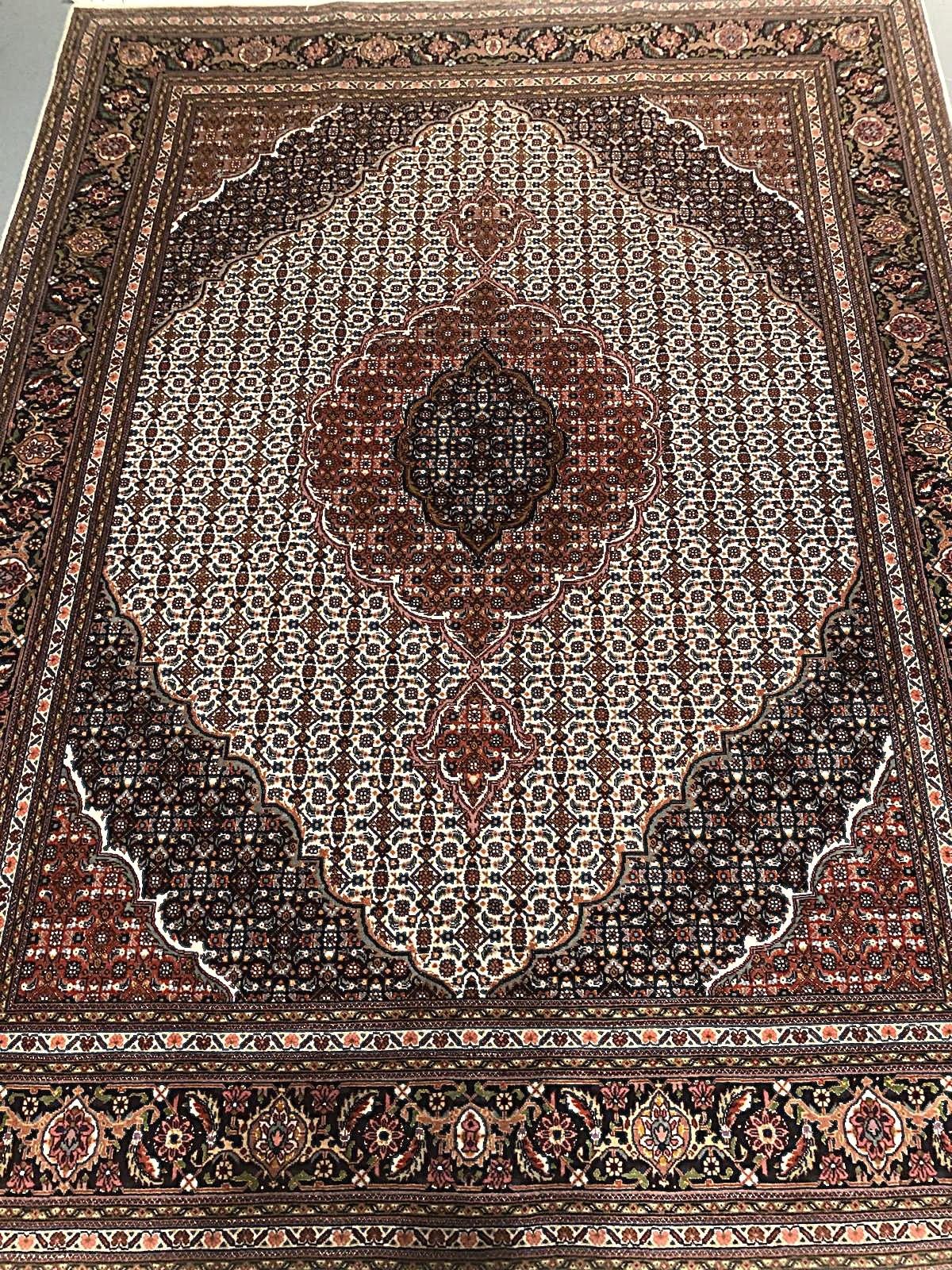
Representative photographs, not of any specific catalogued object. Sources on the credits page.