
Collector guide · 10 min
Tile and ceramic glazes of Iran
Editorial team · updated 2026-09-29
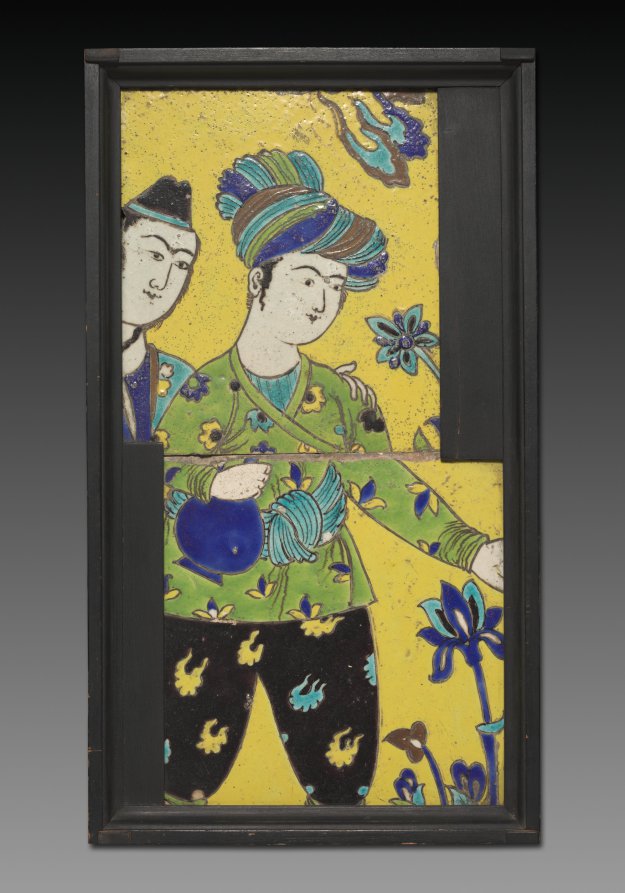
Cleveland Museum of Art · CC0 (museum open access) · Photo source ↗
- Type
- Collector guide
- Reading
- 10 min
- Chapters
- 9
- Photos
- 2
Turquoise, lustre, haft-rang and mosaic: how the main glaze families differ.
Main families
Iranian tilework includes cut-tile mosaic (moarraq), seven-colour painted tiles (haft-rang), lustre and monochrome turquoise glazes.
- Moarraq: each colour a separate cut piece
- Haft-rang: several colours on one tile, fired once
- Lustre: metallic sheen from a second firing
- Monochrome: single glaze colour
Reading a tile
On mosaic, look for joints between pieces. On haft-rang, colours sit side by side on one tile, sometimes separated by thin lines.
Main glaze families
- Alkaline turquoise and cobalt glazes
- Tin-opacified white glazes
- Lustre: a metallic sheen from a reduction firing
- Overglaze enamels (mina'i, haft-rang)
- Lead glazes on earthenware
Safety
Some traditional glazes contain lead. For food use, ask whether the piece is food-safe, or keep it decorative.
A note on this guide
This is a general introduction written by the CraftPersia editorial team. It has not yet been reviewed by a specialist. Confirm details with makers, conservators or museums, and treat any dates as approximate.
Read body, slip, glaze and decoration separately
The ceramic body supplies the object’s structure; a slip can cover or decorate it; glaze forms a fired surface layer. Painted decoration may lie beneath, within or over a glaze depending on the process. A white appearance does not identify porcelain, and a turquoise surface does not identify the clay body or the place of manufacture.
Use the catalogue’s material description when it is available and note existing unglazed areas without scraping a surface. Museum labels may distinguish earthenware and stonepaste, but a photograph alone may not support that distinction. Record the stated material rather than generalise one object’s recipe to all Iranian ceramics.
Decoration and firing sequences leave different questions
Slip-painted decoration under transparent glaze, coloured overglaze decoration and lustre are not interchangeable names for shiny pottery. Lustre involves a metallic optical effect associated with a specialised firing process; painted imitation can resemble it in a single photograph. Haft-rang refers to a polychrome tile practice, not proof of exactly seven pigments in every object.
Look at ornament, colour boundaries and surface reflections together, while avoiding a firing reconstruction from appearance alone. A single workshop may use several techniques, and comparable decoration can appear across regions and periods. Exact process claims should follow technical study or documentation of the object’s making.
Crazing, chips and salts are observations, not dates
A network of fine glaze cracks can relate to material behaviour and past conditions; it is not an automatic sign of antiquity. Rim chips, glaze loss, old joins and overpaint may be easier to record in raking light. White deposits may require specialist identification rather than a household cleaning experiment.
Do not wet an archaeological or unstable ceramic to bring out colour, remove mortar, or scrape a deposit from a tile back. Existing repairs, soluble material and weakened surfaces can change how an object responds. Photographs under different light are documentation aids, not reliable tests of age or authenticity.
Keep display and food-contact decisions separate
An intact-looking glaze is not evidence of food safety. Composition, deterioration and possible migration of substances require appropriate manufacturer documentation or testing for the intended use. Historic tiles, archaeological vessels and objects with unknown glazes or repairs should not be repurposed for serving food.
For display, support the body without loading a handle, damaged rim or repaired joint. Architectural fragments also require legal provenance research. This guide’s museum photographs illustrate their catalogued objects; they do not document a contemporary firing demonstration or certify a modern seller’s glaze.
- Preserve catalogue material terminology
- Record condition before interpreting age
- Avoid scraping, soaking and home chemical tests
- Use unknown historic ceramics for display, not food
Related photographs and screened examples
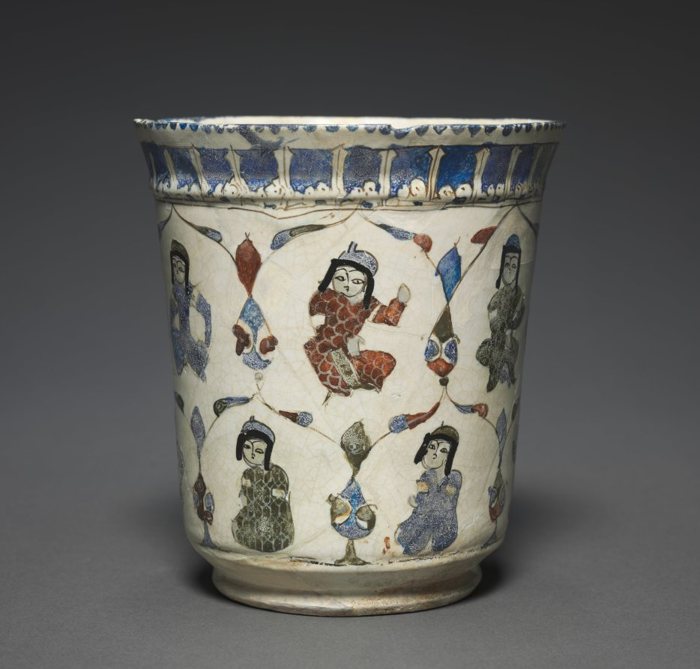
Representative photographs only. Marketplace examples rely on seller descriptions; CraftPersia has not independently authenticated their maker, origin, or rights status. Follow each source link for the listing context.
| Feature | Record | Do not infer |
|---|---|---|
| White body or ground | Catalogue material and visible layers | Porcelain from colour alone |
| Metallic sheen | Changing reflection and source description | Authentic lustre from one photo |
| Glaze cracks | Distribution and condition | Age or geographic origin |
References and further reading
- [1] The Metropolitan Museum of Art — Nishapur: Pottery of the Early Islamic Period ↗Excavated-object study; not a recipe for every regional ceramic.
- [2] H. E. Wulff, The Traditional Crafts of Persia (1966)Historical descriptions; not evidence of current prices, individual makers or present-day workshop access.
These sources provide context, not authentication or provenance for an individual object. Editorial interpretations remain under review.