
Buying guide · 10 min
Termeh: Yazd's woven silk-wool cloth and how to spot printed fakes
Editorial team · updated 2026-09-29
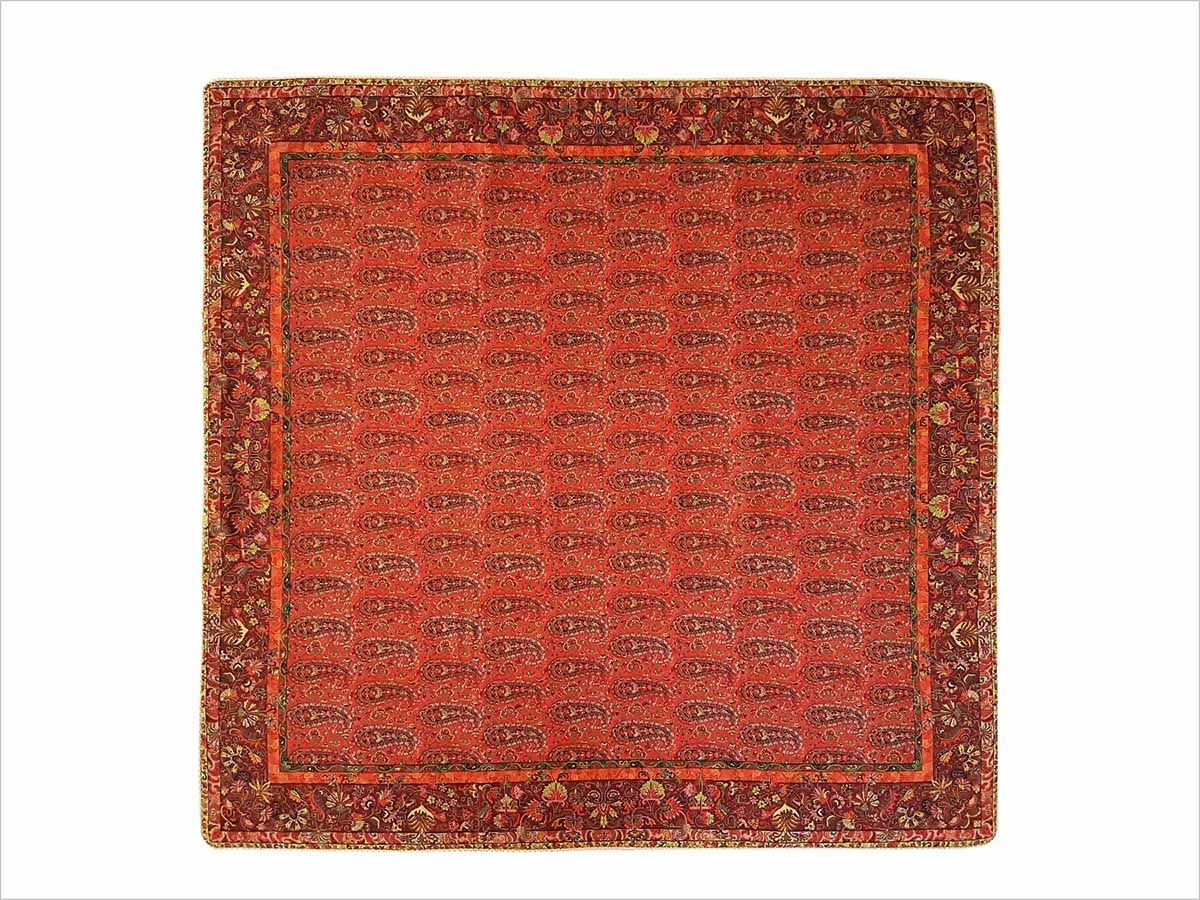
Listing image, date unverified · Craftestan (photographer not stated) · Permission status not reviewed · Photo source ↗
- Type
- Buying guide
- Reading
- 10 min
- Chapters
- 8
- Photos
- 1
Termeh is a hand-woven brocade from Yazd with dense boteh patterns, made from silk and fine wool.
What is termeh?
Termeh is a traditional Persian cloth woven on a draw loom, historically from fine wool and silk. It is closely linked with Yazd. Patterns, especially the boteh (paisley), are woven into the fabric rather than printed or embroidered.
How it is made
Weaving termeh requires two people on a traditional loom: the weaver and an assistant who lifts pattern threads. Progress is slow — a few centimetres a day for fine pieces. Most termeh on the market today is machine-woven with synthetic fibres.
Uses
Termeh is used for tablecloths, sofreh for the Nowruz haft-sin table, cushion covers, and wedding gifts.
How to spot printed or machine fakes
- Printed termeh shows a pattern only on the front; woven termeh shows a reverse pattern on the back
- Hand-woven termeh has tiny irregularities; machine termeh is perfectly uniform
- Synthetic fibre feels slippery and melts (not burns) when tested by a professional
- Very low prices for large pieces usually mean machine-made
Care
Dry clean only with a specialist, fold with tissue or roll, and keep out of sunlight.
- Main centre
- Yazd
- Fibres
- Silk and fine wool (traditionally), now often silk or synthetic blends
- Structure
- Compound weave on a draw-loom (jacquard-type in modern workshops)
What termeh is
Termeh is a densely patterned compound textile woven historically on draw-looms in Yazd and Kerman. Its hallmark is a dense all-over boteh (teardrop) pattern in deep reds, greens and ivory. A skilled weaver might produce only a few centimetres a day on a traditional loom.
Uses
Termeh was used for robes, covers and wedding textiles. Today it appears as tablecloths, cushion covers and framed panels, and as part of the Nowruz haft-sin spread.
- Dense boteh repeats
- Fine, smooth hand
- Reverse shows float structure
Buying advice
Most new 'termeh' sold in Iran is machine-woven. Hand-woven termeh is rare and expensive; ask for workshop name and look at irregularities in the repeat and the reverse floats. Printed cloths with boteh designs are not termeh.
| Check | Hand-woven termeh | Machine termeh | Printed cloth |
|---|---|---|---|
| Reverse | Colour floats, slight irregularity | Very regular floats | Pale, unpatterned |
| Fibre | Silk/fine wool | Often polyester blend | Cotton/poly |
| Price | High | Moderate | Low |
References and further reading
These sources provide context, not authentication or provenance for an individual object. Editorial interpretations remain under review.