Collector guide · 11 min
Tabriz rugs: designs, knots, grades and how to recognise one
Editorial team · updated 2026-09-29
What is a Tabriz rug?
A Tabriz rug is a hand-knotted carpet woven in or around Tabriz, the capital of East Azerbaijan province. Tabriz is one of Iran's oldest weaving centres and has produced carpets for royal, domestic and export markets for centuries. Unlike village rugs, Tabriz pieces are usually woven in workshops from a drawn cartoon (naqsheh), so their designs are precise and symmetrical.
Typical designs
Tabriz workshops are known for variety rather than a single house style. Common designs include:
- Central medallion with corner spandrels
- Herati and mahi (fish) all-over patterns
- Hunting and garden scenes
- Pictorial and portrait rugs
- Vase and tree-of-life compositions
Knot and structure
Most Tabriz rugs use the symmetrical (Turkish) knot, tied with a hook knife (qollab) — a local specialty. Foundations are cotton, sometimes silk in finer pieces. The fringe is the warp itself.
Grades and raj
Tabriz dealers often describe quality in raj — the number of knots along roughly 7 cm of width. Around 30 raj is an everyday grade; 50 raj and above is fine; 60–70 raj pieces are rare. Raj is only one factor: wool quality, drawing and finishing matter as much.
How to recognise one
Look for a symmetrical knot, cotton warps, crisp city drawing and often a slightly lower, firm pile. Signatures in the border sometimes name a workshop. Because Tabriz designs are copied widely, including outside Iran, structure and provenance count more than pattern.
Buying tips
Ask where and when it was woven, the raj count, and whether fibre and dyes are natural or synthetic. See our Persian rug buying guide and the Tabriz region page for context. Prices are indicative only.
Related photographs
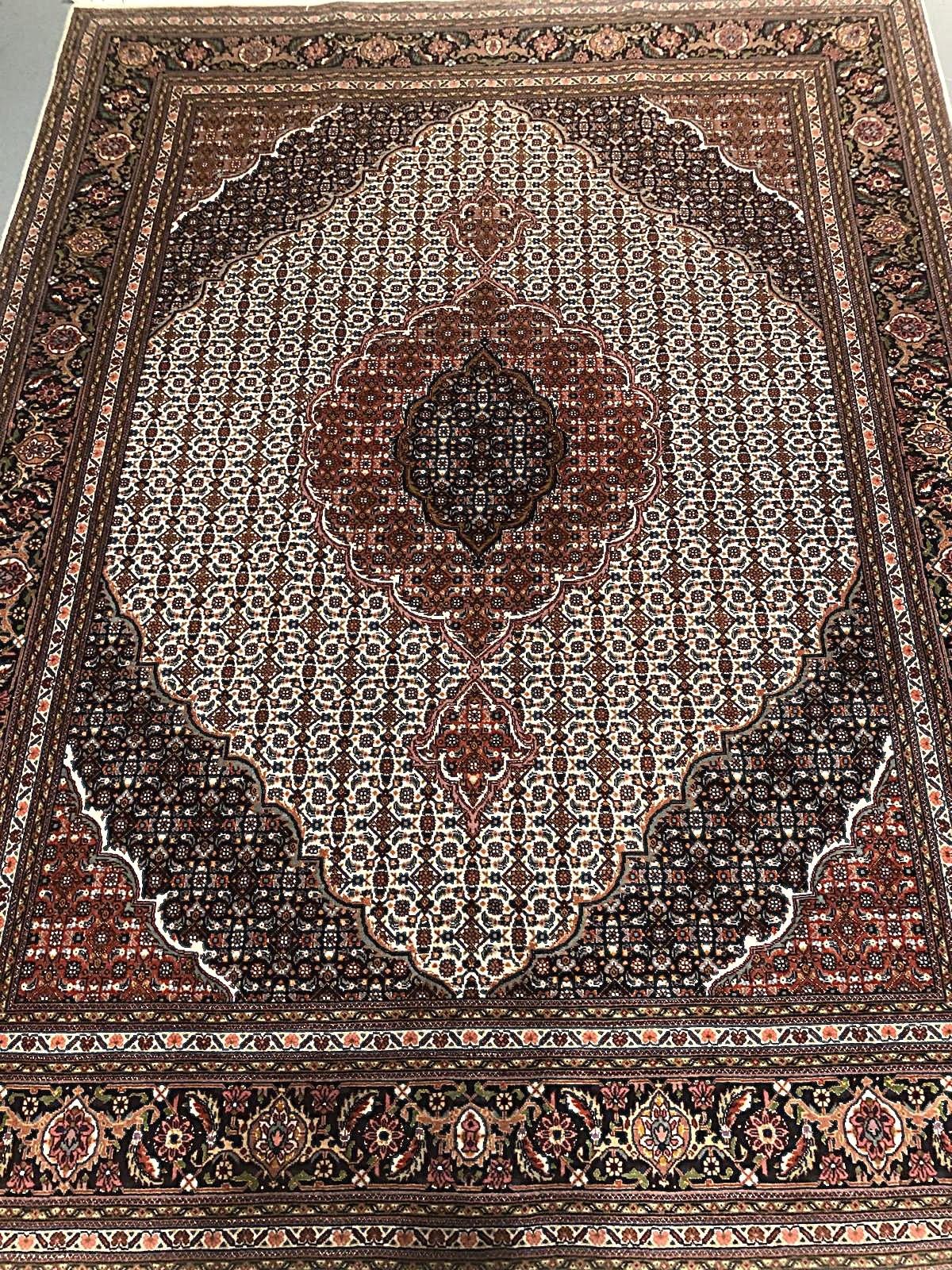
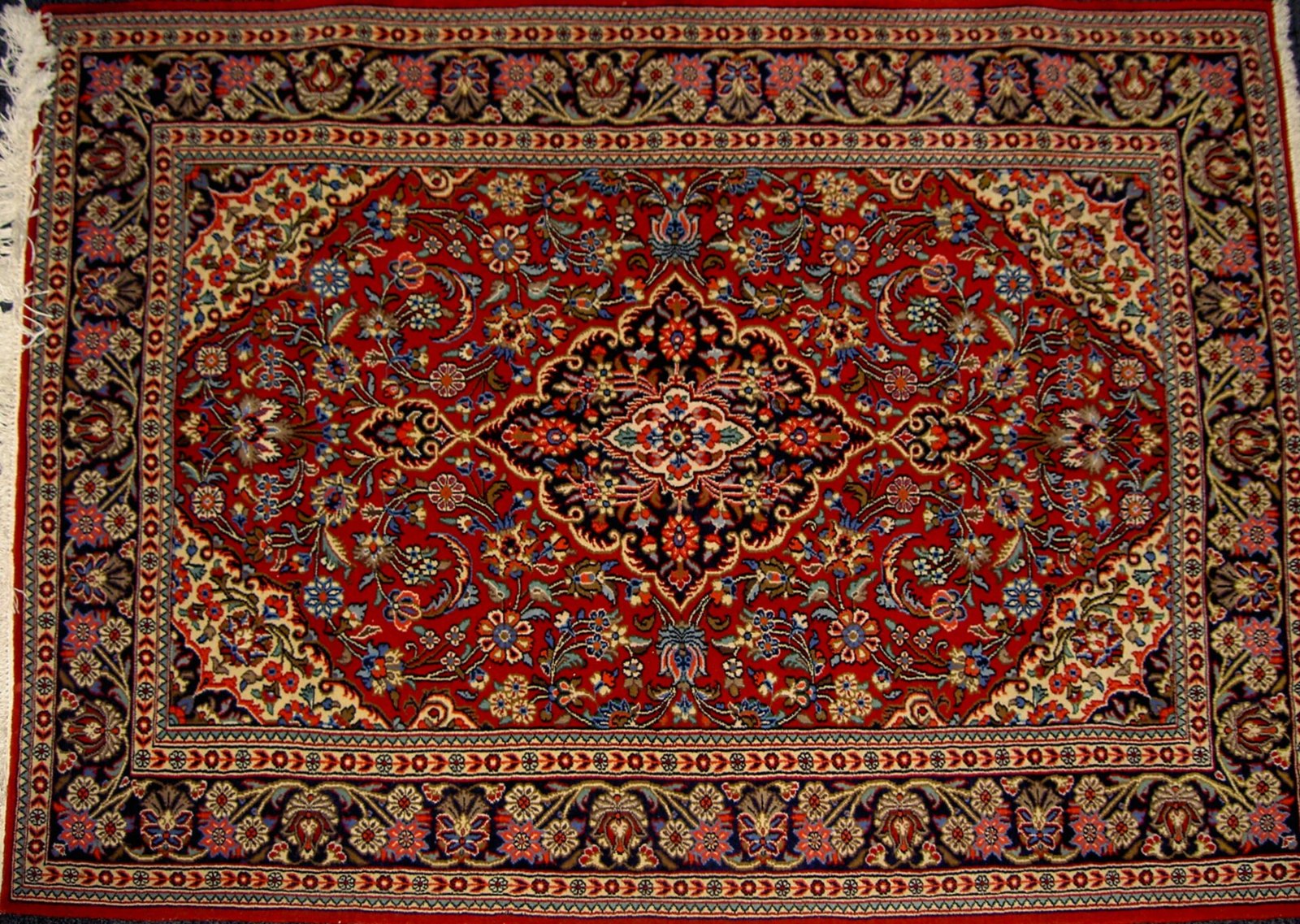
Representative photographs, not of any specific catalogued object. Sources on the credits page.