
Collector guide · 12 min
Recognising Tabriz carpet features
Editorial team · updated 2026-09-29
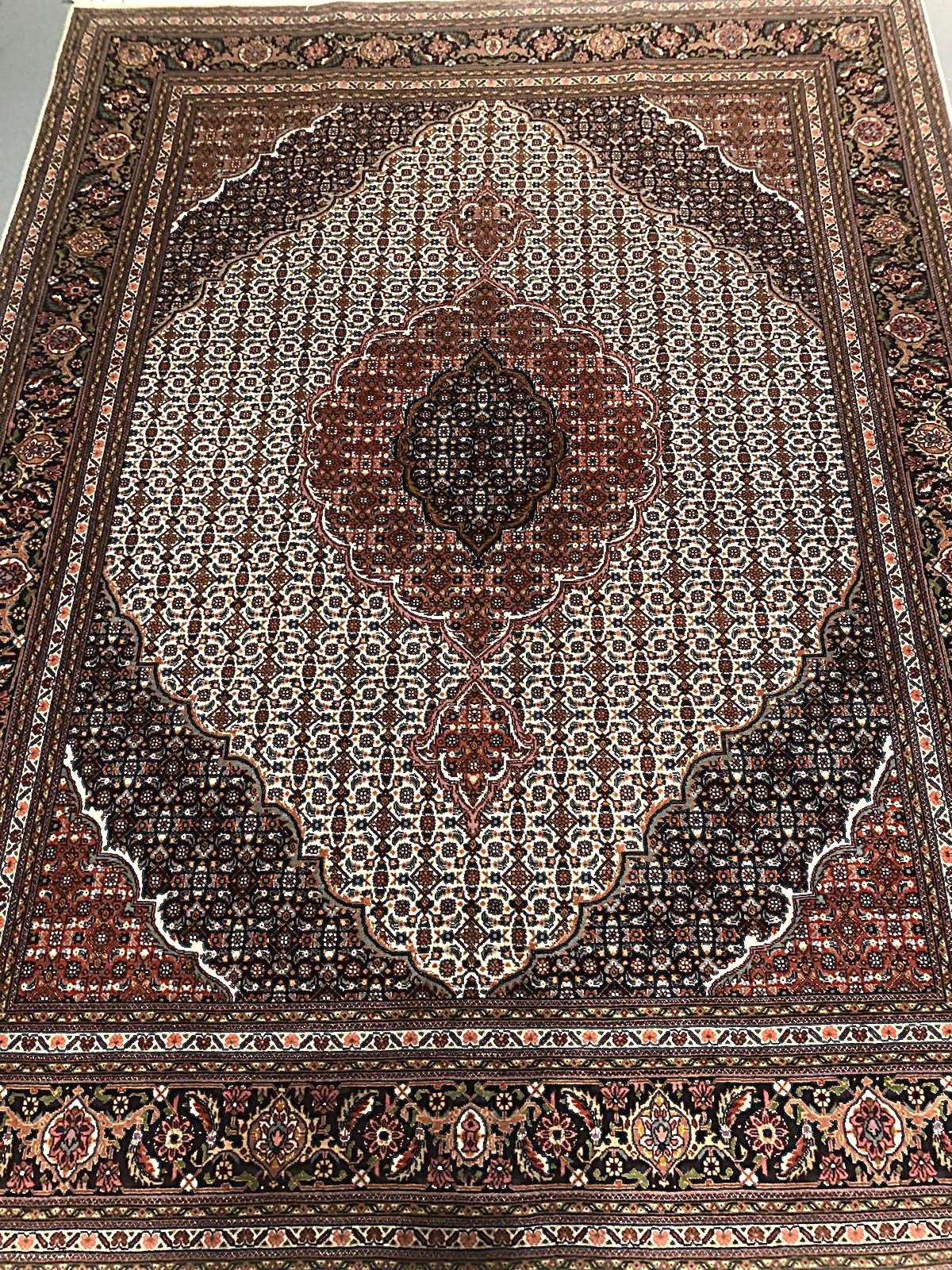
Listing image, 2025 · Arabesque Rugs (photographer not stated) · Permission status not reviewed · Photo source ↗
- Type
- Collector guide
- Reading
- 12 min
- Chapters
- 10
- Photos
- 1
Common construction and design features used when describing Tabriz carpets.
Construction
Often symmetric knots, cotton foundation and a density described in raj.
Designs
Medallion, pictorial, hunting, garden and many other designs; Tabriz workshops made a very wide range.
Caution
‘Tabriz design’ is also woven elsewhere. Origin needs documents.
Recognising a Tabriz rug
No single feature proves where a rug was made, so look at several together: the design, the colours, the knot type, the foundation, and how the edges and ends are finished. Dealers' labels are sometimes used loosely, and ‘Tabriz design’ rugs are woven in other towns and countries.
- Symmetric knot
- Wide design range: medallion, pictorial, herati
- Fineness often stated in raj
Judging quality
Tabriz rugs range from coarse to very fine, so compare the clarity of the drawing. Turn the rug over: hand-knotted rugs show the pattern clearly on the back, with small irregularities. A glued backing cloth or an even grid of stitches suggests a tufted or machine-made rug.
- Even, clear drawing of the motifs
- Wool that springs back when pressed
- Straight sides, and ends that are not pulling in
- No dye run between colours
Care and value
Vacuum regularly without a beater bar, rotate the rug once a year, and keep it out of strong sun. Value depends on condition, fineness, materials, age and design rather than on the city name alone. Get any valuation from an independent appraiser, not from the seller.
A note on this guide
This is a general introduction written by the CraftPersia editorial team. It has not yet been reviewed by a specialist. Practice varies between workshops; confirm details with makers or museums, and treat any dates as approximate.
- Region
- Tabriz, East Azerbaijan
- Character
- Enormous range: coarse to very fine, many designs
- Knot
- Symmetric (Turkish) knot typical
A city of many grades
Tabriz is one of Iran's great weaving cities, and its output is unusually varied: from sturdy coarse rugs to some of the finest workshop carpets ever made, in medallion, all-over floral, pictorial and hunting designs. Because there is no single 'Tabriz look', the name tells you less than the individual piece does.
The city's historic bazaar — a UNESCO World Heritage site — is a trading centre where rugs from many places are bought and sold. A rug purchased in Tabriz was not necessarily woven there, and 'from the Tabriz bazaar' is a provenance of purchase, not of making.
Construction pointers
Tabriz weavers typically use the symmetric (Turkish) knot, often with a cotton foundation; very fine pieces may use silk. A hook or knife is used to cut the yarn as each knot is tied, which supports the fine, regular work the city's workshops are known for.
Assess each piece on its own evidence: count density properly (see the KPSI guide), check the back for construction and repairs, and ask the seller which workshop made the rug and how that is known. Master-weaver signatures are woven into some fine Tabriz pieces — and are copied onto others, so a signature is a claim to be documented, not a guarantee.
- Symmetric knot, cotton foundation typical
- Quality ranges from coarse to extremely fine
- Workshop signatures are claims, not proof
- Bazaar purchase ≠ Tabriz manufacture
Buying in a big market
Regional names in the rug trade describe styles and markets as often as weaving places. Treat the pointers here as questions to ask, not proof of origin: only a documented maker, workshop record or reliable provenance establishes where a particular rug was woven.
In a market this large, the full buying routine matters: written description, your own photographs of the actual piece, independent advice for expensive attributions, and traceable payment. The buying guide's checklist applies without exception.
| Pointer | What it suggests | What it cannot prove |
|---|---|---|
| Symmetric knot structure | North-west Iranian or related practice | The city of weaving |
| Very fine workshop quality | Skilled urban production | A named master weaver |
| Woven signature | A workshop claim | Authenticity of the signature |
References and further reading
- [1] UNESCO World Heritage Centre, Tabriz Historic Bazaar Complex. ↗Documents the trading site, not the origin of goods sold there.
These sources provide context, not authentication or provenance for an individual object. Editorial interpretations remain under review.