
Beginner guide · 5 min
Suzan-duzi: Baluch needlework from Sistan and Baluchestan
Editorial team · updated 2026-10-20
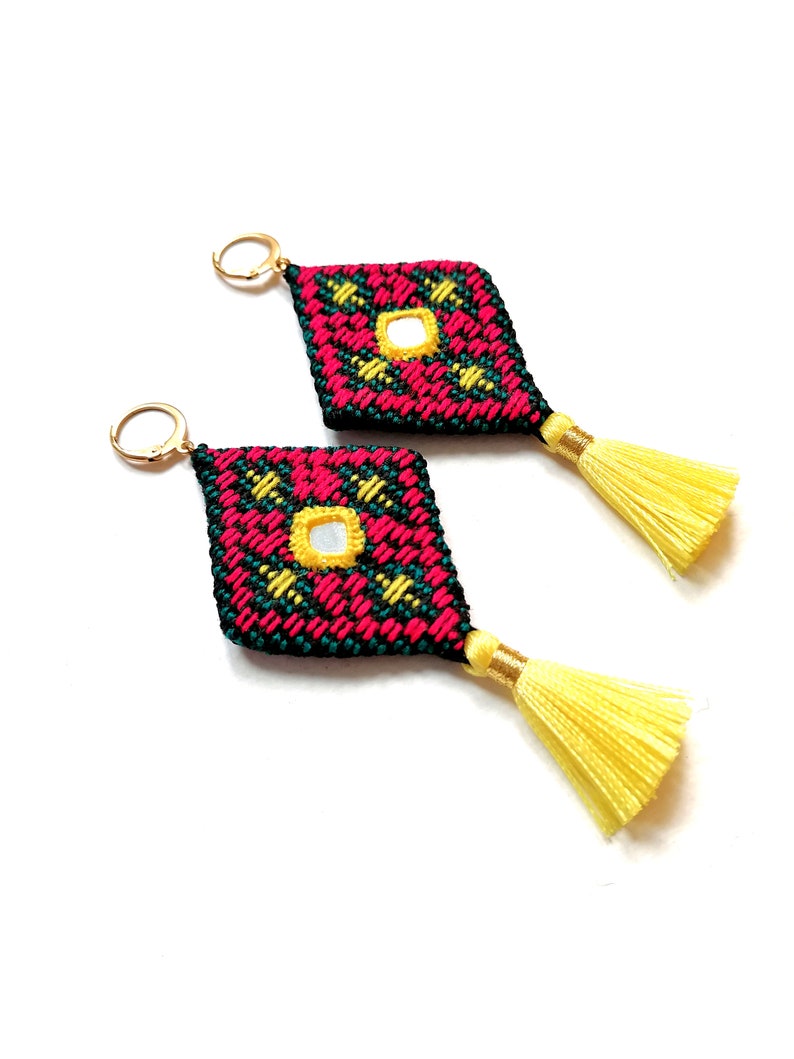
rechecked 14 October 2026. Seller explicitly states hand sewing by Baloch women and girls of Iran, but also labels the product Made in Germany. Embroidery production and finished accessory assembly must not be conflated; origin not independently verified · NafisAccessory (Etsy seller; photographer not stated) · Seller listing image; reuse rights not reviewed · Photo source ↗
- Type
- Beginner guide
- Reading
- 5 min
- Chapters
- 5
- Photos
- 4
Scope and evidence
This reading separates visible construction, documented materials and origin claims. The photographs retain their own source context; they do not authenticate a purchase or demonstrate every stage described below. Historical examples and contemporary maker statements require different kinds of evidence.
- Context: Baluch embroidery crosses national borders
- Origin: Embroidery and accessory assembly are separate
- Value: Density is not a fair-pay calculation
- Context
- Baluch embroidery crosses national borders
- Origin
- Embroidery and accessory assembly are separate
- Value
- Density is not a fair-pay calculation
Begin with the garment or panel
Suzan-duzi means needlework; Baluch embroidery should be understood through the specific community, garment and use described by its maker or source. A yoke, cuff or pocket panel has a placement and orientation that can matter to the design. Do not treat every geometric embroidered accessory as the same tradition.
Record whether the piece is a complete garment, a detached panel, or a contemporary accessory. Reused panels and new designs can both be meaningful work, but they should not be presented as untouched historical dress. Ask permission before publishing personal or community information.
Read stitches without imposing a single grade
Follow how the stitched field relates to the ground and examine joins, edges and the reverse if safely accessible. Counted and free-working methods can vary, and mirrors or other additions are not universal features. An open area or a visible thread end is not automatically poor workmanship.
Do not demand that all stitches completely cover the ground or that the reverse be perfectly regular. Those expectations can misdescribe a technique. Describe loose stitches, wear and alterations as condition findings, separate from judgments about skill or authenticity.
Keep maker and assembly claims distinct
The linked Etsy example states that the embroidery was hand-sewn by Baloch women and girls of Iran while also describing the finished product as made in Germany. Those are different stages of production. The archive preserves both seller statements and has not independently verified them.
For any purchase, request the embroidery maker or group, place of stitching, place of accessory assembly and permission to share the attribution. A shop’s shipping address, a regional motif or a photograph of a finished bag cannot independently establish where the embroidery was produced.
- Record place of stitching
- Record place of final assembly
- Ask how the maker prefers to be credited
- Do not infer wages from retail price
Discuss support without inventing outcomes
Buying through an intermediary does not automatically establish fair pay or a benefit to a whole community. Ask how payments are arranged, whether the makers set prices and whether the seller can document the relationship without exposing private information. Leave unanswered questions visible.
Handle the textile by supporting its ground rather than pulling embroidered edges. Keep decorative attachments from catching on clothing or packing. Cleaning depends on the cloth, thread, dyes and additions; a generic instruction for cotton fabric is not enough for a mixed-material embroidered accessory.
Related photographs and screened examples
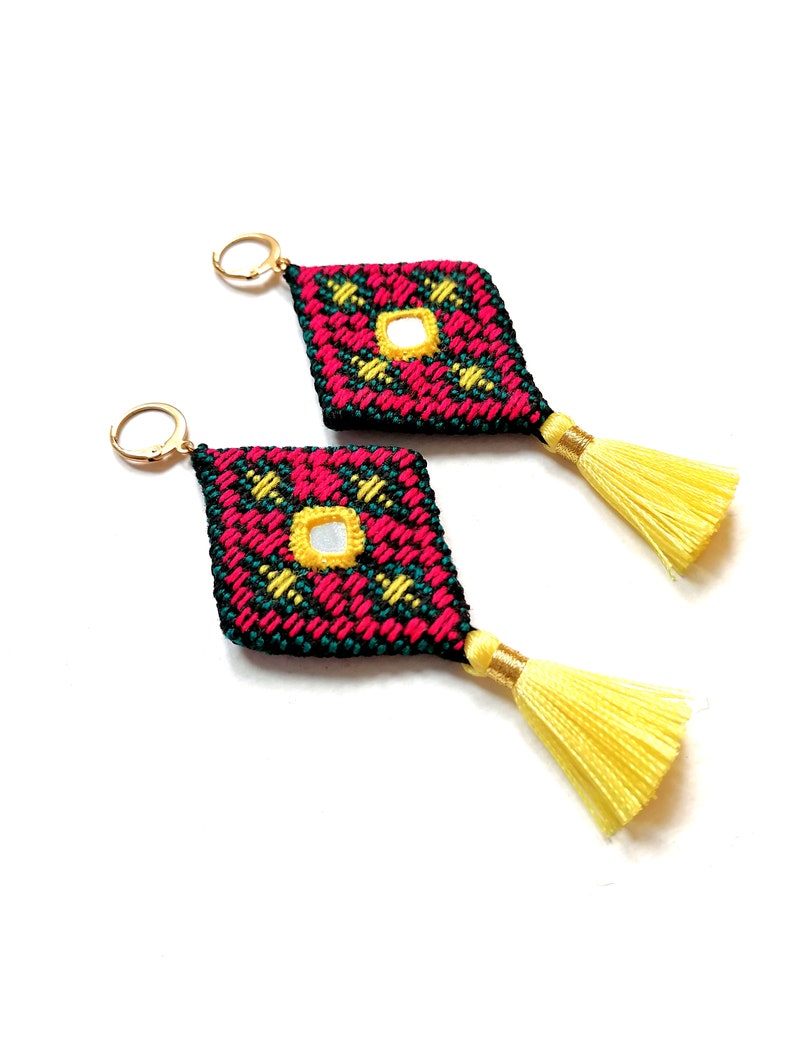
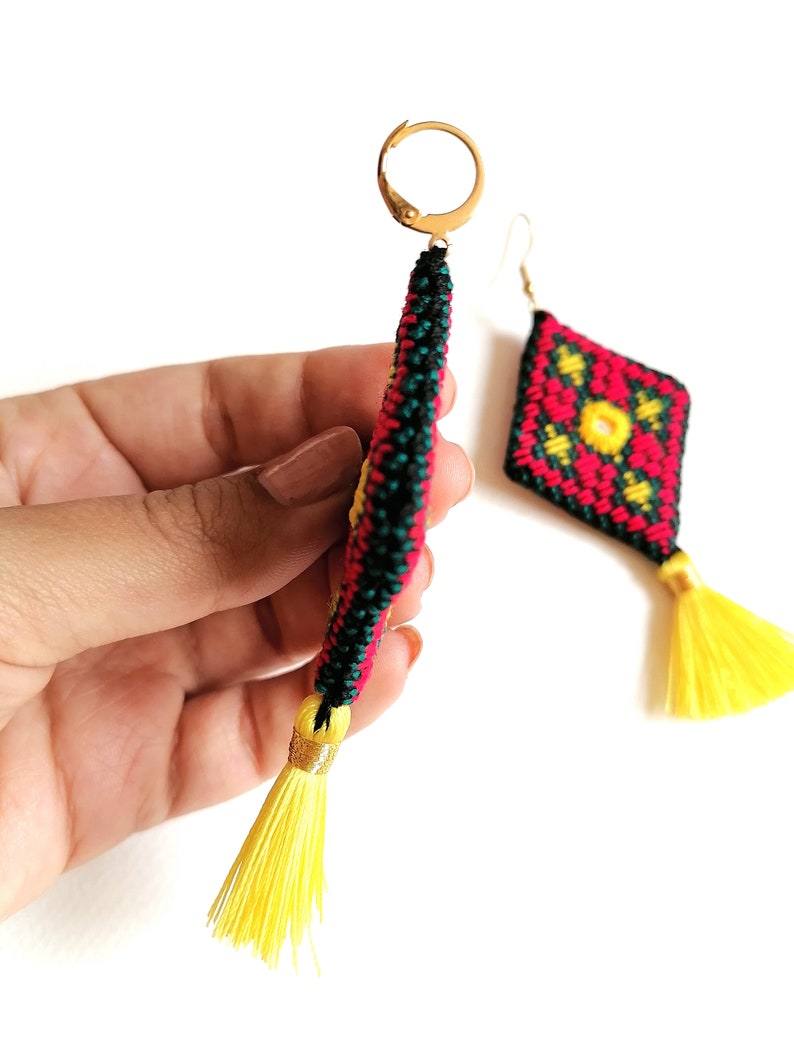
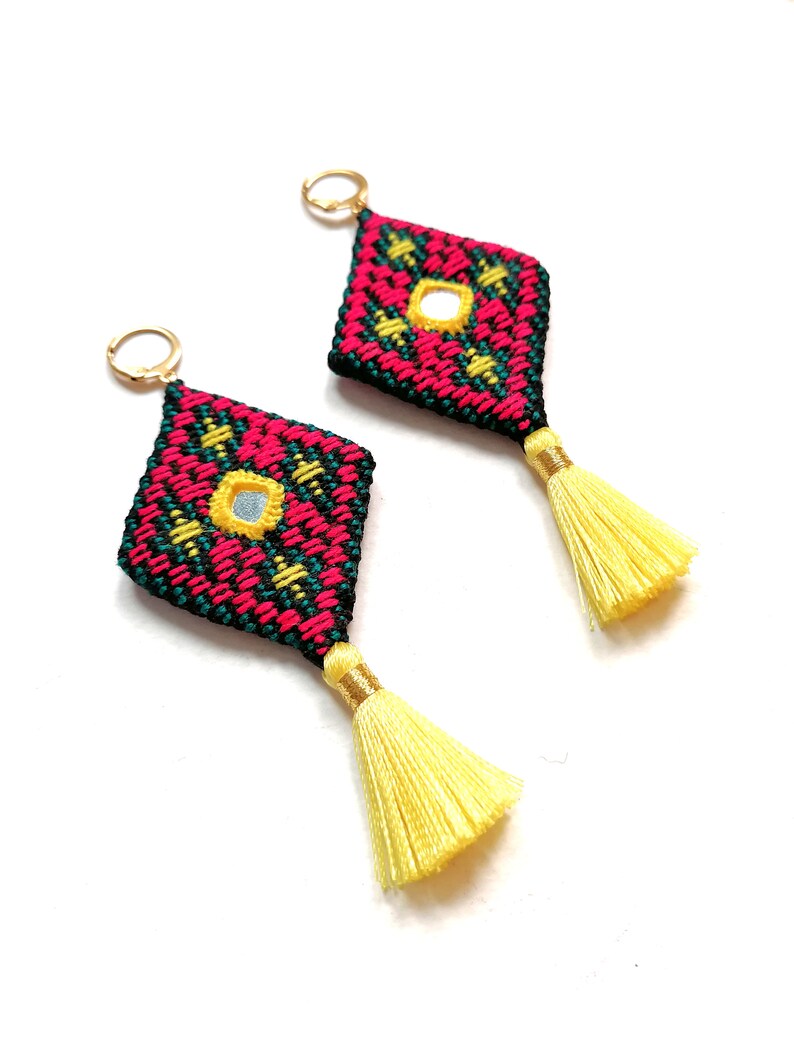
Representative photographs only. Marketplace examples rely on seller descriptions; CraftPersia has not independently authenticated their maker, origin, or rights status. Follow each source link for the listing context.
| Look at | Record | Do not infer |
|---|---|---|
| Object format | Garment, panel, reused section or accessory | Historical completeness |
| Stitches and attachments | Method as described; loose areas | A universal density grade |
| Origin statements | Embroidery location and assembly location | Shipping location proves origin |
| Payment information | Documented maker relationship | Fair pay from stitch count |
References and further reading
- [1] Canadian Conservation Institute — Caring for textiles and costumes ↗Preventive care; not permission to clean or treat an individual textile.
- [2] Etsy listing 1636962520 — seller’s production descriptions ↗Commercial example: Iran embroidery and Germany finished-product claims remain distinct and unverified.
These sources provide context, not authentication or provenance for an individual object. Editorial interpretations remain under review.