
Buying guide · 9 min
Spotting replicas and “Persian style” imports
Editorial team · updated 2026-09-29
Read the wording first
Words such as “style”, “inspired”, “design” or a city name used as a pattern name (for example “Tabriz design”) describe a look, not an origin. A listing should say where and how the piece was made, in plain words.
- “Persian style” — a look, not an origin
- “Tabriz design” — a pattern name, not proof of Tabriz
- “Hand-finished” — often means machine-made with small hand touches
- “Hand-tufted” — not hand-knotted
Check the construction
Each craft has a construction that copies struggle to repeat: knots on a carpet back, real rod-ends in khatam, fired glass enamel in minakari, woven (not printed) patterns in termeh. Printed surfaces stop at the edge; real work continues through the material.
Test what you can safely test
Resin, plastic and printed paper feel light, warm and even. Bone, brass, glass enamel and wool show small variations under a magnifier. Never burn-test or scratch an object you do not own.
Origin needs evidence
Many fine handmade pieces are made outside Iran in related traditions. That does not make them fakes, but it does mean they should not be sold as Iranian. Ask for the workshop, city and any export papers, and note which answers come with documents.
Related photographs
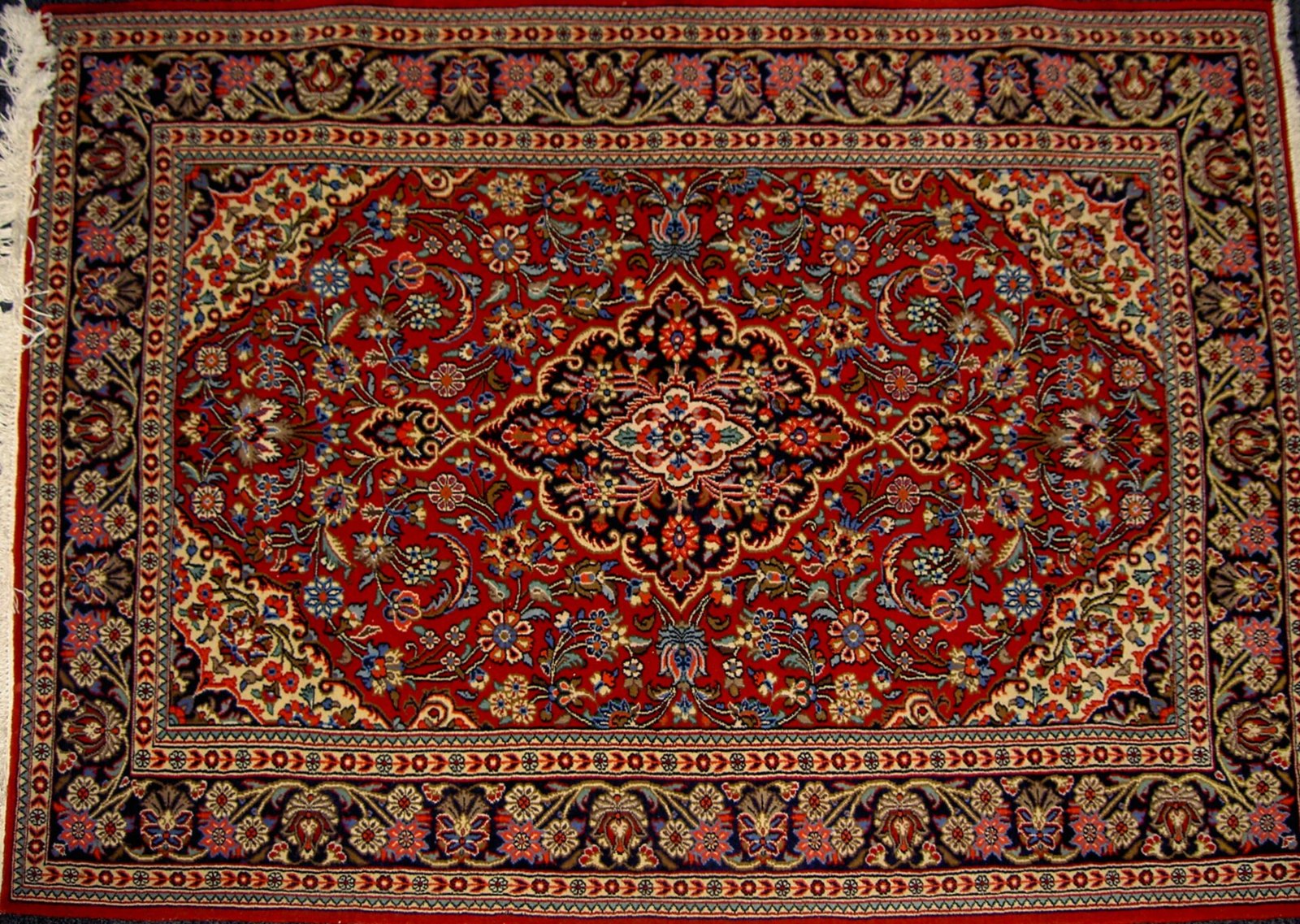
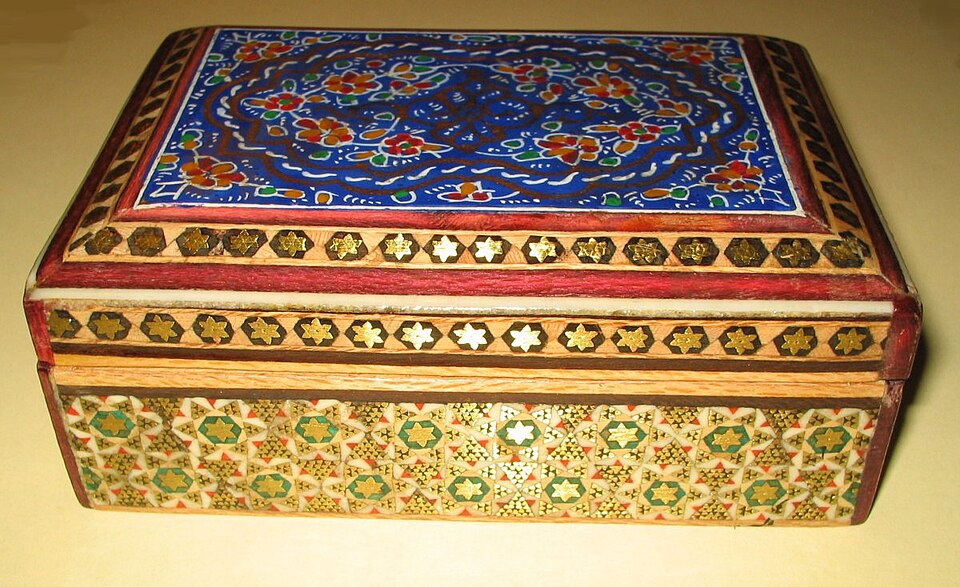
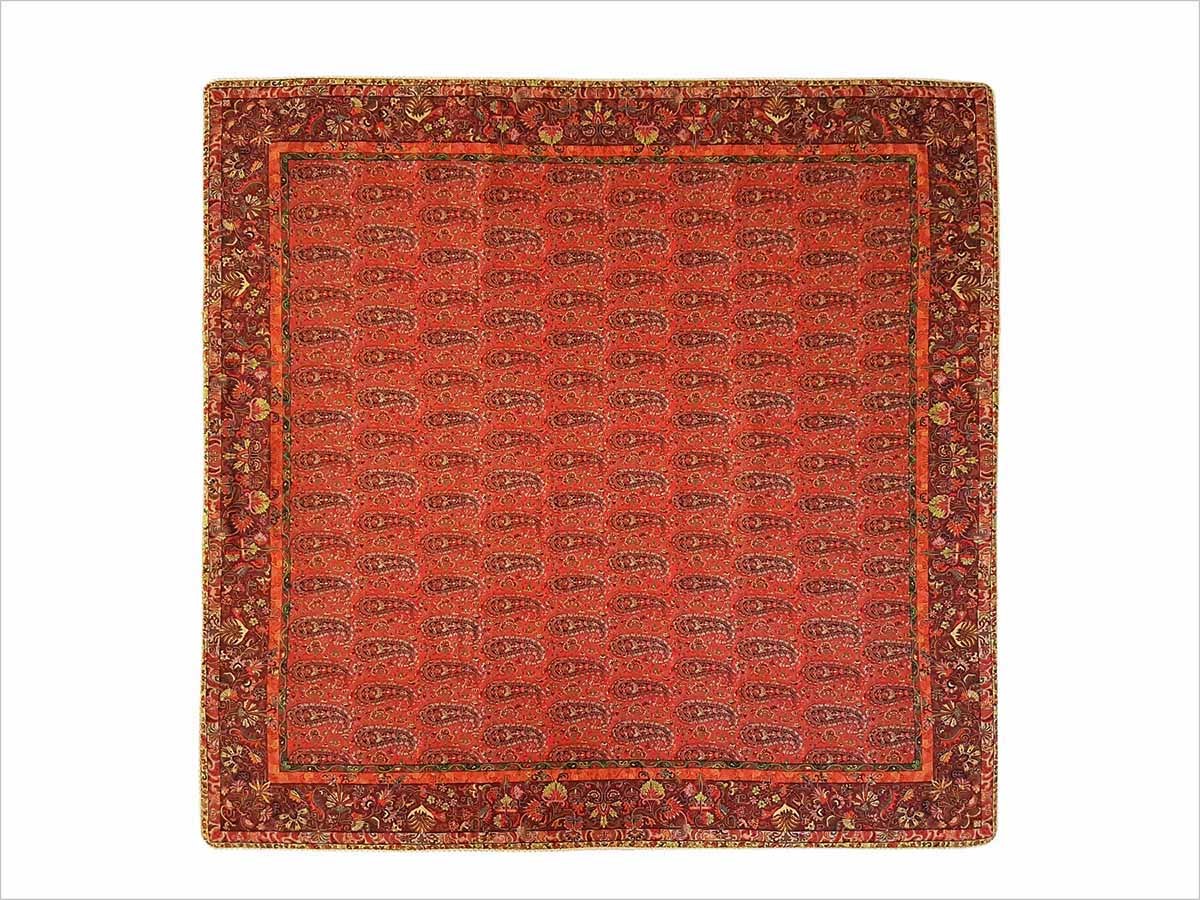
Representative photographs, not of any specific catalogued object. Sources on the credits page.