
Collector guide · 5 min
Slip-painted ware of Nishapur and Samarkand
Editorial team · updated 2026-10-20
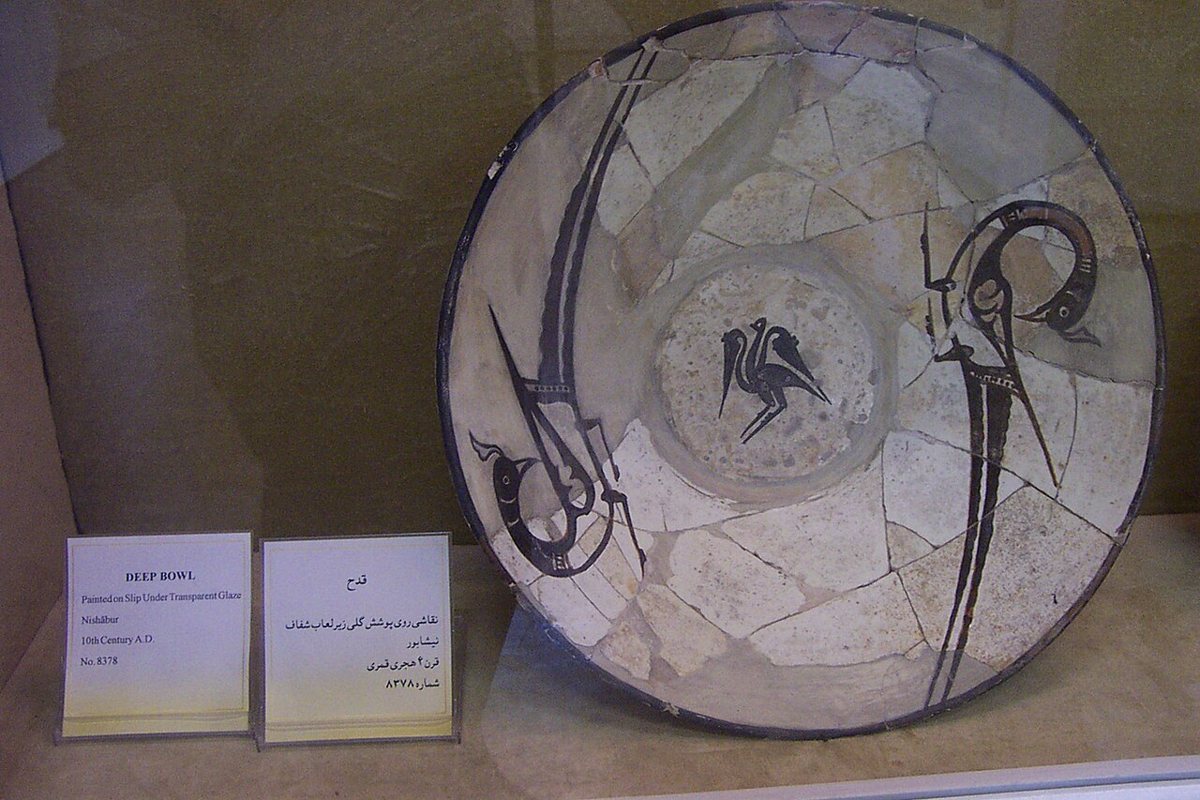
Accessed 15 October 2026.; attribution and origin follow the Commons record and are not independently verified. · Ensie & Matthias from San Diego, California, USA · CC BY-SA 2.0 (per Wikimedia Commons; rights review pending) · Photo source ↗
- Type
- Collector guide
- Reading
- 5 min
- Chapters
- 5
- Photos
- 1
Scope and evidence
This reading separates visible construction, documented materials and origin claims. The photographs retain their own source context; they do not authenticate a purchase or demonstrate every stage described below. Historical examples and contemporary maker statements require different kinds of evidence.
- Layers: Ceramic body, slip decoration and glaze
- Geography: Nishapur and Samarkand are different places
- Evidence: Inscription is not an ownership history
- Layers
- Ceramic body, slip decoration and glaze
- Geography
- Nishapur and Samarkand are different places
- Evidence
- Inscription is not an ownership history
Build the description from layers
Slip is a liquid clay mixture used to cover or decorate a ceramic body. On slip-painted wares, the relationship of ground slip, coloured decoration and glaze matters to the surface’s appearance. The exact composition and firing sequence should come from a technical record, not from the colour of a photograph.
The mapped bowl is identified by its source with Nishapur and a museum inventory number. Keep that identification separate from comparisons with Samarkand, which lies outside present-day Iran. A broad Khorasan or Central Asian visual relationship does not make every related ceramic Iranian-made.
Read the inscription as design and language
Large letters can organise the bowl’s interior, with spacing and elongated strokes creating a visual rhythm around the rim. To read the words, use a qualified transcription and translation tied to the exact object. Do not convert a general description of blessings or proverbs into an invented quotation.
Some designs imitate writing or include abbreviated and difficult passages. A recognisable calligraphic style is not sufficient to establish date, place or maker. Record whether a proposed reading is complete, partial or uncertain and keep the interpretive source with it.
Check complete-looking bowls carefully
An archaeological bowl may have joined fragments, filled gaps, repainting or a modern reconstruction. A smooth, uninterrupted design in a photograph can conceal those interventions. Request a detailed condition report, underside views and photographs that identify restored areas.
Laboratory analysis can answer particular questions but does not replace provenance or lawful ownership documents. A report on one sampled fragment cannot automatically authenticate an assembled bowl. Do not expose a surface to UV or other examination methods without appropriate expertise and an agreed scope.
- Keep inventory and source identifiers
- Request a qualified inscription reading
- Record restored and original areas
- Separate geography from decorative resemblance
Study rather than treating the surface
Do not wash or rub archaeological glaze to make lettering clearer. Glaze, slip, old repair material and salts may respond differently to moisture. Move a stable object with support under the body and avoid repaired rims. Surface deposits and flaking require conservation assessment.
Museum study offers a safer route than purchasing uncertain antiquities. Contemporary original Iranian handmade work can be documented separately, but replicas and reproductions remain excluded from archive marketplace imports. A historical style and a historical object are different categories.
| Look at | Record | Do not infer |
|---|---|---|
| Slip and glaze | Catalogue identification of layers | Composition from colour |
| Inscription | Qualified text and uncertainties | Maker or provenance |
| Geographic label | Nishapur attribution and source | All regional parallels are Iranian |
| Reconstruction | Original fragments, fills and repainting | Whole-bowl authenticity from one sample |
References and further reading
- [1] Mapped photograph — National Museum of Iran bowl, inventory 8378 ↗The source’s object identification remains attached to this photograph; other bowls require their own records.
- [2] The Met — Takht-i Sulayman and tilework in the Ilkhanid period ↗Architectural and technical context for medieval tiles; not a treatment recipe.
These sources provide context, not authentication or provenance for an individual object. Editorial interpretations remain under review.