
Beginner guide · 11 min
Crafts of Sistan and Baluchestan
Editorial team · updated 2026-10-03
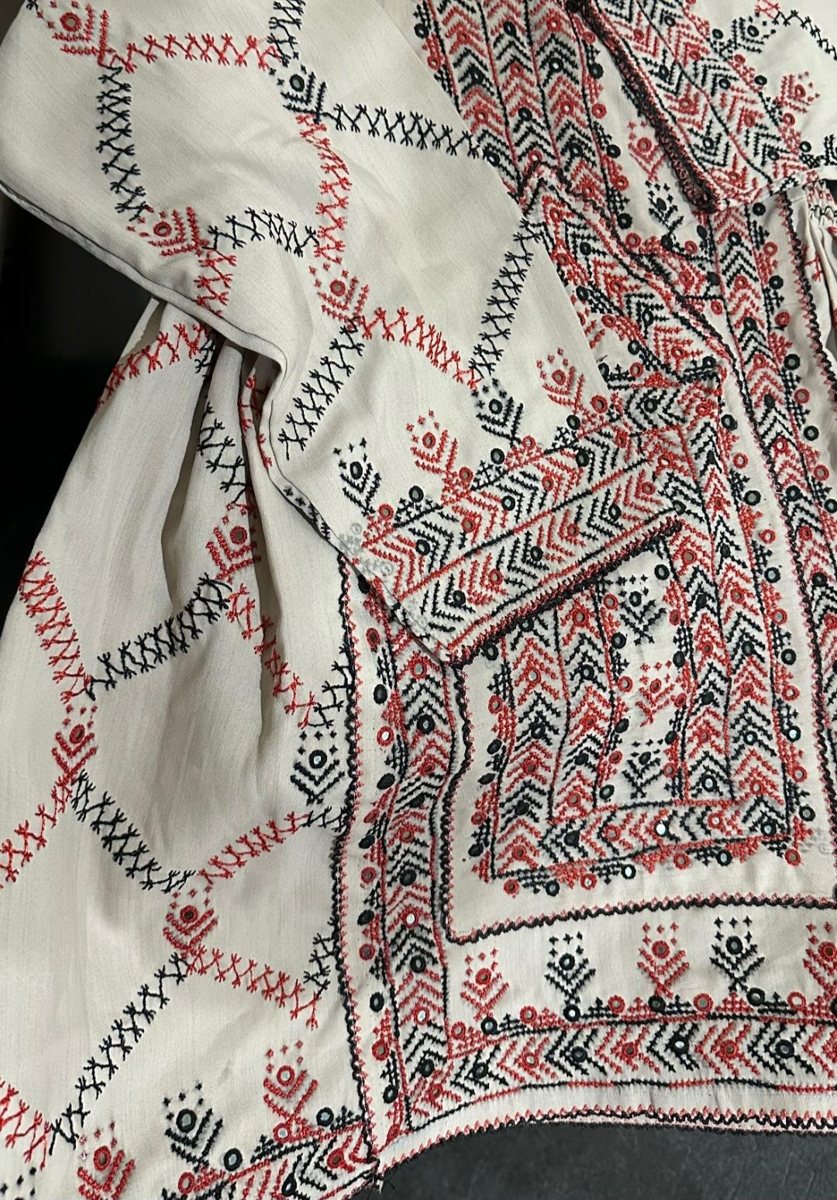
Accessed 15 October 2026.; attribution and origin follow the Commons record and are not independently verified. · EastReviser · CC0 (per Wikimedia Commons; rights review pending) · Photo source ↗
- Type
- Beginner guide
- Reading
- 11 min
- Chapters
- 9
- Photos
- 1
Iran's southeast is home to Baluch needlework (suzan-duzi), Baluch rugs, palm and reed weaving, and Kalpurgan pottery.
Crafts
- Suzan-duzi needlework
- Baluch rugs
- Kalpurgan hand-built pottery made by women
- Reed and palm weaving
Kalpurgan
Kalpurgan pottery is hand-built without a wheel and painted with geometric marks; it is one of Iran's oldest continuing pottery traditions.
Baluchi needlework
Baluchi embroidery (suzan-duzi) uses very dense, fine stitches in geometric patterns, traditionally on dress panels, cuffs and yokes. A single panel can take weeks. Look for even stitch tension and density; machine embroidery has a raised, glossy, perfectly regular look.
- Turn the piece over: hand work shows thread changes and small knots
- Mirror work (where used) should be stitched, not glued
- Ask about the maker's community; buying from cooperatives can support women's income
Pottery and weaving
Kalpurgan, near Saravan, is known for hand-built, unglazed pottery decorated with dark painted motifs. Baluch rugs and flatweaves are also woven in the region.
Planning a craft visit to Sistan and Baluchestan
Workshops and bazaar shops usually keep morning and late-afternoon hours, and many close on Friday and for a midday break. Bring cash or a local payment card, as international cards generally do not work in Iran. When you find a maker you like, ask for a business card or a phone number used for messaging apps so you can order later; many workshops also ship within Iran. Photograph labels and written descriptions rather than relying on verbal claims.
- Ask whether the piece was made in the shop or bought in
- Request materials in writing (wool or silk, natural or synthetic dye, wood species, metal)
- Check export rules for carpets, antiques and old manuscripts before paying
- Wrap fragile enamel and ceramics yourself if you doubt the shop's packing
A note on this guide
This guide is general information from the CraftPersia editorial team and has not been reviewed by a specialist. Prices, workshop locations and practices change; check current details before travelling or buying.
Crafts covered in this guide
Needlework embroidery (Suzan-duzi) (سوزندوزی) — A broad term for Iranian needle embroidery on cotton, silk or wool grounds, including counted, darned and satin-stitch work used on covers, garments and prayer cloths.
Mat and basket weaving (Hasir-bafi) (حصیربافی) — The weaving of mats, baskets, fans and containers from date-palm leaves, reeds and rushes, practised especially in southern and northern Iran.
Materials, techniques and centres
Needlework embroidery (Suzan-duzi) and Mat and basket weaving (Hasir-bafi) are recorded in the archive with cotton, silk and palm leaf and reed as principal materials, and surface embroidery as the technique. Associated centres include Sistan & Baluchestan, Isfahan and Kerman; a place name on its own does not establish where an individual object was made.
Collecting and next steps
When applying this guide to a specific object, work from what can be observed: structure, materials, tool marks, repairs and documentation. Ask the seller or maker for written statements about who made the piece, where, from what materials, and what has been repaired or replaced.
The steps here are educational; identification, conservation and valuation of an individual object require appropriate independent expertise.
| Craft | Associated centres | Key materials |
|---|---|---|
| Needlework embroidery (Suzan-duzi) | Sistan & Baluchestan, Isfahan, Kerman | Cotton, Silk |
| Mat and basket weaving (Hasir-bafi) | Not recorded | Palm leaf and reed |
References and further reading
- [1] H. E. Wulff, The Traditional Crafts of Persia, MIT Press, 1966.General historical craft reference, not evidence for a particular object.
These sources provide context, not authentication or provenance for an individual object. Editorial interpretations remain under review.