
Beginner guide · 11 min
Crafts of Shiraz and Fars: inlay, nomad weavings and glass
Editorial team · updated 2026-10-03
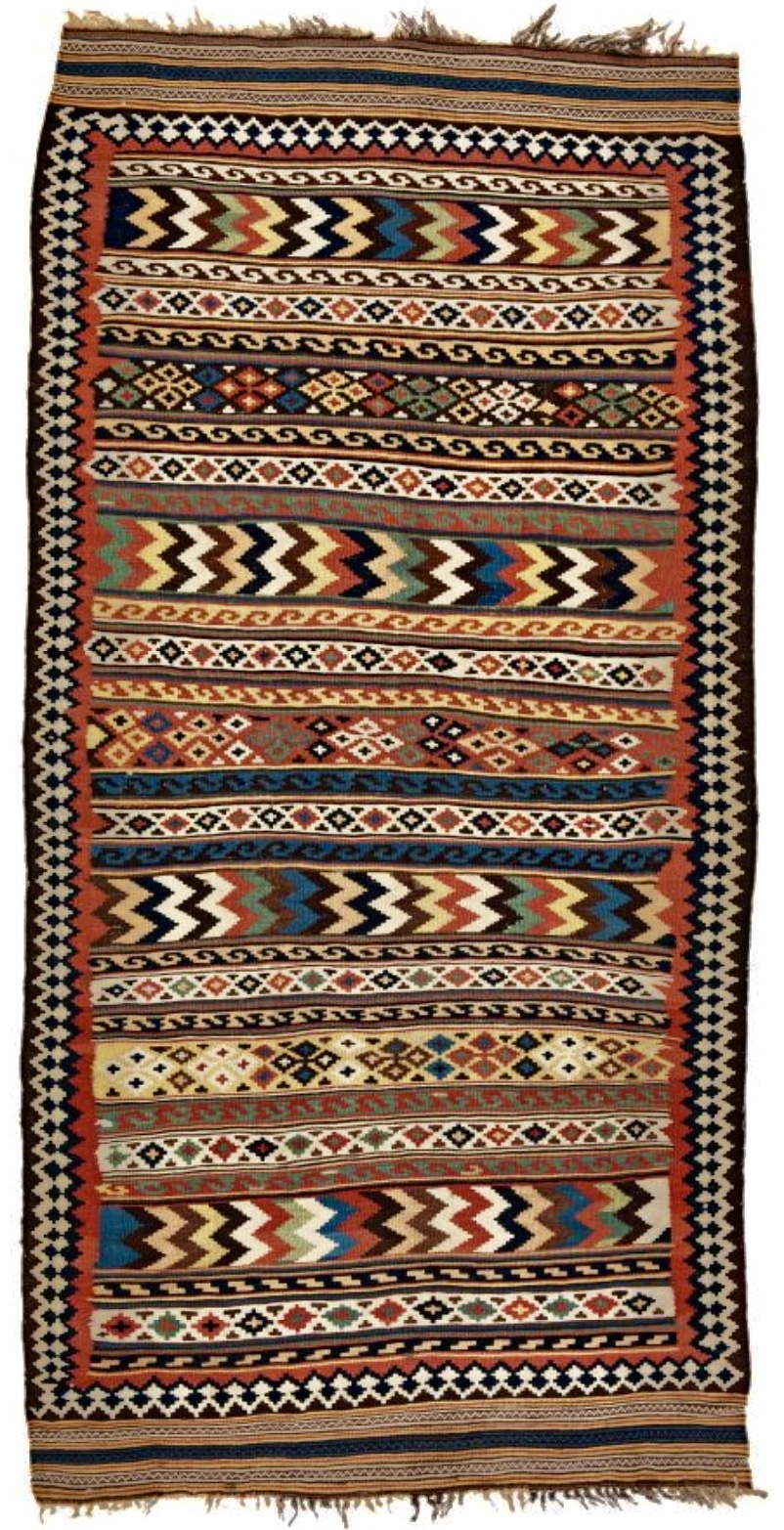
Unknown tribal weaver; photograph by auction house (per Commons) · Public domain (per Wikimedia Commons) · Photo source ↗
- Type
- Beginner guide
- Reading
- 11 min
- Chapters
- 9
- Photos
- 3
Shiraz is a gateway to Qashqai nomad weavings — gabbeh and kilim — and has its own khatam and glass traditions.
Highlights
- Qashqai and Khamseh gabbeh, kilim and bags
- Shiraz khatam-kari
- Handblown glass
- Abadeh carved wood nearby
Buying nomad weavings
Ask about wool and dyes; natural-dyed pieces cost more and age gracefully.
Nomadic weaving around Fars
Shiraz is the market city for Qashqai and Khamseh nomadic and village weaving: gabbeh, kilim, jajim and pile rugs. Pieces vary widely; many are woven in villages rather than on migration. Natural dyes and handspun wool are valued, but ask how the seller knows.
- Gabbeh: thick pile, simple shapes, often bold colour
- Kilim: flatwoven, reversible patterns
- Jajim: narrow strips sewn together
Other crafts
Shiraz workshops produce khatam, inlaid boxes and metalwork, and Vakil Bazaar has textile and spice sections. Historic sites such as the Nasir al-Mulk mosque show coloured glass and tilework.
Planning a craft visit to Shiraz
Workshops and bazaar shops usually keep morning and late-afternoon hours, and many close on Friday and for a midday break. Bring cash or a local payment card, as international cards generally do not work in Iran. When you find a maker you like, ask for a business card or a phone number used for messaging apps so you can order later; many workshops also ship within Iran. Photograph labels and written descriptions rather than relying on verbal claims.
- Ask whether the piece was made in the shop or bought in
- Request materials in writing (wool or silk, natural or synthetic dye, wood species, metal)
- Check export rules for carpets, antiques and old manuscripts before paying
- Wrap fragile enamel and ceramics yourself if you doubt the shop's packing
A note on this guide
This guide is general information from the CraftPersia editorial team and has not been reviewed by a specialist. Prices, workshop locations and practices change; check current details before travelling or buying.
Crafts covered in this guide
Khatamkari (خاتمکاری) — A Persian inlay art in which fine rods of wood, bone and metal are bundled into star units, sliced into thin sheets and applied to a wooden surface to form dense geometric tessellation.
Gabbeh (گبه) — A thick, coarsely knotted pile rug woven mainly by pastoral and village weavers of the Zagros, with open fields, few motifs and a directly personal design language.
Kilim (Gelim) (گلیم) — A flat, pileless woven textile made across Iran by interlocking or slit-weaving coloured weft threads over a warp, used as floor covering, storage bag, saddle cover and tent divider depending on region.
Glassmaking (شیشهگری) — Iranian glass includes Sasanian cut glass, early Islamic mould-blown and cut vessels, and later blown bottles and rosewater sprinklers, with a small studio glassblowing tradition today.
Materials, techniques and centres
Khatamkari, Gabbeh, Kilim (Gelim) and Glassmaking are recorded in the archive with walnut wood, camel bone, brass, wool, natural dyes and cotton as principal materials, and wood inlay (khatam), knotted pile weaving and weft-faced flatweaving as techniques. Associated centres include Isfahan, Shiraz, Kerman, Sistan & Baluchestan, Yazd and Tabriz; a place name on its own does not establish where an individual object was made.
Collecting and next steps
When applying this guide to a specific object, work from what can be observed: structure, materials, tool marks, repairs and documentation. Ask the seller or maker for written statements about who made the piece, where, from what materials, and what has been repaired or replaced.
The steps here are educational; identification, conservation and valuation of an individual object require appropriate independent expertise.
Related photographs and screened examples
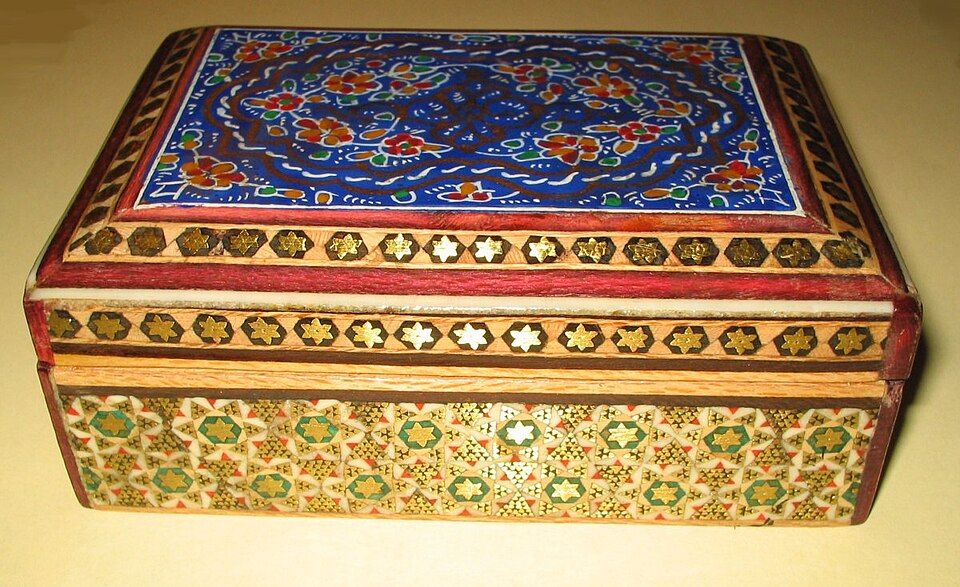
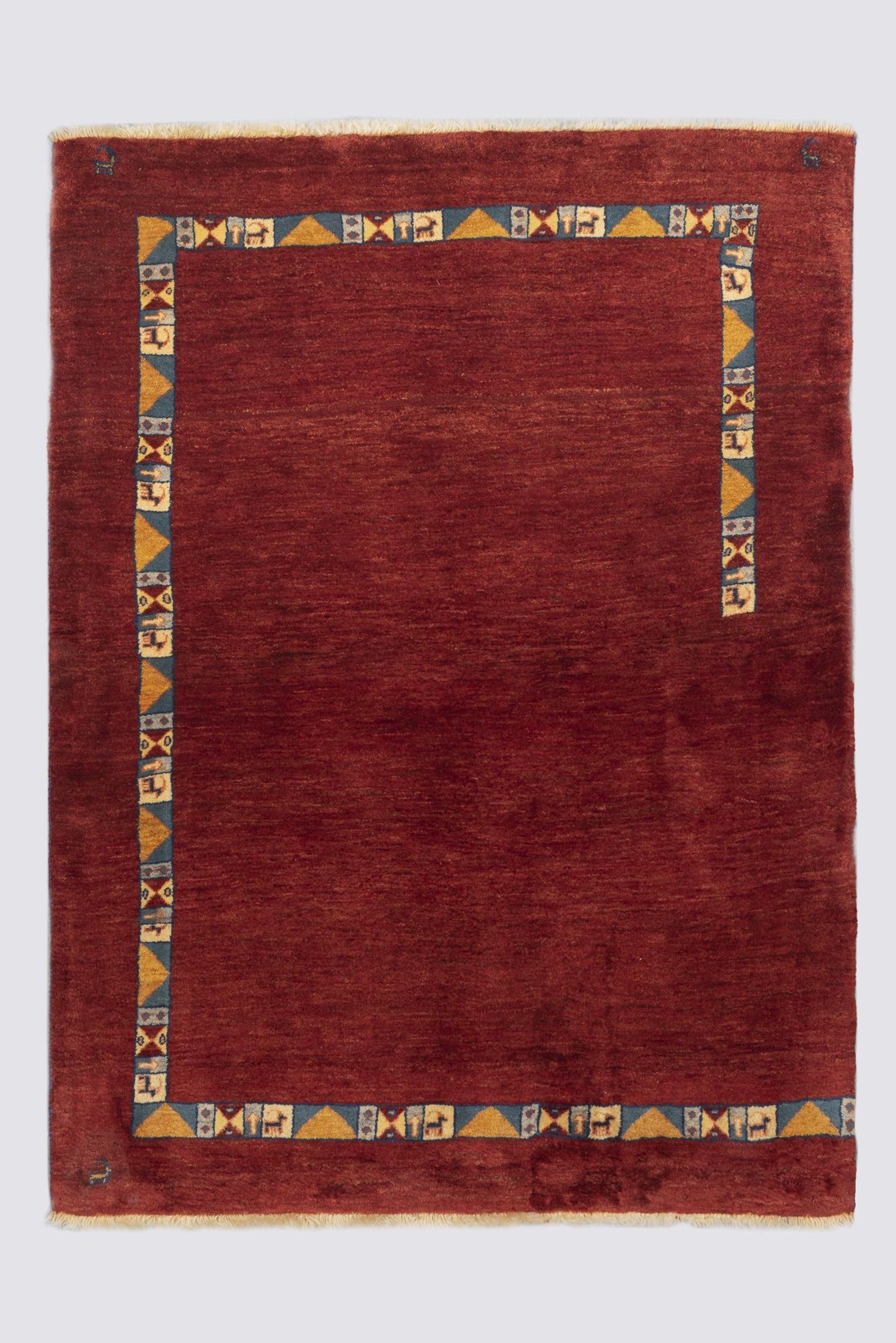
Representative photographs only. Marketplace examples rely on seller descriptions; CraftPersia has not independently authenticated their maker, origin, or rights status. Follow each source link for the listing context.
| Craft | Associated centres | Key materials |
|---|---|---|
| Khatamkari | Isfahan, Shiraz | Walnut wood, Camel bone, Brass |
| Gabbeh | Shiraz | Wool, Natural dyes |
| Kilim (Gelim) | Shiraz, Kerman, Sistan & Baluchestan | Wool, Cotton, Natural dyes |
| Glassmaking | Tabriz, Shiraz, Kashan | Not recorded |
References and further reading
- [1] H. E. Wulff, The Traditional Crafts of Persia, MIT Press, 1966.General historical craft reference, not evidence for a particular object.
These sources provide context, not authentication or provenance for an individual object. Editorial interpretations remain under review.