
Beginner guide · 11 min
Sermeh-duzi: gold-thread embroidery
Editorial team · updated 2026-09-29
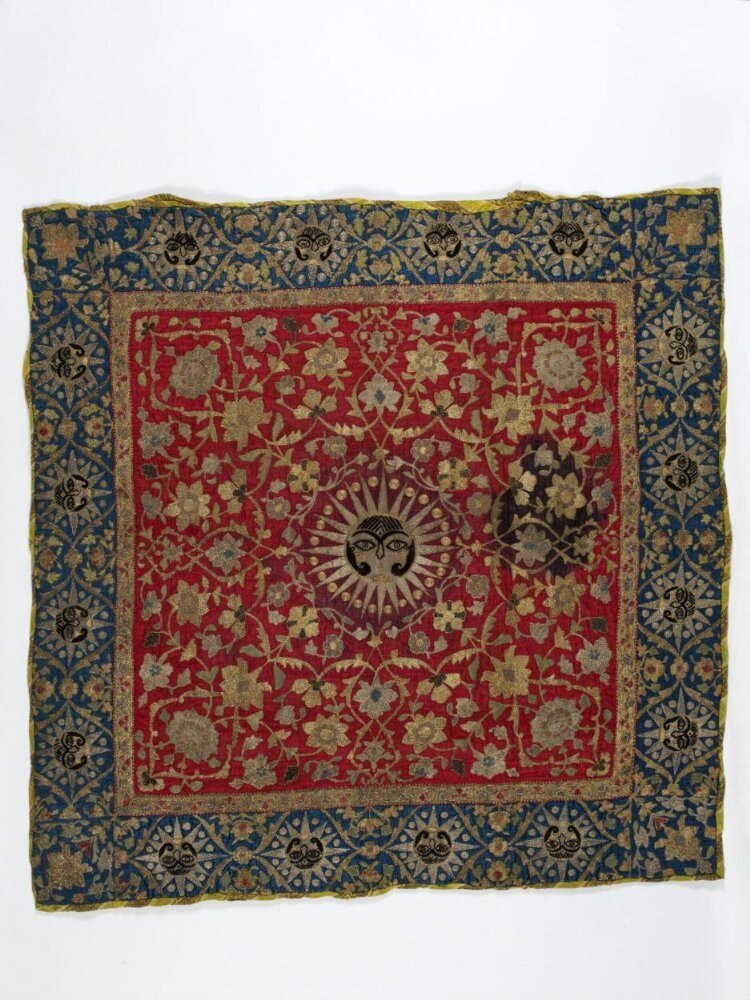
related technique example, not a verified sermeh-duzi attribution · Victoria and Albert Museum · © Victoria and Albert Museum, London (re-use requires review) · Photo source ↗
- Type
- Beginner guide
- Reading
- 11 min
- Chapters
- 9
- Photos
- 1
Couched metallic-thread embroidery on velvet, associated with Isfahan and religious textiles.
Technique
Metallic threads are laid on the surface over a padding and fixed in place with small stitches (couching).
Uses
Prayer mats, covers, wall pieces and ceremonial textiles.
Care
Metal threads tarnish and break. Do not clean with polish; keep dry and away from light.
Technique and care
Metallic threads are couched over a padded pattern on velvet or cloth. Store pieces away from humidity to prevent tarnish, and do not wash them.
Background
Sermeh-duzi is couched metal-thread embroidery. Gold- or silver-coloured threads are laid over a padded design and stitched down with fine silk thread. It was used for prayer mats, cushions, ceremonial covers and garments, and Isfahan and Shiraz are often mentioned as centres. Contemporary pieces usually use gilt or metallic threads rather than solid gold.
What to look for
- Raised padding under the metal threads
- Even couching stitches
- A velvet or satin ground in good condition
- Ask about the thread's metal content
- Keep pieces away from humidity, which causes tarnish
- Technique
- Couched metal-thread embroidery over padding
- Grounds
- Velvet, silk, or wool cloth
- Uses
- Prayer covers, sofreh, cushion covers, ceremonial textiles
How sermeh is worked
The design is first padded with card, leather or thread so the gold stands in relief. Metallic thread — today usually gilt or imitation-gold thread — is laid over the padding and couched down with fine silk stitches. The ground is commonly dark velvet, which makes the metal glow.
Motifs and settings
Common motifs include boteh, floral sprays, medallions and inscriptions. Sermeh-duzi is closely associated with ceremonial textiles, including wedding sofreh (spread cloths) and prayer-related covers.
- Raised relief from padding
- Couching stitches visible under magnification
- Dark velvet grounds most typical
Care and condition
Metal threads tarnish and can snag; silk couching threads break first. Store flat with tissue, avoid polishing metal threads, and consult a textile conservator for loose areas.
| Feature | Sermeh-duzi | Pateh | Baluchi embroidery |
|---|---|---|---|
| Thread | Metal thread | Wool | Silk/cotton |
| Ground | Velvet/silk | Wool twill | Cotton |
| Relief | Raised | Flat, dense | Flat, geometric |
References and further reading
These sources provide context, not authentication or provenance for an individual object. Editorial interpretations remain under review.