
Collector guide · 10 min
Senneh (Sanandaj) rugs and kilims: fine Kurdish weaving
Editorial team · updated 2026-10-12
A name with two meanings
‘Senneh’ is the old name of Sanandaj, capital of Kurdistan province. In the rug trade, however, ‘Senneh knot’ is used for the asymmetric (Persian) knot. Many Senneh rugs are actually woven with the symmetric knot. The knot name does not tell you where a rug was made.
Senneh kilims
Senneh kilims are among the finest Persian flatweaves. They are thin and closely woven, often with small all-over boteh or herati patterns, or with a central medallion. The fine slit-tapestry weave makes very small, precise motifs possible.
Senneh pile rugs
Senneh pile rugs are thin and flexible with a short pile, and they often feel rough on the back because the knots are so tight. Small boteh repeats and herati patterns are common.
How to look at one
- Count how many weft passes cover one centimetre on a kilim; fine work has many
- Check whether the slits are long and open, which can weaken a kilim
- On pile rugs, feel the back for the tight, gritty texture
- Ask for the seller's basis for any Sanandaj attribution
Care
Thin kilims move on smooth floors, so use a non-slip underlay. Avoid heavy furniture legs on slit areas. Rotate the piece to even out light exposure.
A note on this guide
This is general information from the CraftPersia editorial team and has not been reviewed by a specialist. It is not a valuation, authentication or conservation treatment. For valuable or fragile pieces, consult a qualified conservator or appraiser.
Related photographs and screened examples
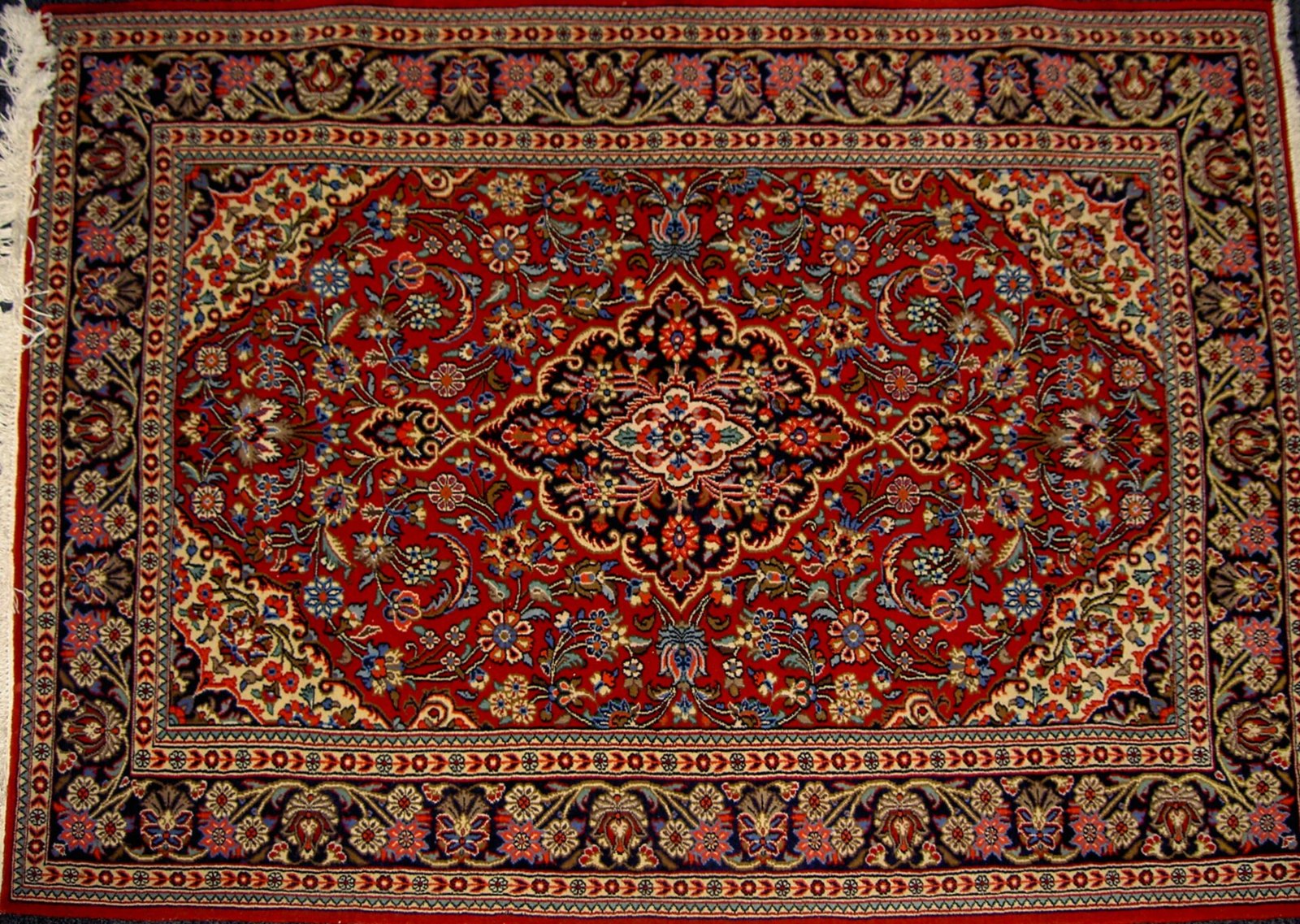
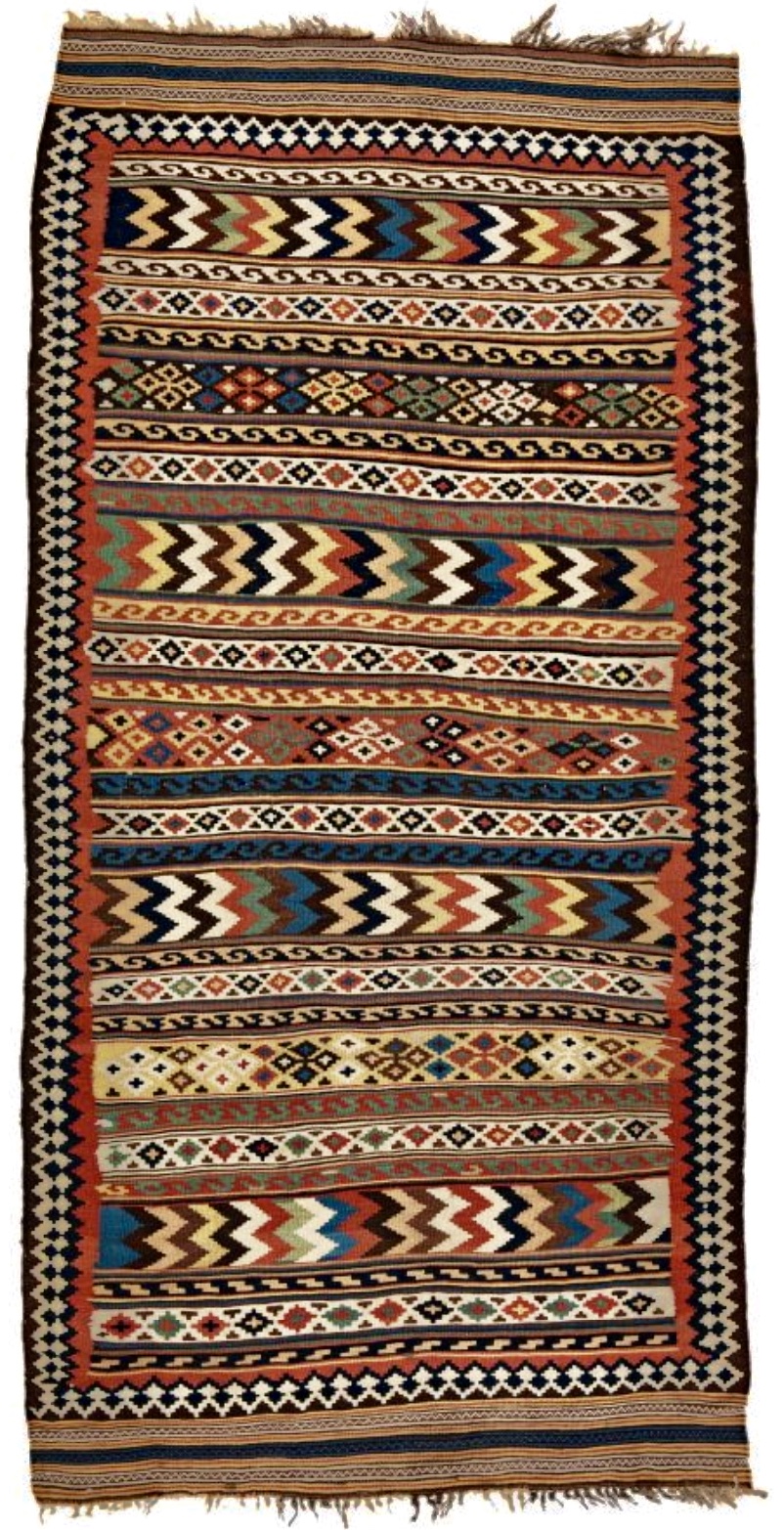
Representative photographs only. Marketplace examples rely on seller descriptions; CraftPersia has not independently authenticated their maker, origin, or rights status. Follow each source link for the listing context.