
Beginner guide · 12 min
Reed pens, ink and paper for calligraphy
Editorial team · updated 2026-09-29
Accessed 15 October 2026.; attribution and origin follow the Commons record and are not independently verified. · No machine-readable author provided. Baba66 assumed (based on copyright claims). · CC BY 2.5 (per Wikimedia Commons; rights review pending) · Photo source ↗
- Type
- Beginner guide
- Reading
- 12 min
- Chapters
- 10
- Photos
- 2
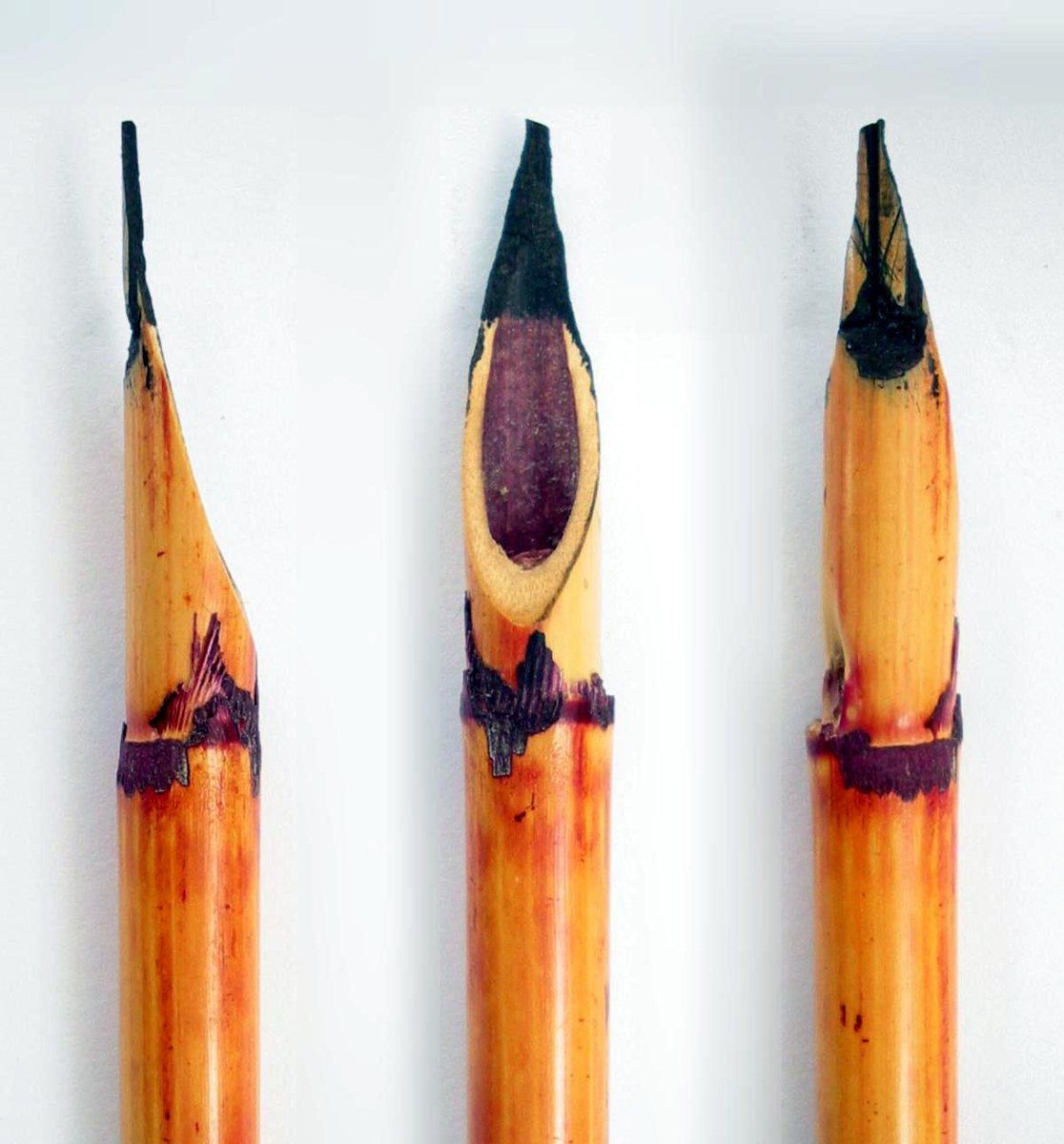
The basic tools of Persian calligraphy.
Qalam
Reed pens are cut at an angle with a knife.
Ink
Traditional ink is soot-based; a silk wad in the inkwell controls flow.
Paper
Burnished paper allows the pen to glide.
The reed pen (qalam)
Persian calligraphers write with a reed pen (qalam) cut with a knife. The width and angle of the nib suit each script: nastaliq uses a slanted cut, naskh a straighter one. The cut is made on a hard rest called a qalam-tarash.
Ink and paper
Traditional black ink is made from soot and gum arabic. Calligraphers polish their paper with a smooth stone or glass so the pen glides over it.
- Silk fibres (liqeh) in the inkwell control how much ink the pen takes up
- Students practise on heavier, cheaper paper
- Expect to re-cut the nib often
Cutting the nib
The reed is cut with a sharp knife. The calligrapher shapes the slope, splits the tip and trims it at an angle on a bone or hard rest. Students learn to cut nibs early, because a poor cut spoils the letters.
A note on this guide
This is a general introduction written by the CraftPersia editorial team. It has not yet been reviewed by a specialist. Practice varies between workshops; confirm details with makers or museums, and treat any dates as approximate.
Crafts covered in this guide
Nasta'liq calligraphy (نستعلیق) — A hanging cursive script developed in Iran for Persian poetry, distinguished by its sloping baseline, sharply contrasted thick and thin strokes, and sweeping final letters.
Materials, techniques and centres
Nasta'liq calligraphy is recorded in the archive with paper as principal materials, and tazhib illumination as the technique. Associated centres include Shiraz, Isfahan and Tabriz; a place name on its own does not establish where an individual object was made.
Collecting and next steps
When applying this guide to a specific object, work from what can be observed: structure, materials, tool marks, repairs and documentation. Ask the seller or maker for written statements about who made the piece, where, from what materials, and what has been repaired or replaced.
The steps here are educational; identification, conservation and valuation of an individual object require appropriate independent expertise.
Related photographs and screened examples
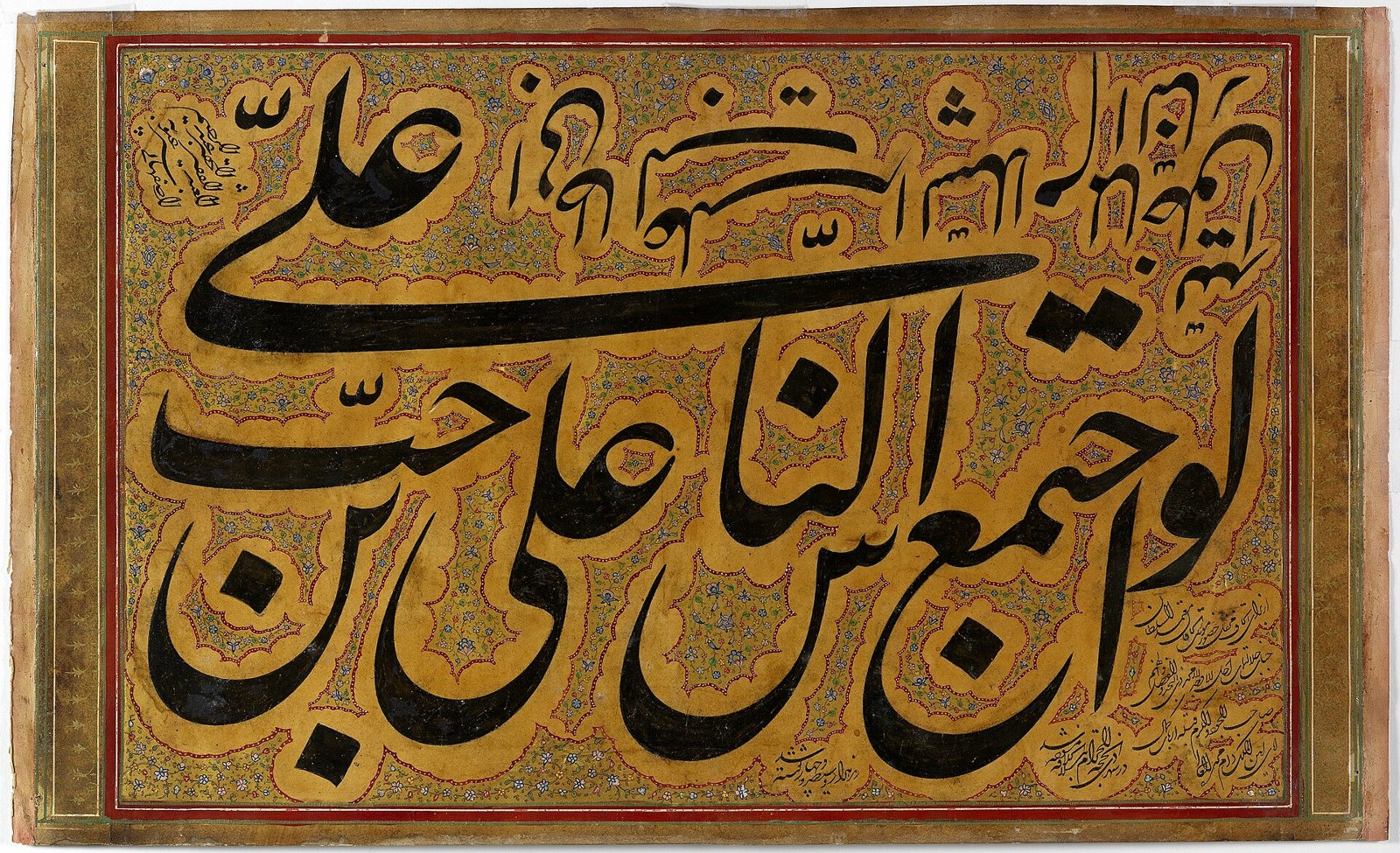
Representative photographs only. Marketplace examples rely on seller descriptions; CraftPersia has not independently authenticated their maker, origin, or rights status. Follow each source link for the listing context.
References and further reading
- [1] H. E. Wulff, The Traditional Crafts of Persia, MIT Press, 1966.General historical craft reference, not evidence for a particular object.
These sources provide context, not authentication or provenance for an individual object. Editorial interpretations remain under review.