
Collector guide · 10 min
Reading motifs without over-reading them
Editorial team · updated 2026-09-29
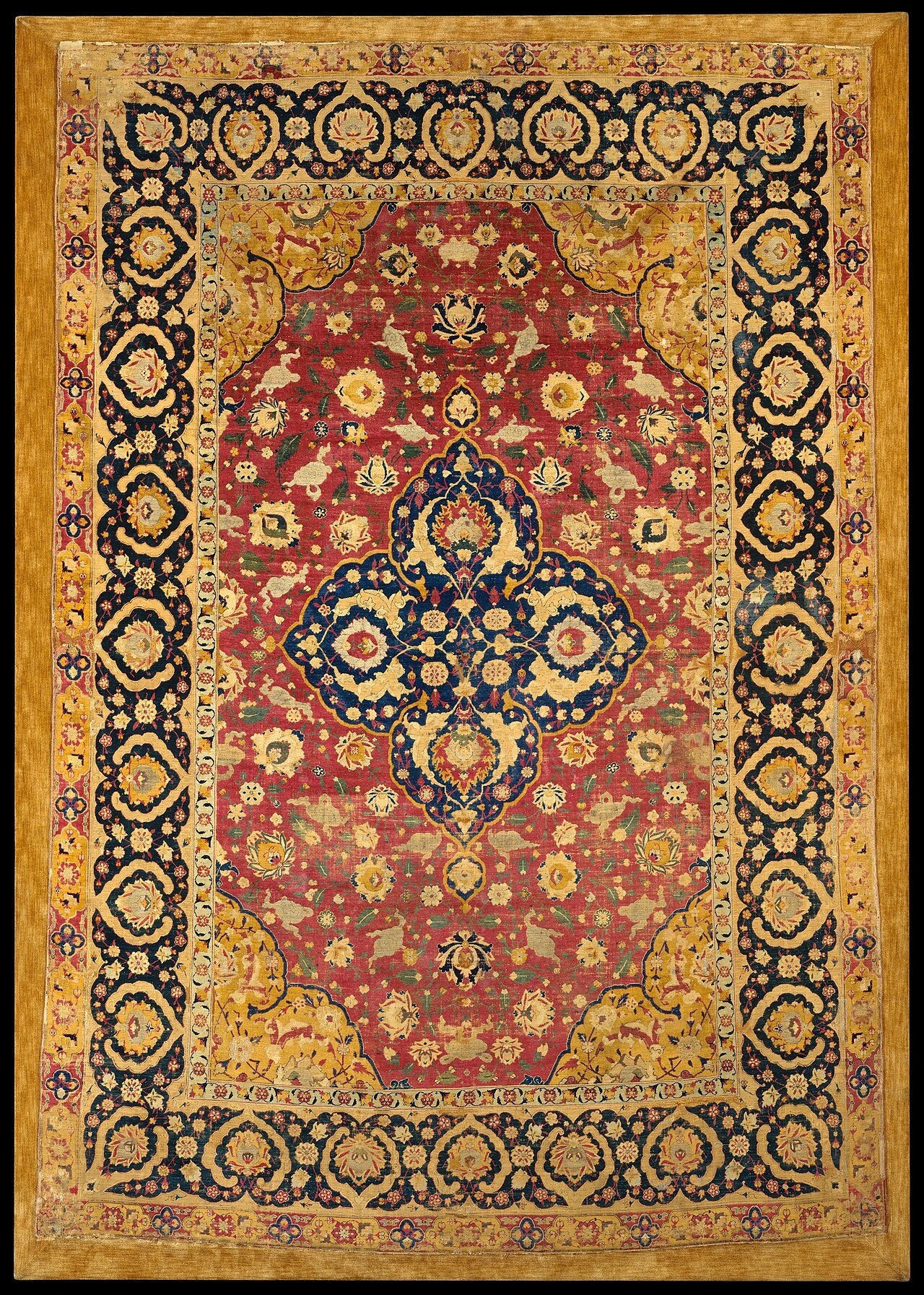
accessed 2026-09-30 · The Metropolitan Museum of Art · CC0 (Met Open Access / Wikimedia Commons) · Photo source ↗
- Type
- Collector guide
- Reading
- 10 min
- Chapters
- 9
- Photos
- 6
Why motif meanings are often disputed, and how to talk about them honestly.
Popular meanings
Many meanings given for motifs — protection, fertility, water — are modern or local explanations. Weavers themselves may name motifs differently.
Speak with care
Say “often described as” rather than “means”. Where a meaning comes from a weaver or source, credit it.
Why caution matters
Popular meanings for motifs, such as boteh as a flame or the cypress as eternity, are often repeated without sources. Weavers may choose a motif for tradition, beauty or a buyer's taste rather than for its symbolism.
A careful approach
- Describe what you see before interpreting it
- Note where the motif appears and in which period
- Use phrases like ‘often interpreted as’
- Ask makers what a motif means to them
A note on this guide
This is a general introduction written by the CraftPersia editorial team. It has not yet been reviewed by a specialist. Confirm details with makers, conservators or museums, and treat any dates as approximate.
Describe a motif before giving it a meaning
Start with observable shape: a curved pointed form, a branching stem, a polygonal medallion or a repeated fish-like unit. Record placement, orientation, colour and relationship to the border. This descriptive record remains useful even if the name or interpretation changes after research.
A motif label can vary across languages, workshops and catalogues. Keep the source’s spelling alongside a plain description rather than assume two similar terms are exact equivalents. A maker’s name for a form and a collector’s later classification may both be worth preserving, with their source and date attached.
Look at the whole object and its function
A repeated shape gains context from material, technique, scale and use. A motif woven into a bag closure has a different practical setting from a painted manuscript border or a carved architectural panel. The same name does not establish a single function or symbolic meaning across those objects.
Examine how technique constrains the shape: stepped outlines in weaving and curved brushwork may organise related forms differently. Compare an intact repeat with edges, interruptions and repaired areas. Do not reconstruct a missing symbolic programme from an isolated fragment without documenting the uncertainty.
Separate makers’ accounts from later interpretations
An interview, dated text or catalogue may offer an interpretation, but identify who makes the claim and for which object. Say that a source associates a form with a meaning rather than declare the meaning universal. Popular accounts of fertility, protection or paradise can be suggestive without establishing what a particular maker intended.
Do not infer religion, ethnicity or personal belief from a motif alone. People borrow designs, work to commissions and reuse inherited patterns for many reasons. Where there is no object-specific evidence, an open question is more accurate than a confident symbolic explanation.
Compare designs without turning resemblance into provenance
Similar boteh, herati and geometric patterns occur beyond Iran, in both handmade and industrial production. A design match is therefore a starting point for comparison, not evidence of Iranian manufacture, age or maker identity. Combine design with structure, material study and documentary history where those are available.
Keep a comparison record that separates what is visibly shared from what is only attributed by a source. Use photographs of their actual catalogued objects, retaining captions and credits. A related textile picture on this page is not documentary evidence for a specific belief or a named community.
- Describe shape and placement first
- Attach interpretations to their sources
- Compare construction as well as design
- Leave unsupported meaning and origin open
Related photographs and screened examples
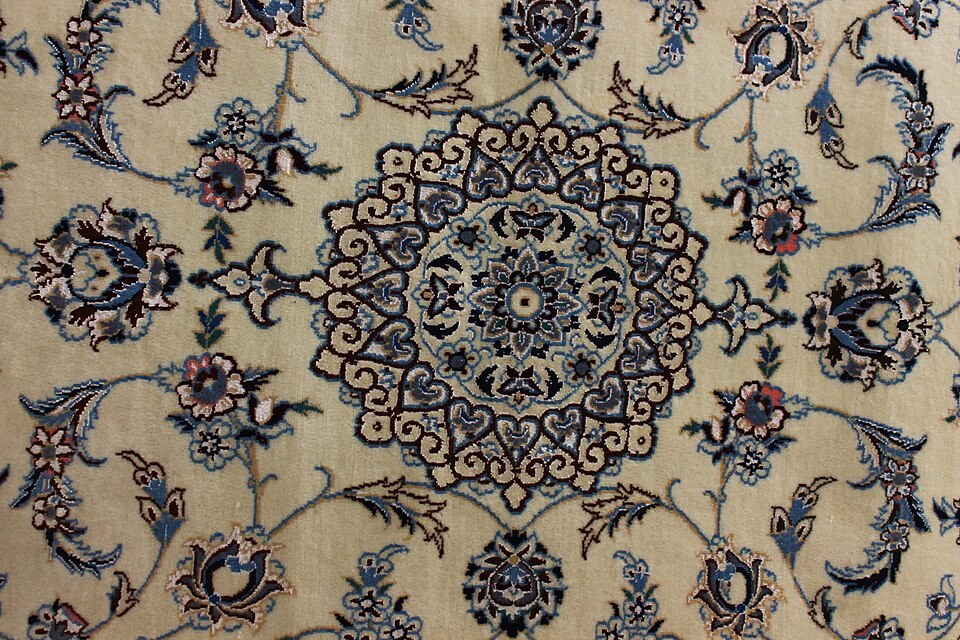
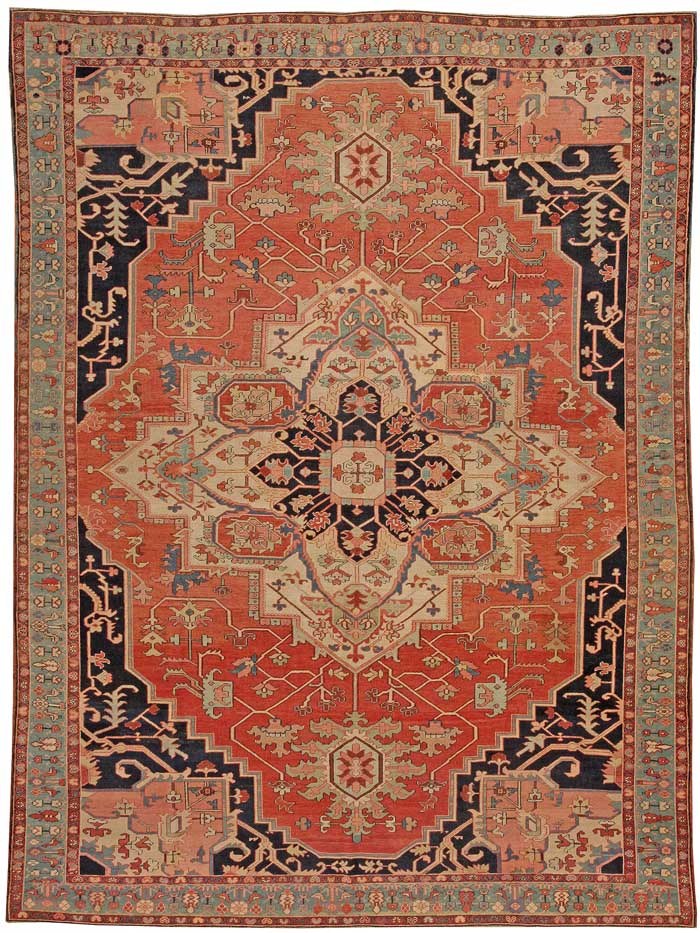
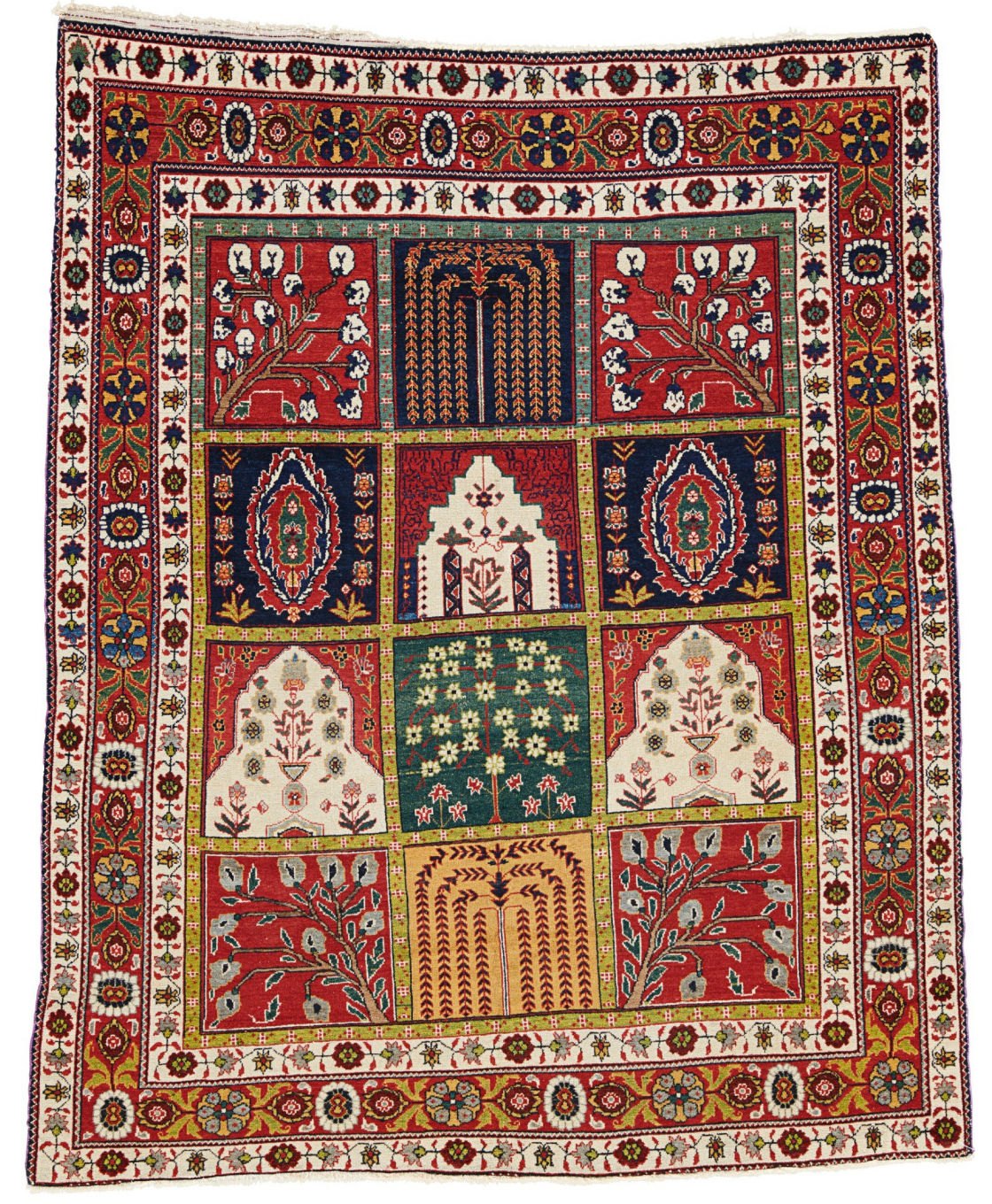

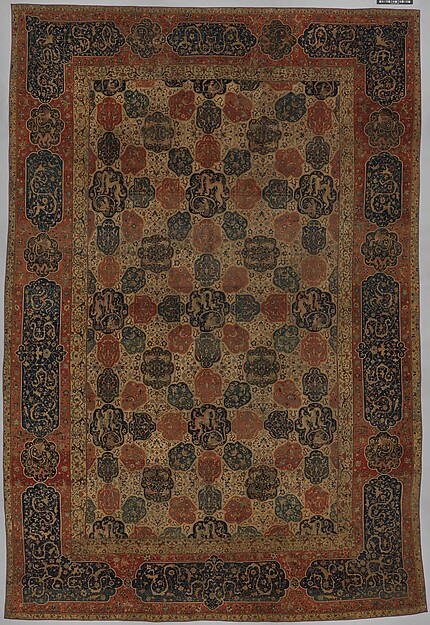
Representative photographs only. Marketplace examples rely on seller descriptions; CraftPersia has not independently authenticated their maker, origin, or rights status. Follow each source link for the listing context.
| Evidence | Responsible conclusion | Limit |
|---|---|---|
| Visible shape | Descriptive resemblance | No fixed symbolic meaning |
| Dated maker statement | That maker’s stated account | Not every maker’s belief |
| Comparative catalogue | Published classification or attribution | Not independent proof of origin |
References and further reading
- [1] Encyclopaedia Iranica — Carpets ↗Comparative historical context; individual motif interpretations need object-specific evidence.
- [2] H. E. Wulff, The Traditional Crafts of Persia (1966)Historical descriptions; not evidence of current prices, individual makers or present-day workshop access.
These sources provide context, not authentication or provenance for an individual object. Editorial interpretations remain under review.