
Collector guide · 11 min
Qashqai tribal rugs and weavings
Editorial team · updated 2026-09-29
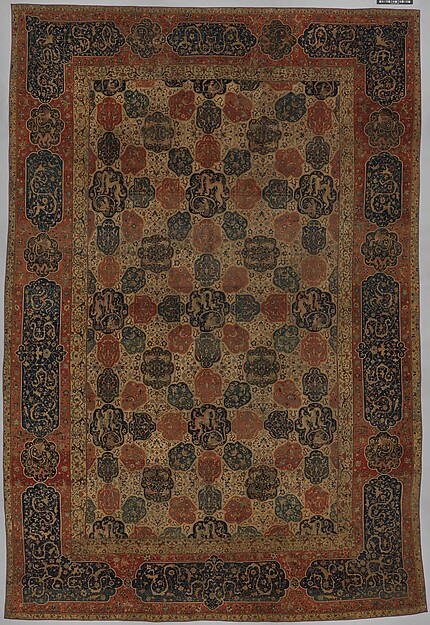
first half 16th century · accession 10.61.3 · The Metropolitan Museum of Art · CC0 (Met Open Access) · Photo source ↗
- Type
- Collector guide
- Reading
- 11 min
- Chapters
- 9
- Photos
- 6
An introduction to the pile rugs, flatweaves and bags of the Qashqai confederation of Fars.
Who the Qashqai are
The Qashqai are a Turkic-speaking confederation of pastoral groups in Fars province.
Weavings
They weave pile rugs, gabbeh, kilim, saddlebags and animal trappings on horizontal ground looms.
Features
Bold colours, lozenge medallions, small animals and wool warps are common.
- Horizontal loom
- Wool foundation
- Hand-spun yarn
Recognising Qashqai weaving
Qashqai rugs, woven by Turkic-speaking nomads of Fars, often show a central medallion or several medallions, small animals and stylised flowers. The palette is rich red and blue, and the wool is glossy. Edges are often finished with alternating colours.
- Gabbeh and kilim are also woven by Qashqai groups
- Bags and animal trappings are collected too
- Village-made Qashqai-style rugs are common
Buying
Ask whether the rug was woven in a nomadic or village setting, and about the dyes. Many pieces sold as Qashqai come from Fars villages, which is fine as long as the seller describes them honestly.
A note on this guide
This is a general introduction written by the CraftPersia editorial team. It has not yet been reviewed by a specialist. Confirm details with makers, conservators or museums, and treat any dates as approximate.
Crafts covered in this guide
Persian carpet (فرش ایرانی) — A hand-knotted pile textile woven across Iran in city workshops, village looms and pastoral camps, distinguished by regional structure, palette and design vocabulary.
Gabbeh (گبه) — A thick, coarsely knotted pile rug woven mainly by pastoral and village weavers of the Zagros, with open fields, few motifs and a directly personal design language.
Kilim (Gelim) (گلیم) — A flat, pileless woven textile made across Iran by interlocking or slit-weaving coloured weft threads over a warp, used as floor covering, storage bag, saddle cover and tent divider depending on region.
Materials, techniques and centres
Persian carpet, Gabbeh and Kilim (Gelim) are recorded in the archive with wool, silk, cotton and natural dyes as principal materials, and knotted pile weaving and weft-faced flatweaving as techniques. Associated centres include Tabriz, Isfahan, Kashan, Kerman, Qom and Shiraz; a place name on its own does not establish where an individual object was made.
Collecting and next steps
When applying this guide to a specific object, work from what can be observed: structure, materials, tool marks, repairs and documentation. Ask the seller or maker for written statements about who made the piece, where, from what materials, and what has been repaired or replaced.
The steps here are educational; identification, conservation and valuation of an individual object require appropriate independent expertise.
Related photographs and screened examples
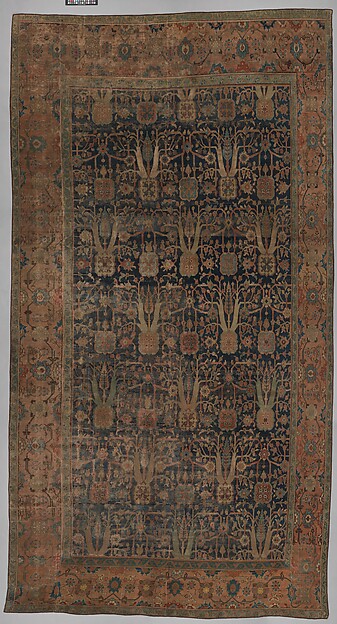
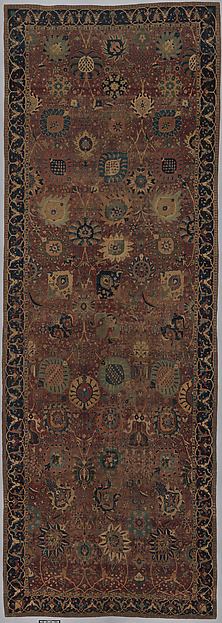

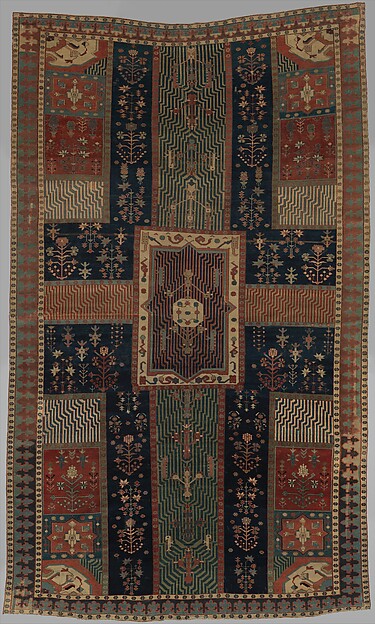

Representative photographs only. Marketplace examples rely on seller descriptions; CraftPersia has not independently authenticated their maker, origin, or rights status. Follow each source link for the listing context.
| Craft | Associated centres | Key materials |
|---|---|---|
| Persian carpet | Tabriz, Isfahan, Kashan | Wool, Silk, Cotton |
| Gabbeh | Shiraz | Wool, Natural dyes |
| Kilim (Gelim) | Shiraz, Kerman, Sistan & Baluchestan | Wool, Cotton, Natural dyes |
References and further reading
- [1] H. E. Wulff, The Traditional Crafts of Persia, MIT Press, 1966.General historical craft reference, not evidence for a particular object.
These sources provide context, not authentication or provenance for an individual object. Editorial interpretations remain under review.